Stem ginger and buckwheat cookies (GF, DF)

When you’re eating gluten free, you can usually find some great substitutions in the shops. Pasta, cereal, even the bread that’s available in shops is improving. But there’s one thing I’ve been struggling to find, and to make. The object of my desire is a perfectly chewy cookie. The cookies that I’ve been making and buying so far have all been wrong; too crunchy, too cakey, just plain wrong. That is, until now.

One day I decided to experiment with some buckwheat flour that I’d bought for another project. Buckwheat is a gluten-free grain with a nutty flavour, commonly used to make crepes. It’s also the not-so-secret ingredient to making perfect, chewy, flavoursome GF cookies.

In this recipe I don’t use a typical GF flour blend, just the buckwheat flour (this is available from health food shops). I also use chunks of crystallised ginger to add a really autumnal flavour and texture. I’m sure if you prefer you could use the balls of stem ginger in syrup, but the crystallised ginger lasts a long time in the cupboard and is generally neater to handle.

This may sound a bit nonsensical, bit I’ve started piping my chilled cookie dough onto the prepared trays before baking. I find that GF mixtures tend to be sticky and difficult to shape, and one day I decided to pipe the mixture using a piping bag and large round nozzle. Large chunks of ginger or chocolate chips tend to get a bit stuck (use the end of a teaspoon to unblock the nozzle) but I do think it makes my cookies more even in shape and size. They’re still not perfect, but they’re homemade, so I’m not worried about perfection! Plus, the piping saves me fiddling around with spoons.

I finished these babies off with a swirl of dark chocolate. This was a surprisingly relaxing process: cut the very tip off a piping bag and don’t try to be too neat about it. Let your wrist swing in a natural circular motion, the chocolate will flow and all will be well.

Stem ginger and buckwheat cookies (makes 18, GF, DF)

100g crystallised stem ginger, chopped into bite-size pieces

150g light brown sugar

110g soft butter or dairy-free spread

1 egg

150g buckwheat flour

pinch salt

1/2 tsp baking powder

1 bar dark chocolate for decoration (use dairy free chocolate if you’re making these DF)

  1. Cream the soft butter/spread with the sugar in a large bowl until pale and fluffy.
  2. Add the egg and mix well.
  3. Add the flour, salt and baking powder and mix well to combine.
  4. Stir in the chopped stem ginger until distributed.
  5. Cover the bowl with cling film and chill in the fridge for at least half an hour.
  6. Preheat the oven to 180 degrees fan and prepare two large, flat baking trays with baking paper.
  7. Put the cookie dough into a piping bag fitted with a large, round nozzle and pipe the dough onto the trays, ensuring space between the cookies. This mixture will make about 18 cookies; each portion should be roughly the size of a golf ball.
  8. Bake the cookies for around 12 minutes or until golden brown.
  9. Once baked, carefully place the cookies on a cooling rack. Melt the whole bar of dark chocolate and allow to cool for two minutes before placing in a piping bag. cut the very end off the piping bag (you only want a very small opening for the chocolate to flow through).
  10. When the cookies are fully cooled you can decorate them. Starting in the middle of the cookie, smoothly move your wrist in a circular motion to achieve the chocolate spiral effect. Leave for the chocolate to set, and then keep in an airtight container.

Apricot and Ginger surprise cake (dairy + gluten free)

I think it’s best to start this post by wishing you all a happy new year! I know that for most of us our new year’s celebrations were held two weeks ago (been there, drank the fizz, got the hangover) but this year I’m celebrating new year twice: I’m celebrating Chinese new year for the first time!

My boyfriend’s family is from Hong Kong, and it just so happens that his aunt’s birthday coincides with Chinese new year this time (February 5th). It’s a big birthday too. When my boyfriend’s mum suggested that I might like to make a cake, naturally I leapt at the chance.

When I first met her, the aunt in question kindly gave me a money packet. As soon as I started dreaming up this cake I knew that I would incorporate some element of the money packet design as decoration. Then I got another idea. I’d seen surprise cakes online- a cavity is made in the cake which is filled with treats- but I’d never made one. Since money is traditionally given at Chinese new year, why not fill the cake with chocolate coins? Luckily they’re still in the shops (and available online) after Christmas, and heavily discounted!

In terms of flavours, I knew that this aunt liked Victoria sponge, but I wanted to play with the flavours a bit more. I had a new bottle of ginger extract which I was dying to try, and I decided that apricot jam would be a good pairing. Thus, the whole cake was formed in my head: the flavours (plain sponge, sandwiched with apricot jam and ginger buttercream), the decoration (buttercream flowers, inspired by the money packet) and the surprise (chocolate coins hidden inside).

I learnt how to do the buttercream flowers from a few different YouTube videos- Cupcake Savvy’s Kitchen, Greggy Soriano from Greggy’s Digest, and Joni Kwan from How to Cake it Step by Step. I used a set of plastic palette knives which I found from my local art shop, but I’m sure you can find similar ones online. I love the effect, I think it’s very beautiful and soft, and I can’t wait to play around with it more in the future!

What you see in this post is the trial of this cake, and it involved a lot of techniques which I had never done before. This meant that the assembly and decoration of this cake was a long and messy process. It was definitely worth it when I cut into that first slice and saw the coins spilling out just as I’d hoped.

The texture of this sponge is so light and fluffy, as well as the icing. The ginger extract gives a sweet heat to it and compliments the apricot nicely. This is definitely an interesting take on the Victoria sponge, and it’s worth trying out even if you’re a purist. Now all that’s left for me is to do it all again- hopefully with less mess this time. Wish me luck!

Apricot and Ginger Surprise cake: (gluten free + dairy free)

340g plain flour

225g caster sugar

340g dairy-free spread

6 eggs

2 tsp baking powder

2 tsp vanilla

For the decoration:

450g dairy-free spread

260g icing sugar

2 tsp ginger extract

Food colourings

300g apricot jam

About 15 chocolate coins

Tube of black writing icing/sprinkles/edible pearls (for the middle of the flowers)

  1. Preheat the oven to 180 degrees and line two sandwich cake tins.
  2. NOTE: The ingredients which I have listed are enough for the four individual cakes which make up this whole cake. I made these in two batches of two as I only have two sandwich cake tins.
  3. Cream the spread with the sugar until pale and fluffy, then add the other ingredients and combine well.
  4. Divide the mixture between the tins and bake for fifteen minutes or until the cakes shrink from the edges of the tin. They should be a light golden brown and an inserted toothpick should emerge clean.
  5. Leave the cakes to cool.
  6. Once you have baked all your cakes and they are all cool, start making your icing. To do this, simply combine the icing sugar with the spread and the ginger extract until pale and fluffy.
  7. Divide your buttercream equally into bowls and colour them as you desire, reserving some white icing to cover the whole cake.
  8. Place your first layer of cake down and cover it with first a layer of apricot jam, then some coloured buttercream.
  9. Use something round (I used a large round biscuit cutter) to cut a hole from the middle of two of the sponges (You can reserve these to make a small cake later).
  10. Place one of these sponges on top of the first layer you decorated. Add jam and buttercream, then place the other ring cake on top (So far your creation has a complete layer on the bottom, with the two ‘ring’ layers stacked on top, with jam and coloured buttercream between each layer).
  11. Take your chocolate coins, still in foil, and place them vertically into the hollow in the middle of your cake. Once you have enough in there they should stand up on their own.
  12. Place your final, complete layer on top of your cake, then cover the whole thing lightly in white buttercream.
  13. Use your palette knives and your coloured buttercream to create flowers on top. I used black writing icing to create dots in the centres of the flowers, but you could use sprinkles or edible pearls. I used the last scraps of coloured icing to create a watercolour effect around the sides of the cake.

Kintsugi-inspired gingerbread buns

Every baker knows that things don’t always go to plan. This might be through fault of our own, the recipe which we were following, or from any other number of factors. In recent days I’ve been thinking about this blog and how-so far- nothing has seemed to go too wrong. I knew it would only be a matter of time before I would pull something from my oven that I wasn’t entirely happy with.

I am an amateur baker, and although I want to provide helpful, tasty recipes, I also want to show what happens when things don’t turn out as you expected, or hoped. Sometimes you come out with something that’s completely inedible. I’ve been baking for years and this still happens to me. Sometimes, however, you come out with something which could be great, with a bit of inspiration.

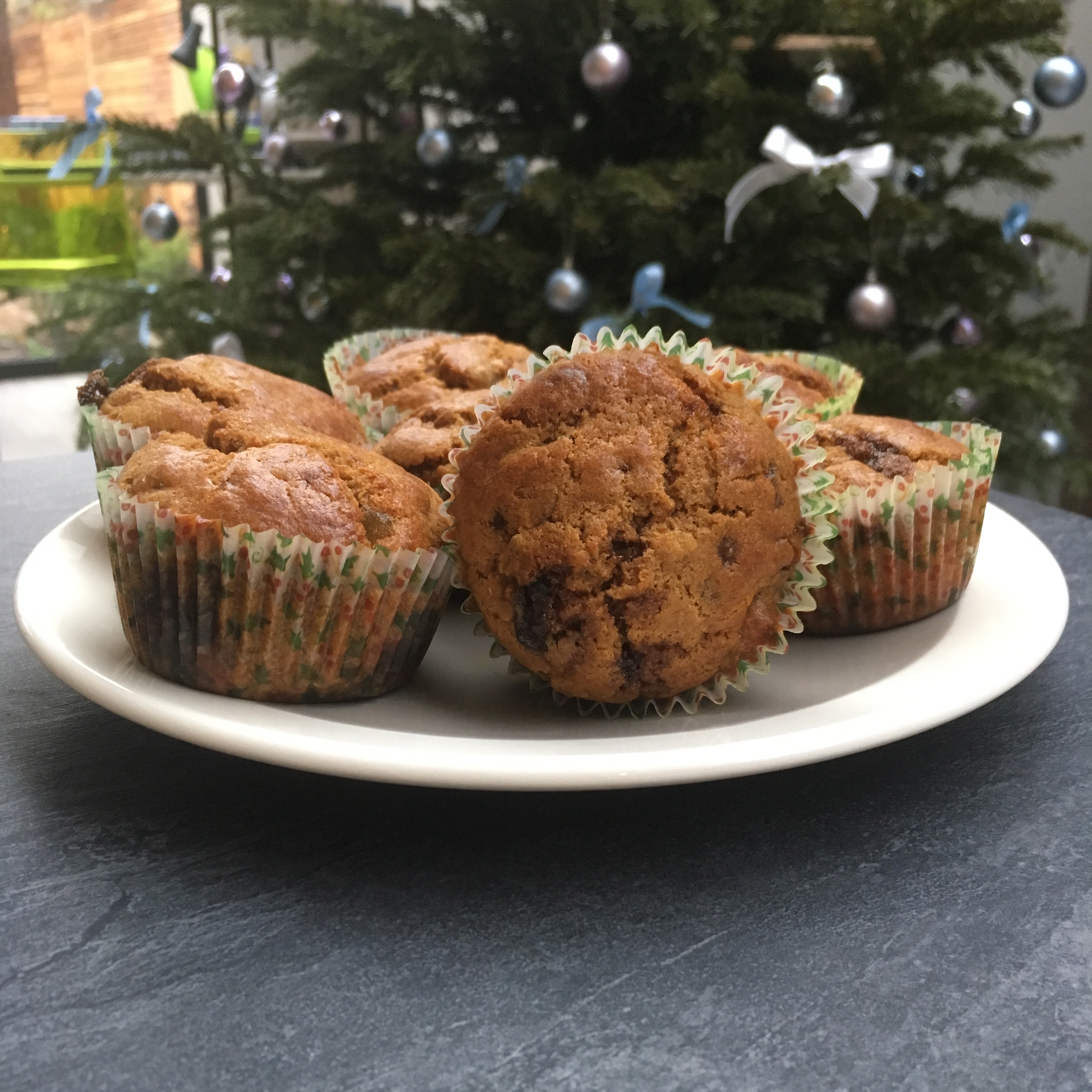
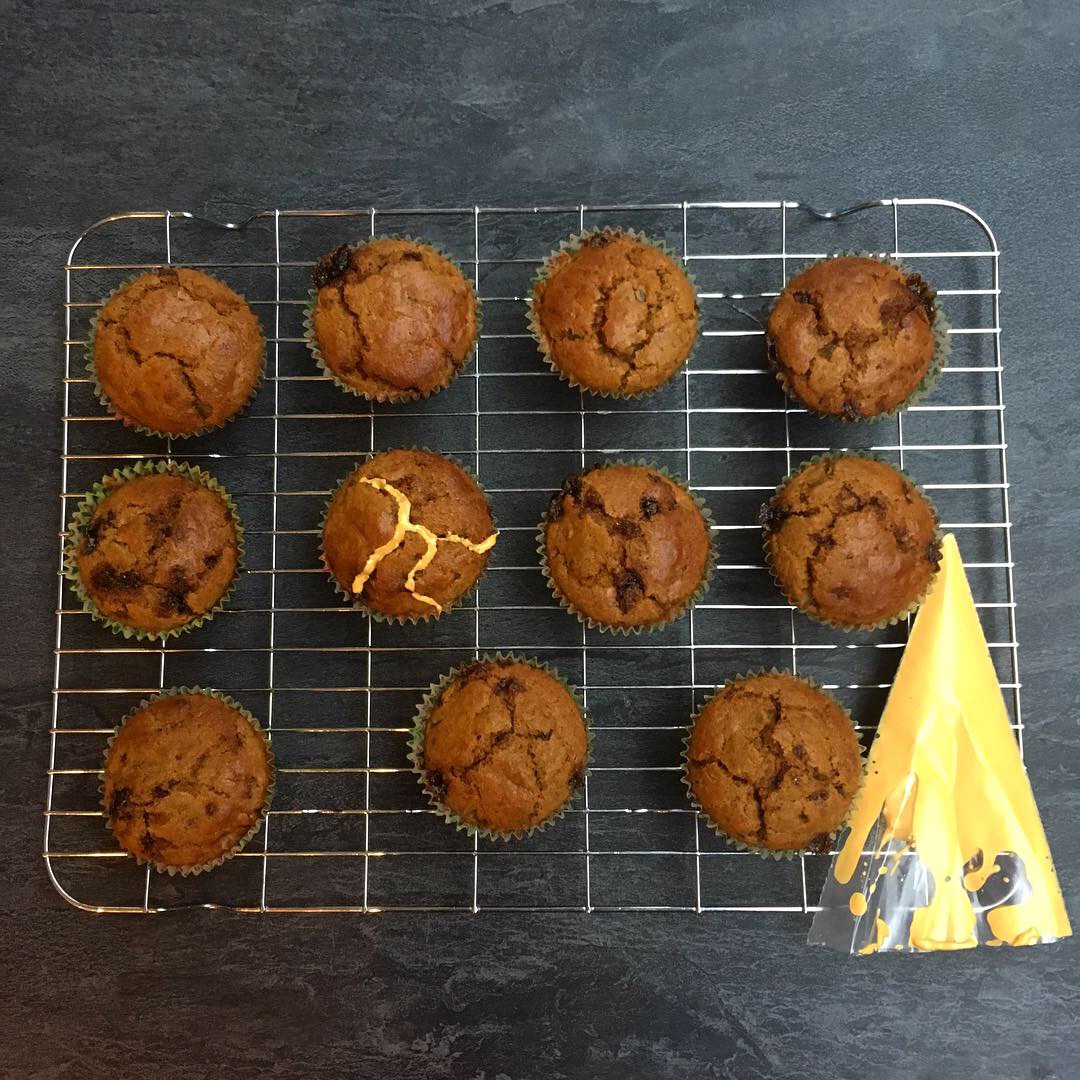
I’d been struggling with deciding what to make today and eventually decided to make some gingerbread buns. I pictured plump, even, golden brown buns which I would decorate with pretty white icing swirls. Instead the cakes turned out with craggy surfaces and hard lumps of muscovado sugar.

Gingerbread buns

As I sat in front of the oven watching the buns bake I questioned putting them on this blog. I thought that they were too imperfect. I didn’t go out into the rain to get more ingredients for a fresh batch (I couldn’t have done that anyway as I have to work) and I scolded myself for being lazy. I have this idea in my head that other baking bloggers work weeks perfecting their recipes instead of making it once and hoping for the best (I don’t know if this is true or not).

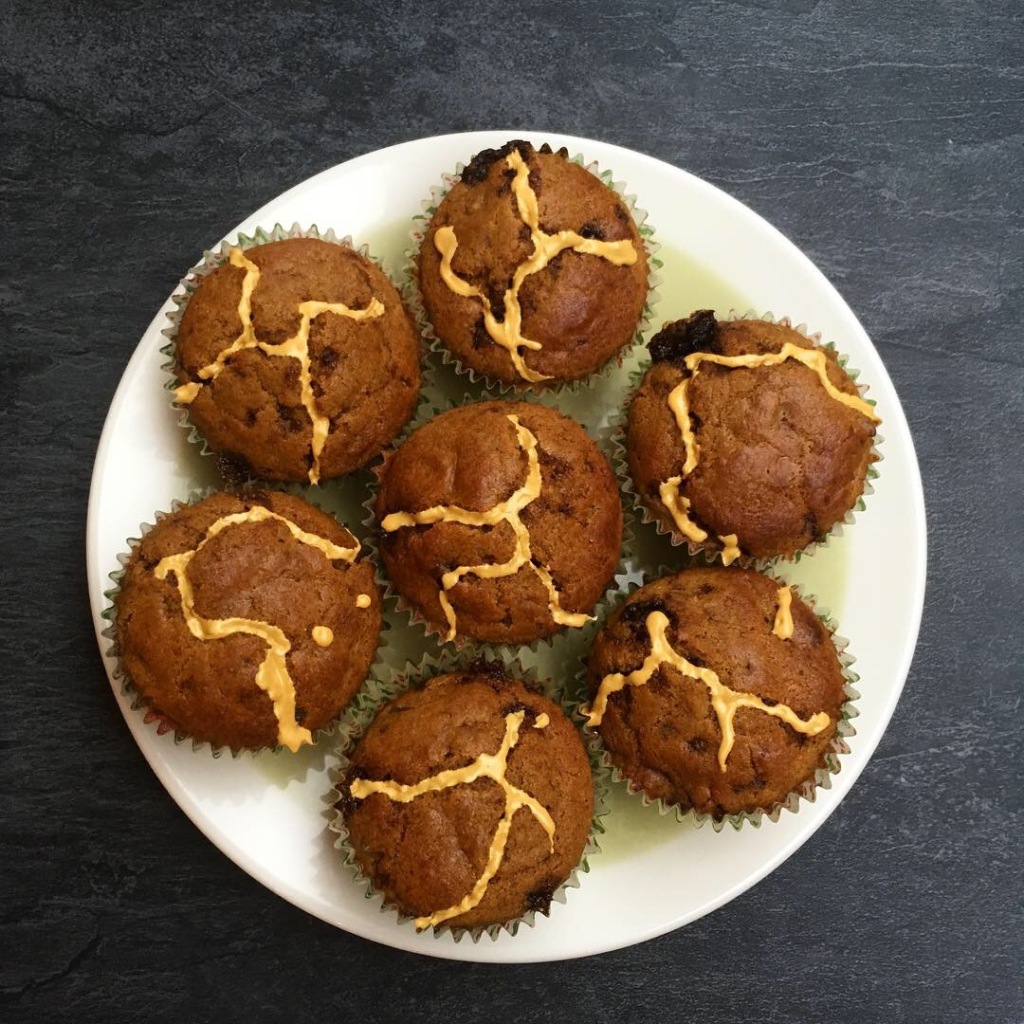
Then I realised- this could be a teaching opportunity. I could take these perfectly good cakes and turn them into something unique. I knew that I couldn’t cover the crags with icing, so I decided instead to enhance them. This choice was inspired by the Japanese art of kintsugi, in which broken crockery is repaired with molten gold. Instead of disposing of a broken bowl or plate, it is made even more beautiful than it was before. I love the way the gold icing makes delicate patterns on these buns as it flows through the cracks.

Gingerbread buns

The buns themselves are spicy, with little chewy nuggets of stem ginger and a deep background flavour of treacle. I made the icing with a little fresh lemon juice and some almond extract- water alone would be fine if you prefer a plain icing but I think the sharp lemon flavour with the rich almond is delicious.

Gingerbread buns

Gluten free Gingerbread Buns: (makes 12)

170g gluten free self-raising flour

170g butter

3 eggs

55g dark brown sugar (fresh is best to avoid lumps)

55g treacle

Stem ginger in syrup (I used 4 balls, chopped finely)

1 tsp each of cinnamon, ginger, nutmeg and allspice

For the icing:

100g icing sugar

2 tsp lemon juice

1 tsp almond extract

Edible gold dust

  1. Place paper cases into a 12-hole tin and preheat the oven to 180 degrees.
  2. Cream the butter with the sugar, treacle and spices. To make measuring the treacle easier, first measure your sugar in your measuring bowl and then add the treacle on top of the sugar. When you pour the two into your mixing bowl then the treacle will slide right off on the sugar instead of sticking to the bowl.
  3. Add the flour and eggs to the butter mixture and combine. Lastly, fold in the chopped stem ginger.
  4. Fill the paper cases evenly and bake the cakes for roughly 12 minutes. The tops of the cakes will be firm to touch and an inserted toothpick will emerge clean.
  5. Whilst the cakes cool. combine your icing ingredients with a very small amount of water until you have an icing which is suitably golden and not too runny. Add the liquids slowly until you are happy with the texture.
  6. I then cut the end off a piping bag to make it smaller and filled the piping bag with the icing. I cut the very end off the piping bag in order to make a very small hole to pipe through.
  7. Pipe the icing into the cracks on your cakes.