Stem ginger and buckwheat cookies (GF, DF)

When you’re eating gluten free, you can usually find some great substitutions in the shops. Pasta, cereal, even the bread that’s available in shops is improving. But there’s one thing I’ve been struggling to find, and to make. The object of my desire is a perfectly chewy cookie. The cookies that I’ve been making and buying so far have all been wrong; too crunchy, too cakey, just plain wrong. That is, until now.

One day I decided to experiment with some buckwheat flour that I’d bought for another project. Buckwheat is a gluten-free grain with a nutty flavour, commonly used to make crepes. It’s also the not-so-secret ingredient to making perfect, chewy, flavoursome GF cookies.

In this recipe I don’t use a typical GF flour blend, just the buckwheat flour (this is available from health food shops). I also use chunks of crystallised ginger to add a really autumnal flavour and texture. I’m sure if you prefer you could use the balls of stem ginger in syrup, but the crystallised ginger lasts a long time in the cupboard and is generally neater to handle.

This may sound a bit nonsensical, bit I’ve started piping my chilled cookie dough onto the prepared trays before baking. I find that GF mixtures tend to be sticky and difficult to shape, and one day I decided to pipe the mixture using a piping bag and large round nozzle. Large chunks of ginger or chocolate chips tend to get a bit stuck (use the end of a teaspoon to unblock the nozzle) but I do think it makes my cookies more even in shape and size. They’re still not perfect, but they’re homemade, so I’m not worried about perfection! Plus, the piping saves me fiddling around with spoons.

I finished these babies off with a swirl of dark chocolate. This was a surprisingly relaxing process: cut the very tip off a piping bag and don’t try to be too neat about it. Let your wrist swing in a natural circular motion, the chocolate will flow and all will be well.

Stem ginger and buckwheat cookies (makes 18, GF, DF)

100g crystallised stem ginger, chopped into bite-size pieces

150g light brown sugar

110g soft butter or dairy-free spread

1 egg

150g buckwheat flour

pinch salt

1/2 tsp baking powder

1 bar dark chocolate for decoration (use dairy free chocolate if you’re making these DF)

  1. Cream the soft butter/spread with the sugar in a large bowl until pale and fluffy.
  2. Add the egg and mix well.
  3. Add the flour, salt and baking powder and mix well to combine.
  4. Stir in the chopped stem ginger until distributed.
  5. Cover the bowl with cling film and chill in the fridge for at least half an hour.
  6. Preheat the oven to 180 degrees fan and prepare two large, flat baking trays with baking paper.
  7. Put the cookie dough into a piping bag fitted with a large, round nozzle and pipe the dough onto the trays, ensuring space between the cookies. This mixture will make about 18 cookies; each portion should be roughly the size of a golf ball.
  8. Bake the cookies for around 12 minutes or until golden brown.
  9. Once baked, carefully place the cookies on a cooling rack. Melt the whole bar of dark chocolate and allow to cool for two minutes before placing in a piping bag. cut the very end off the piping bag (you only want a very small opening for the chocolate to flow through).
  10. When the cookies are fully cooled you can decorate them. Starting in the middle of the cookie, smoothly move your wrist in a circular motion to achieve the chocolate spiral effect. Leave for the chocolate to set, and then keep in an airtight container.

Coffee + sesame cakes

Long time, no bake!

I know there’s been quite a long hiatus since my last post. At that time I felt quite creatively blocked- I was putting myself under so much pressure to come up with original recipes and I wasn’t happy with anything I created.

Yesterday I felt an urge to bake and got inspired by the sesame seeds I had in my cupboard. I’d seen a lot of people on Instagram use them in desserts, particularly paired with chocolate. Although it’s a relatively new trend to Western baking, many Asian countries have used sesame in desserts for decades.

Sesame has a sweet, nutty flavour that I wanted to experiment with. I personally can’t tolerate much cocoa due to a medical condition, but I love coffee flavoured desserts. Coffee and chocolate have similar qualities, with deep, roasted flavour notes. So why not coffee and sesame?

I can assure you, this combination really works. The sesame adds a sophisticated depth of flavour to the cake (and makes it seem much fancier than it is). I also added a spoonful of treacle to the batter- I was aiming for a slightly sticky cake, and the deep molasses works well with the other strong flavours. I used golden caster sugar for this recipe, but it would be interesting to see the results with a darker sugar.

The cake is soft and moist, with a little bit of texture from the seeds flecked through. My boyfriend described the flavours as a rollercoaster; first sesame, then coffee, then sesame again to finish. A little squiggle of chocolate on the top finishes these cakes off, and it works brilliantly with the rest of the flavours. This is one of my new favourite flavour combinations, and I can’t wait to experiment with it more!

Coffee + Sesame cakes

170g gluten-free self-raising flour

115g golden caster sugar

170g butter or dairy-free spread

1 tbs treacle

1 tbs coffee extract

30g sesame seeds

3 eggs

Chocolate and more sesame seeds for the top

  1. Preheat the oven to 180 degrees fan.
  2. Prepare whatever tin you’re using. This would make a lovely traybake, cupcakes, or possibly a loaf cake. I used my silicone tin with 12 small rectangular holes.
  3. Mix the flour, sugar, butter/spread, treacle, coffee extract, sesame seeds and eggs together thoroughly in a bowl.
  4. When the mixture is smooth and well-combined, place it into your tin and bake for about 15 minutes (depending upon the shape and size of your tin, this is how long mine took). I believe that you can smell when a cake’s ready, but you can always use a toothpick if you don’t trust your nose (an inserted toothpick should come out clean).
  5. When the cake/s are ready, bring them out and allow them to cool in the tray. When cool, drizzle them with a little melted milk or dark chocolate (make sure the chocolate isn’t too hot or runny, allowing it to cool a little will make it easier to pipe) and sprinkle a few more seeds on the top to finish. Enjoy!

Easter Rocky Road

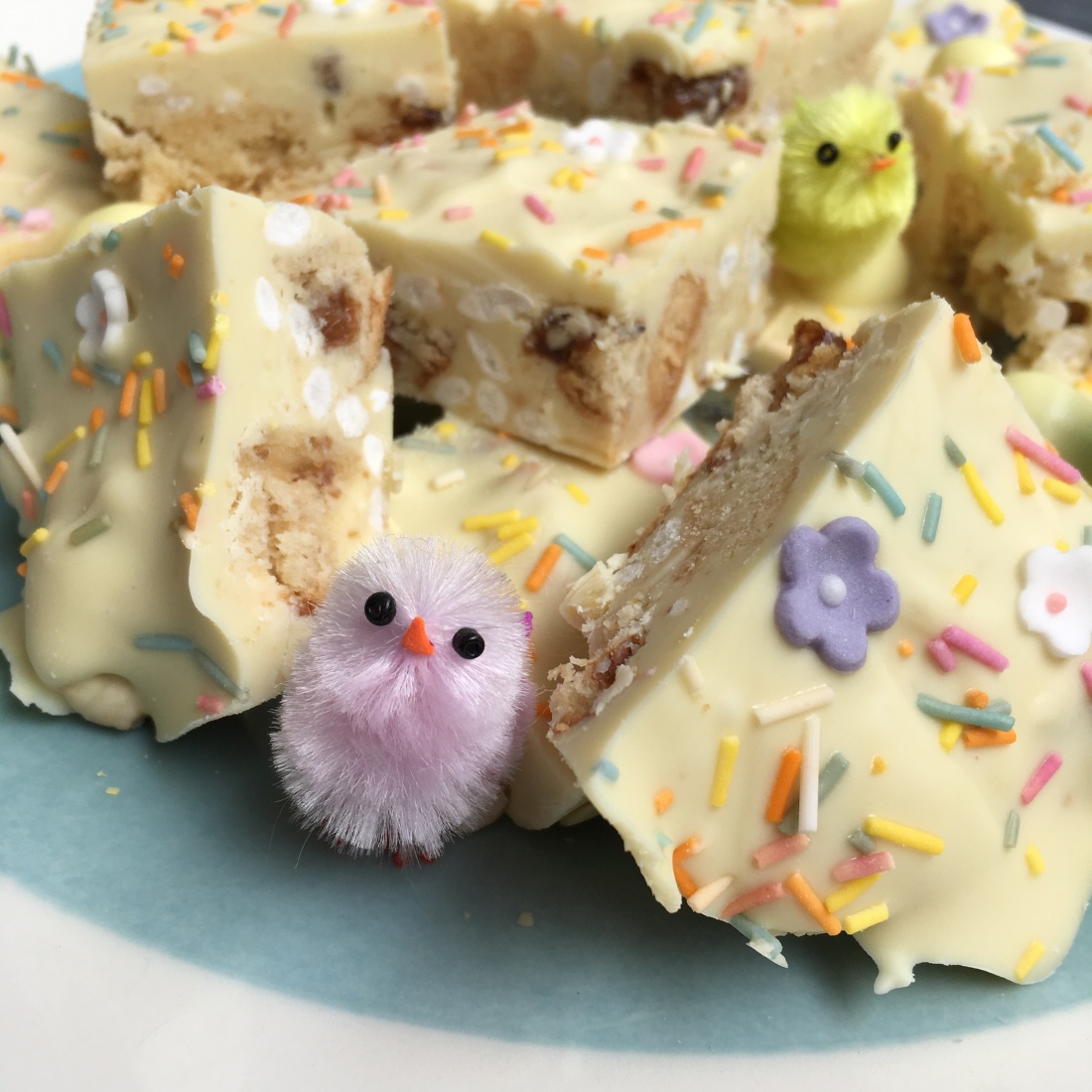
Easter rocky road

When I was a child, we had an Easter tradition. Every year we would crush Shredded Wheat, mix it with melted chocolate and form it into nests. They were finished off with mini chocolate eggs and taken into primary school, where they were always received well.

Now, sadly, I can’t eat cocoa or wheat (shredded or otherwise). I can, however, eat white chocolate, and I think the colour looks so bright and springlike.

Easter rocky road

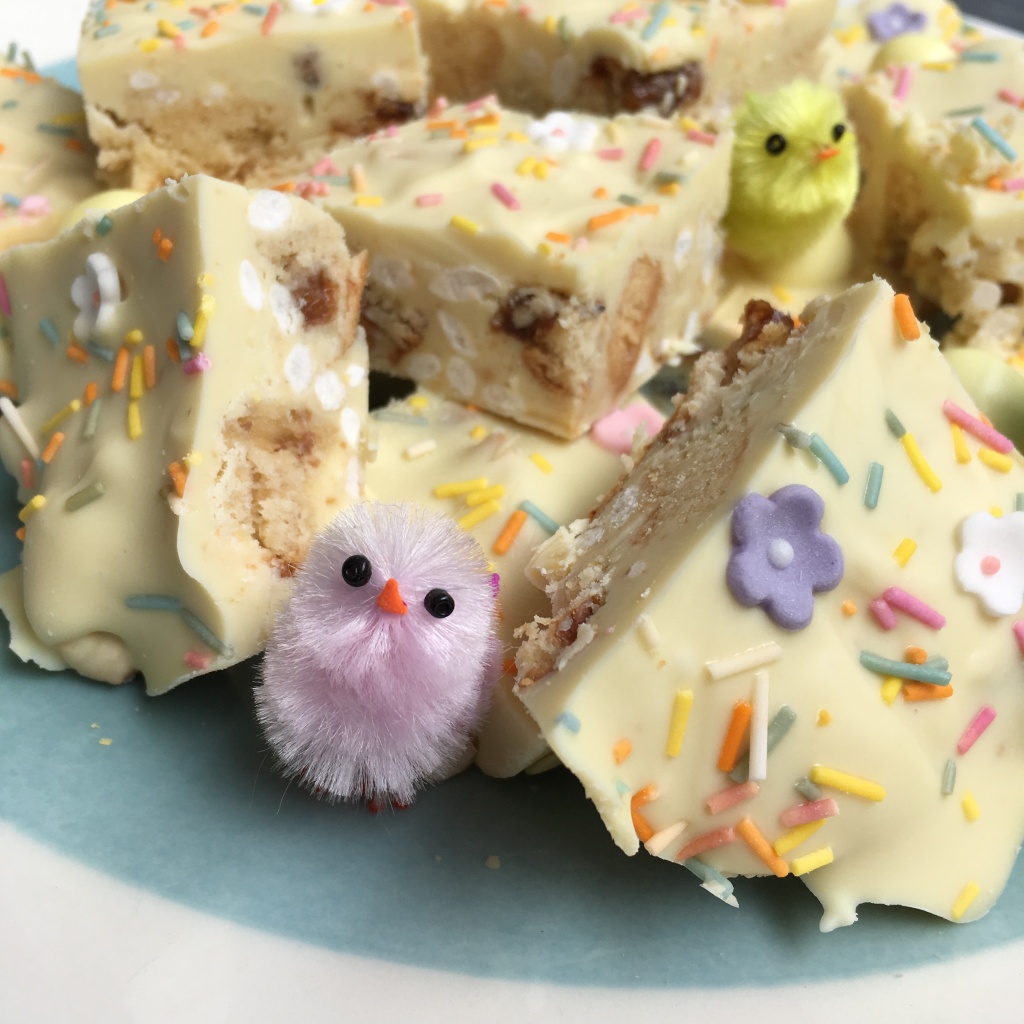
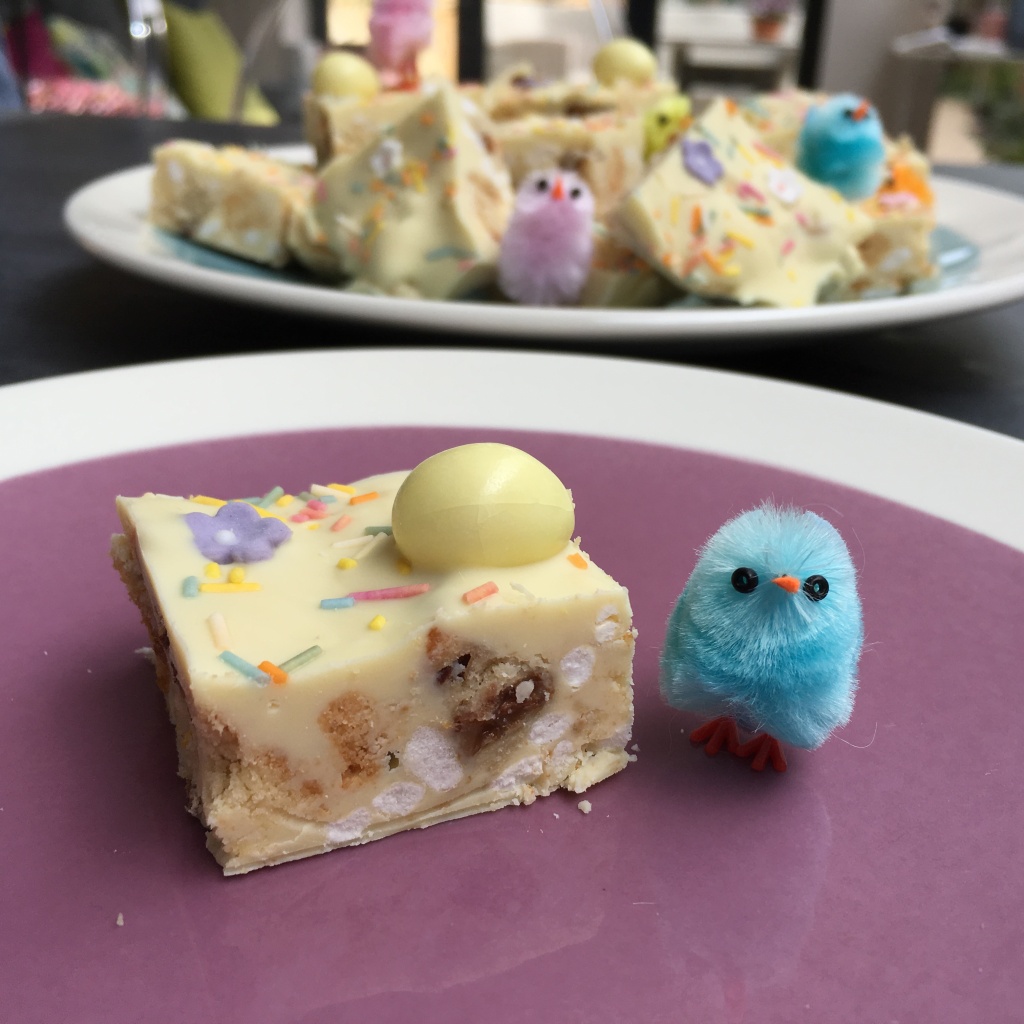
The textures of this rocky road are provided by crispy puffed rice, chunks of crumbly shortbread, and cubes of hot cross bun. If you’re disappointed by the lack of marshmallows in this recipe, then by all means put some into yours.

This recipe is definitely for those with a sweet tooth, so I’d recommend cutting it into dainty cubes. This would be a nice project to do with children; they’ll be entranced by the melted chocolate, and they’ll love the mixing and decorating.

Easter rocky road white chocolate

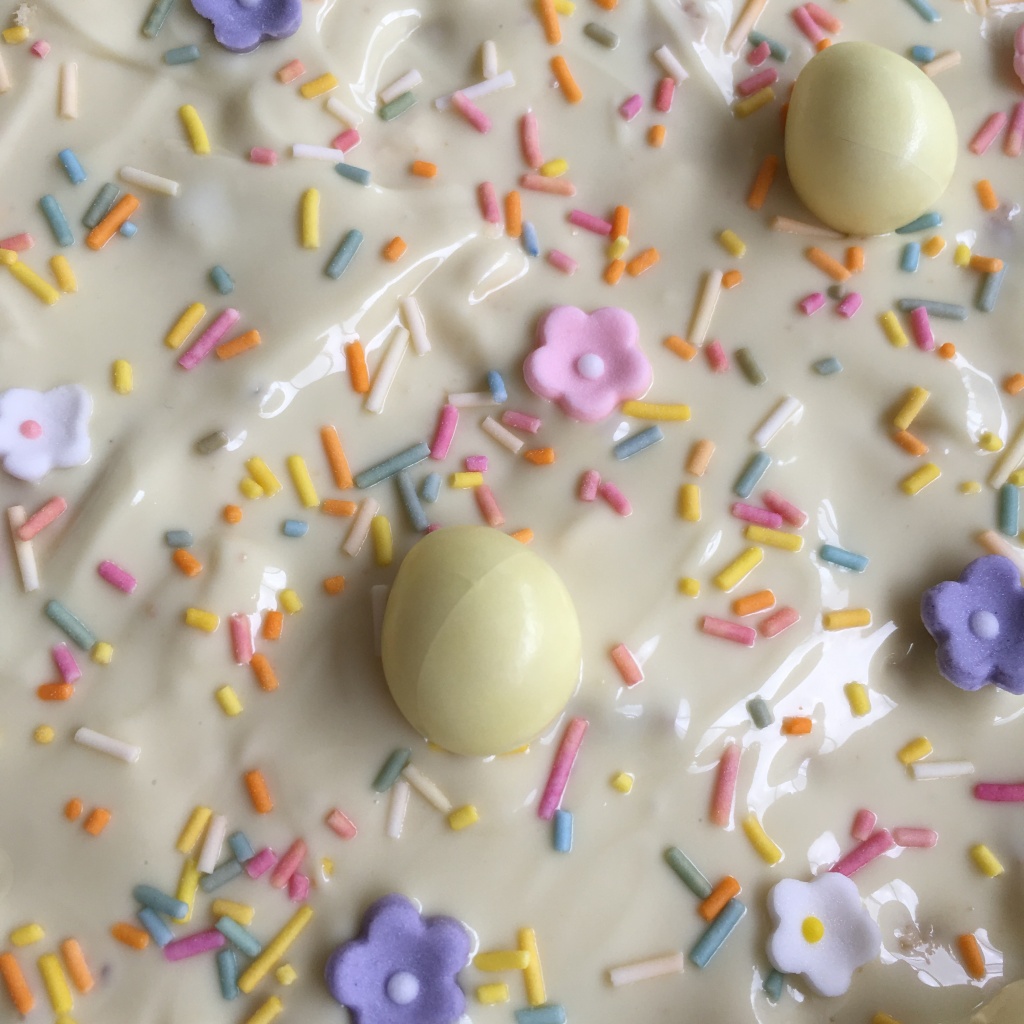
To decorate, I used pastel sugar sprinkles and white chocolate eggs. Feel free to deviate! The shops are full with so many gorgeous Easter treats to use.

This quick, no-bake treat is also suitable for freezing! Why not make some this weekend and freeze them, ready for the big day (If you can wait that long!)

Easter rocky road

Easter Rocky Road

1 gluten-free hot cross bun

100g gluten-free shortbread

15g gluten-free puffed rice

405g white chocolate

Decorations

  1. Cut the hot cross bun into small cubes and set aside.
  2. Cut the shortbread into big chunks.
  3. Measure out the rice and set aside.
  4. Break all the chocolate. Place two thirds of it into a bowl set over a pot of water. Gnetly heat the pot to melt the chocolate, making sure to stir and watch it carefully.
  5. Once the chocolate’s melted, add in the shortbread, rice and bun pieces. Stir to combine then press into a 20cm square pan (lined with baking paper).
  6. Melt the final third of the chocolate. This will be poured over the top of the rocky road to make the surface smoother.
  7. Once the chocolate has been poured and spread on top, the surface of the rocky road should look even and ready for decorating. Place your decorations on before the chocolate sets. When you’re happy, place in the fridge and leave to chill for about an hour.
  8. Once it’s set, cut into small chunks and enjoy!

Banana + pecan cake with treacle frosting

Banana pecan cake with treacle frosting

I really hope you readers like this recipe. I hope you like all my recipes, of course, or most of them. But I really hope that some of you like this one, because this has been by far my most contentious bake.

My darling mum, the woman who taught me to bake, was driven to distraction this morning. The sight of the baking equipment next to three oven-blackened bananas…the scene was set, and she didn’t like it one bit.

“But I don’t like bananas!” she mock-sobbed.

Unfortunately for her, I love bananas, and I’d been planning to bake with them for a while. I can’t always stick to ingredients that she likes, as I reminded her.

“I always make stuff you like!” Mum pouted.

This I couldn’t deny. Every birthday without fail my sister and I would choose some enormous multicoloured challenge from a kid’s birthday cake book (which we still have) and she would do it, without complaint.

Banana pecan cake with treacle frosting

This particular cake isn’t an enormous challenge, and it isn’t multicoloured either: it’s a festival of brown. Brown doesn’t necessarily mean boring, in fact right now it’s THE colour to wear. Match your cake to your outfit, and thank me later.

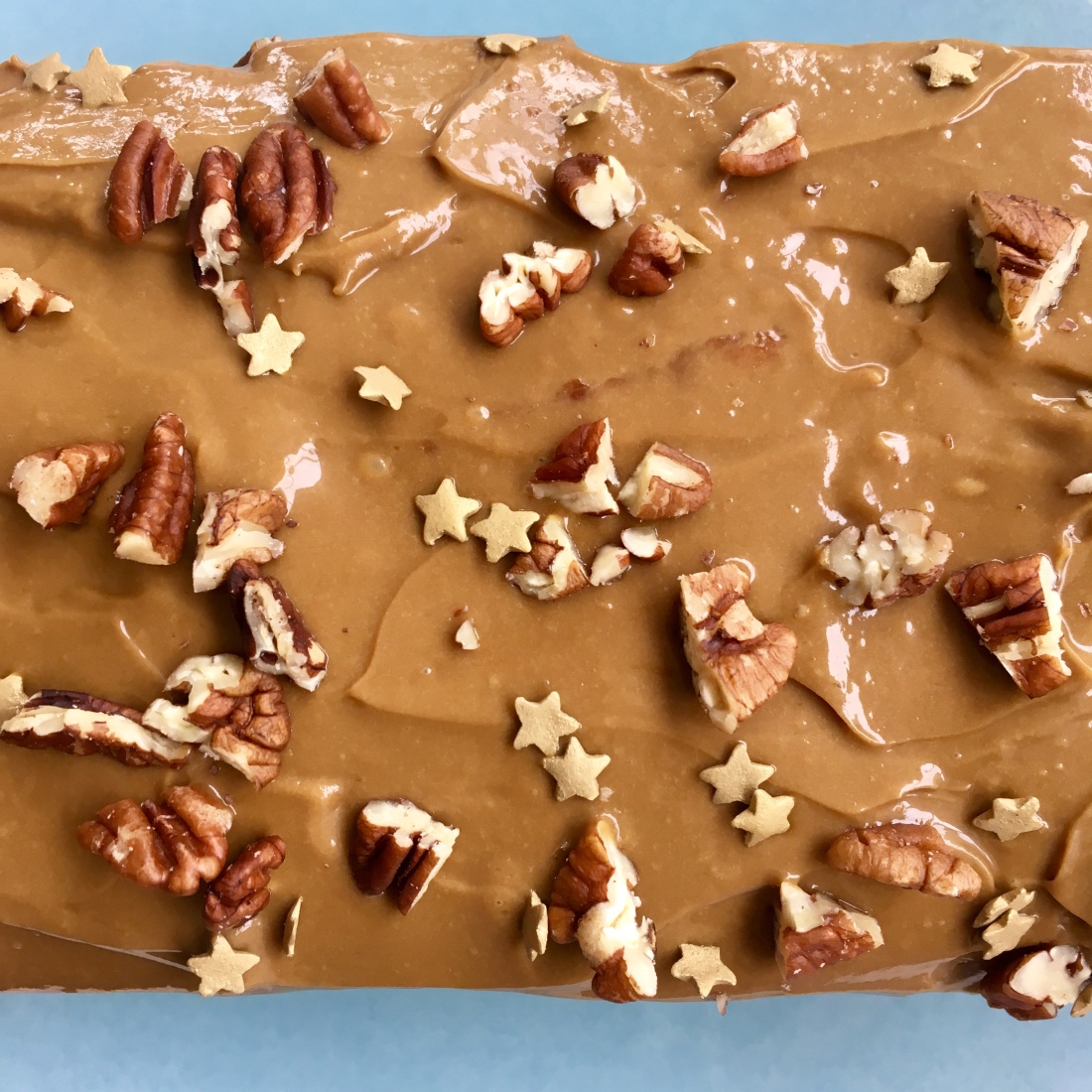
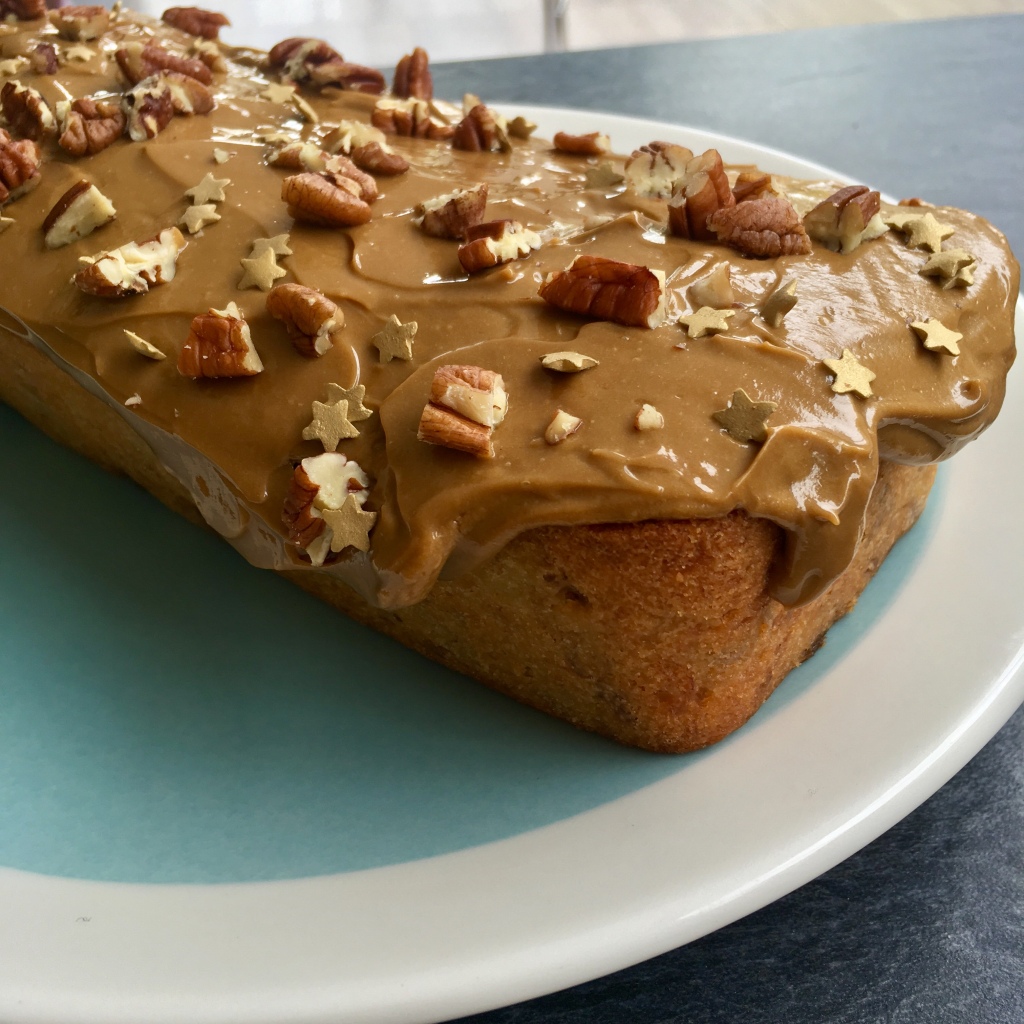
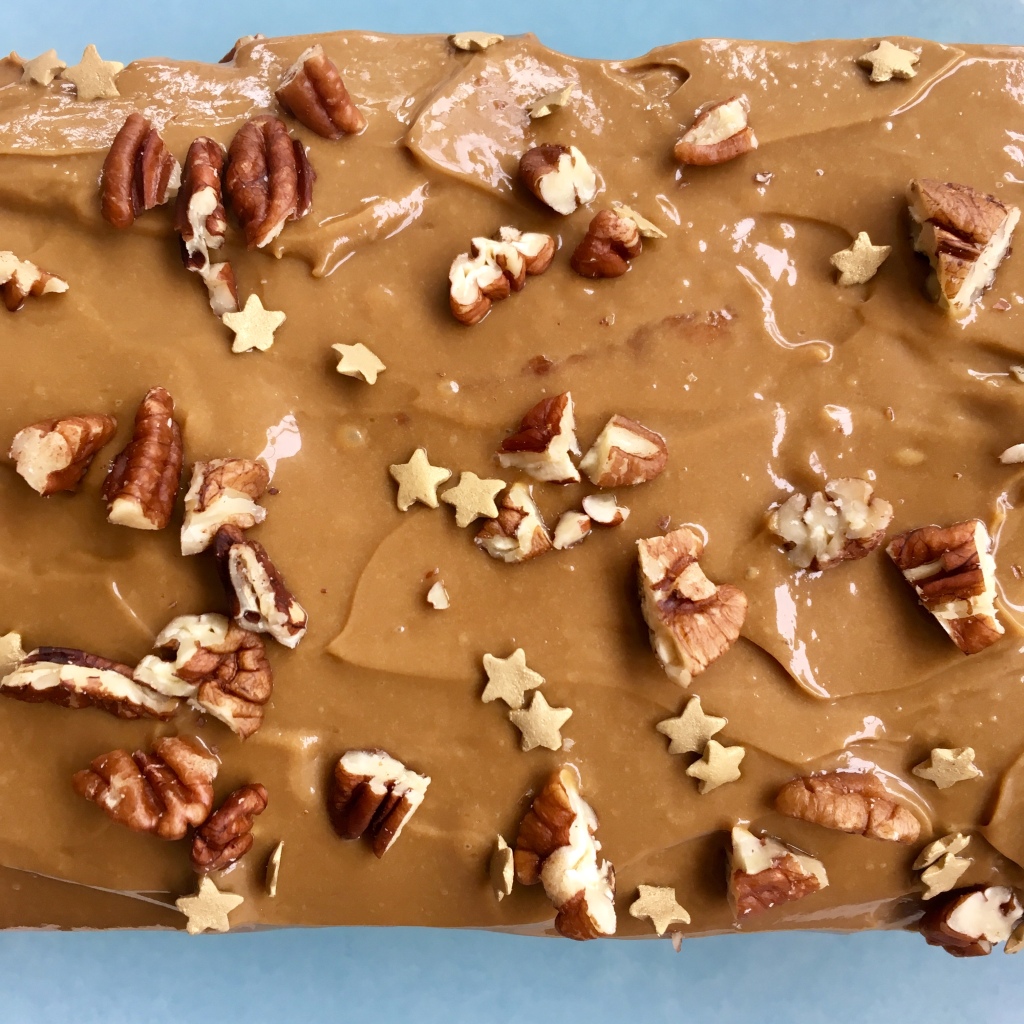
What this cake lacks in colour it makes up for in flavour and texture. Banana gives a cake a tender springy texture, and I think it’s ideal for gluten-free baking. The crunchy pecans throughout add interest, but for me the star is the treacle ‘frosting’. Treacle is added to cream cheese and very lightly sweetened. It makes for a creamy result, and the lactic sourness of the cream cheese really lifts the rich treacle.

Mum won’t go near this cake, but I’m happy with the result. And I hope, reader, that you are too.

Banana pecan cake with treacle frosting

Banana + pecan cake with treacle frosting

For the cake:

170g gluten-free self-raising flour

3 bananas

90g light brown sugar

110g butter

55g coconut oil

2 eggs

1 tsp vanilla

Dash of milk

100g pecans

For the frosting:

180g cream cheese

1 tbsp treacle

75g icing sugar

  1. If your bananas aren’t ripe, preheat your oven to 160 degrees and line a tray with baking paper. Place the whole bananas on the tray and cook for about fifteen minutes or until the bananas are completely black. Remove them from the oven and leave to cool for a few minutes before handling.
  2. Chop the pecans and reserve a few for decoration.
  3. Place all the cake ingredients in a bowl and mix until combined.
  4. Pour into a loaf tin (I used a silicone one, if yours isn’t silicone you may want to grease and/or line it) and bake at 160 for about 40 minutes.
  5. Loaf cakes take a long time to cook and a long time to cool down, so be patient. While you leave your cake to cool make the frosting by combining the ingredients until smooth. The consistency of the frosting is spreadable, not pipeable. Place it into the fridge to chill while your cake cools completely.
  6. When the cake is cool, spread the chilled frosting on the top and decorate. You can use more chopped pecans, chocolate, or any sort of sprinkle. Enjoy!

‘Bar snack’ no-bake crispy treats

Sweet salty crispy no-bake treats

Like a lot of people, I love food that combines sweet and salty flavours. Sweet and salty popcorn, salted caramel, anything of that nature. But I’ve got to say, it’s hard to get right.

I’m sure we’ve all bought some salted caramel treat, for instance (chocolate, ice cream etc.) and thought…I can’t really taste the salt. That’s why I think it has to be added to desserts carefully, so that it can spark off the other flavours as intended. In my Salty Dog biscuits, for instance, the little sprinkling of salt on the top is a great foil to the citrus flavours of the biscuit.

Sweet salty crispy no-bake treats

For my latest bake (or non-bake), I decided to combine some salty snacks with a classic marshmallow crispy rice treat. I was worried that the texture of the treat would become homogenously crispy but no- the puffed rice has a little chew to it, the pretzels are crisp and the peanuts are chunky. The saltiness is located within the pretzels and peanuts, so that you get bursts of saltiness instead of an overall salty flavour.

Pretzel peanut rice crispy treat

I cut the treats into small chunks as I expected them to be sickly sweet, but they turned out milder than I expected. I used gluten-free puffed rice without any added sugar, so perhaps that’s why. If you like your treats sweeter then use sweetened puffed rice, or perhaps drizzle these with some melted chocolate.

Texturally, these treats are unique and moreish. I think they’d be great as an alternative snack for a movie night or a football game. As you can see, this recipe filled up two small pans; halve the recipe if needed.

Sweet salty pretzel peanut crispy treat

‘Bar snack’ crispy treats

200g marshmallows

1 and 1/2 tbsps butter

150g gluten-free puffed rice

100g salted peanuts

100g gluten-free pretzels

  1. Prepare two small pans with baking paper.
  2. Chop the pretzels (not too much).
  3. Melt the marshmallows with the butter over a medium heat until liquified.
  4. Add the marshmallow mixture to the other ingredients and stir well.
  5. Press into the pans and put into the fridge for a few hours. Once chilled, slice them into however many pieces you desire. A bit of oil on the knife might help, I used coconut oil.
  6. Keep them in the fridge or freeze them!

Mini jam + coconut sponges

Mini jam and coconut cakes

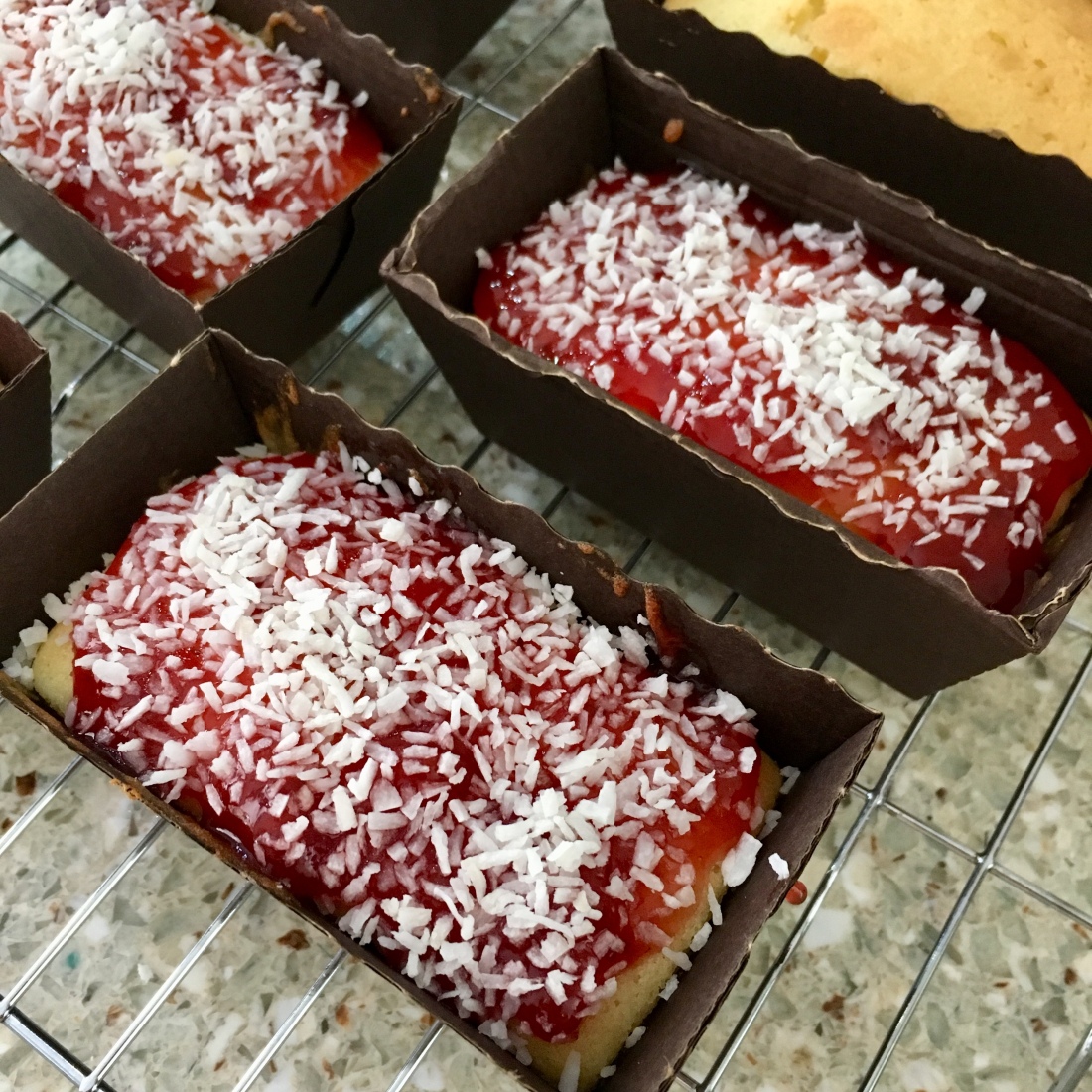
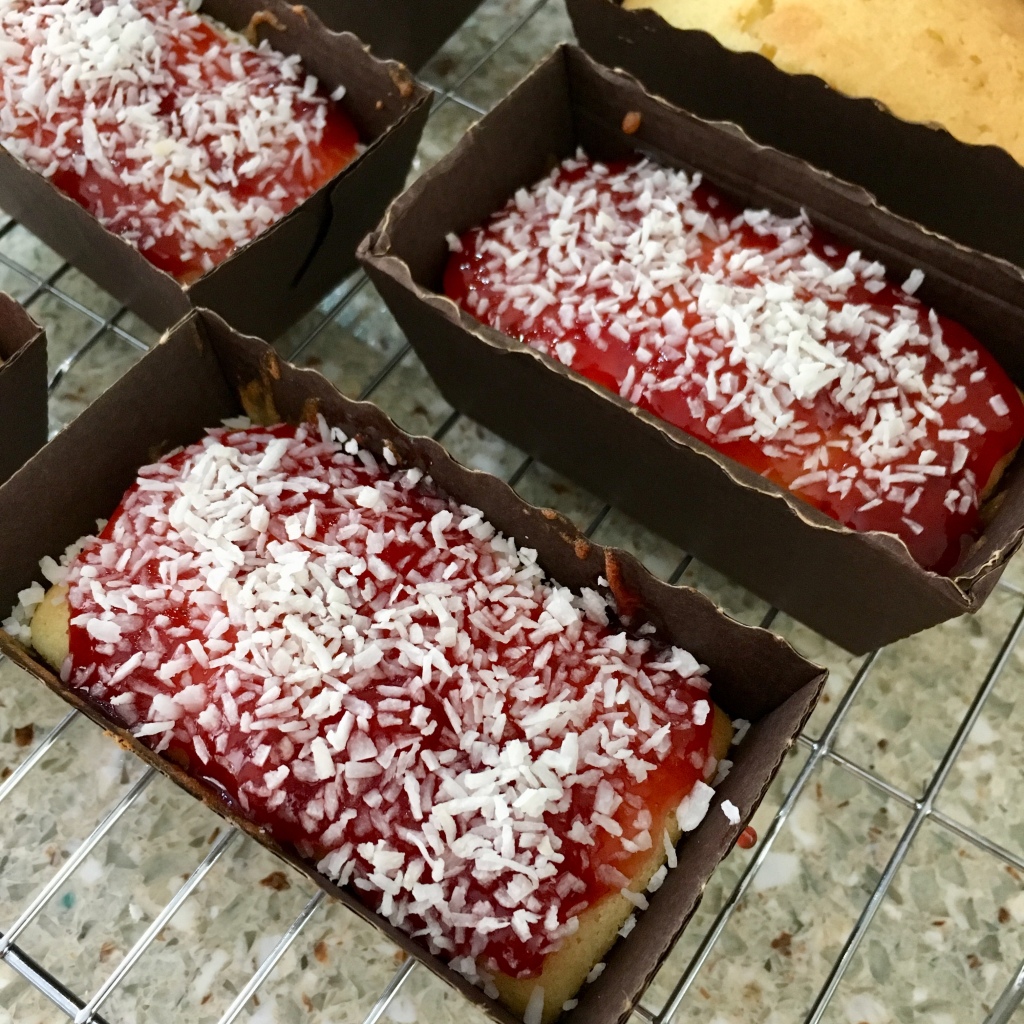
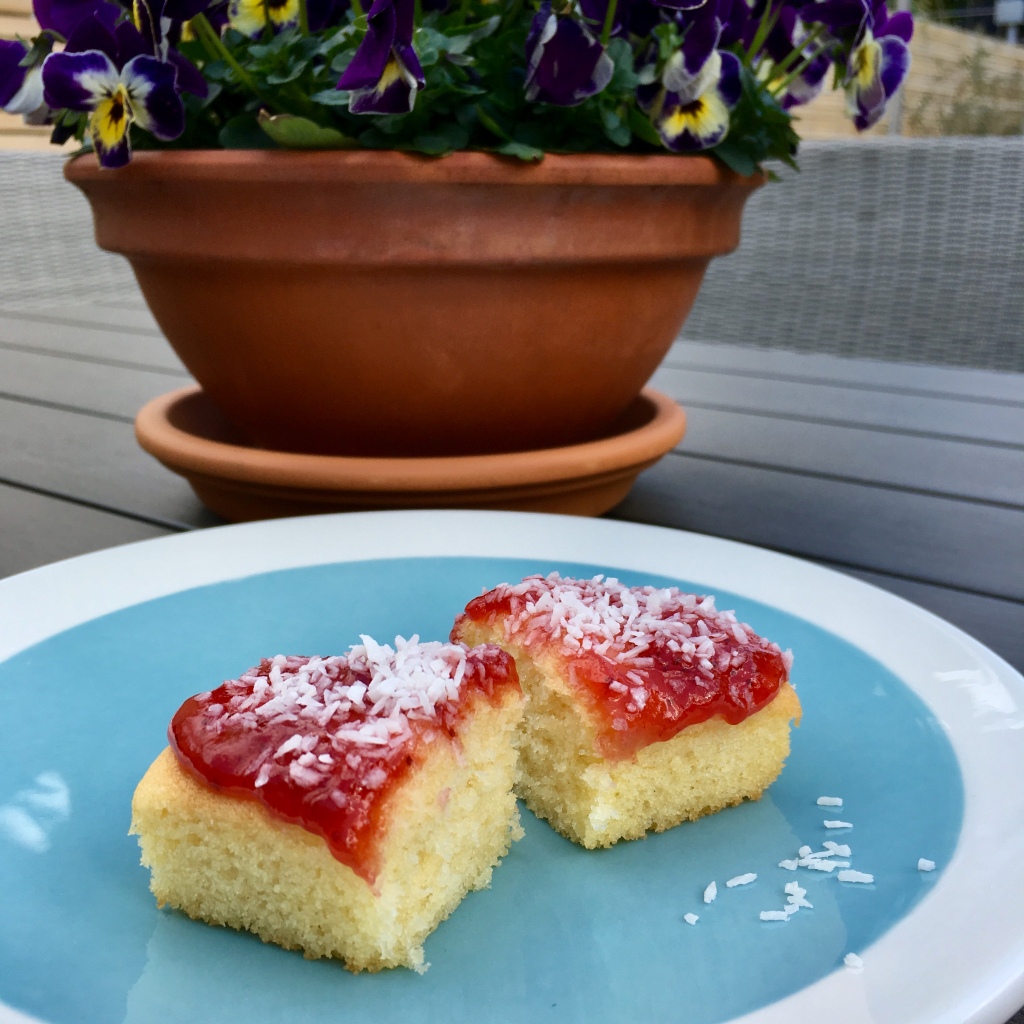
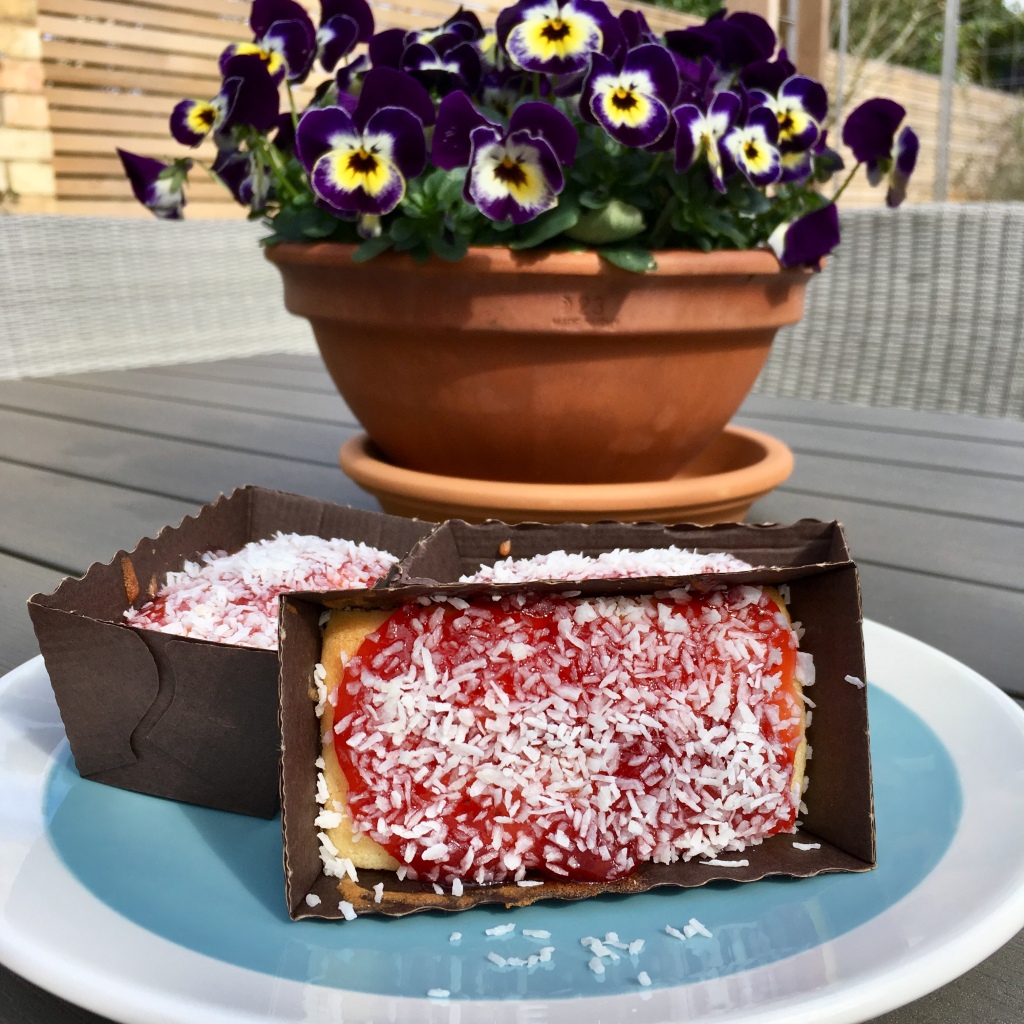
I like to think of this bake as an exercise in simplicity. In the interests of simplicity, I’ll keep this post short and sweet (just like these cakes!). I saw a picture of a full-sized jam and coconut sponge on instagram recently and it took me back to my school days. Tender golden sponge, a thin layer of jam, and dessicated coconut on top. That’s it. It’s simple but comforting. I’ve made my version here, gluten free and in miniature. Enjoy!

Mini jam and coconut cake

Mini jam + coconut sponges

170g gluten-free self-raising flour

170g butter

110g caster sugar

3 eggs

2 tsp vanilla extract

Your favourite jam (red berry jams are traditional, but any seedless jam will work)

Dessicated coconut

  1. Preheat the oven to 180 degrees and prepare your baking tray. I used cardboard loaf cases which I bought from my local supermarket, but you could also make these as cupcakes.
  2. Cream the butter and sugar together until pale and fluffy.
  3. Add in the eggs, vanilla extract and flour and mix to combine.
  4. Distribute the mix evenly between the cases and bake for 12-15 minutes until the cakes are golden and springy to the touch.
  5. Place the cakes on a cooling rack and warm up some jam in a saucepan. This shouldn’t take long, you just want to loosen it up. Add a thin layer of jam to each cake and sprinkle over the coconut. Et voila!
Mini jam and coconut cakes

Nutty chocolate chunk cookies

Nutty chocolate chunk cookies

I’d like to start this post by apologising to my followers- two cookie recipes in a row might seem excessive. Rest assured, these recipes are pretty different. The papaya and coconut biscuits which I posted yesterday are firm and slightly crumbly, with tropical flavours. These are closer to an American cookie, softer and cakier, with crunchy nuts and caramelised chocolate chunks.

I used what’s known as ‘blonde’ chocolate in this recipe. It’s a white chocolate which has a lovely caramel appearance and taste. I actually used a bar which already had almonds and hazelnuts in it, which made the prep for these cookies very easy. I found this in my local supermarket, but you could always replace the chocolate and nuts with your own preferences.

Nutty chocolate chunk cookies

I tempered the sweetness of the chocolate and added a depth of flavour with a little coffee extract. This paired really well with the chocolate and the nuts. You may be able to find this in the supermarket, online, or in baking shops. A little goes a long way, and I didn’t want coffee to be the dominant flavour, so I used it as I would use a vanilla essence.

In this recipe I tried a few tricks from the blog Meaningful Eats. I’m not very practised in biscuits so I thought a bit or prior research wouldn’t hurt!

These biscuits turned out a bit pale (happens a lot with gluten free baking) but they’re soft and tasty with a great biscuit to chunk ratio!

Nutty chocolate chunk cookies

Nutty chocolate chunk cookies (makes 12)

210g gluten-free plain flour

30g ground almonds

110g brown sugar

55g white sugar

110g butter

1 egg

1 tbsp milk

2 tsp vanilla extract

2 tsp coffee extract

1 tsp baking powder

135g nuts and chocolate, roughly chopped

  1. Mix the flour, ground almonds and baking powder together.
  2. Melt the butter.
  3. Mix the sugar, egg, milk and extracts into the melted butter. Add this mixture to the dry mixture and stir to combine.
  4. Cover the bowl and leave to sit for half an hour. This will allow the dough to firm up a bit.
  5. In the meantime, preheat the oven to 160 degrees and line two oven trays with baking paper.
  6. I used an ice cream scoop to measure out the dough into equal portions. The dough isn’t terribly firm and may be a bit sticky but do your best to wrangle it into a circle. My cookies didn’t spread too much so you can put them close together.
  7. Bake for 12-15 minutes until they’re lightly golden and not sticking to the paper.

Papaya + coconut cookies

Papaya and coconut cookies

One thing which I haven’t mentioned so far on my blog is that I suffer from IBS (Irritable Bowel Syndrome) and a reflux condition. Because of these I’ve ‘restricted’ my diet over the past few years, excluding and reducing certain foods to treat my symptoms.

When I was first diagnosed with IBS in December 2014 I did what people usually do and went to google. Online I saw countless stories from sufferers who were thoroughly miserable. People with no social life, people who felt completely helpless (it is a sad truth that there are links between digestive issues and poor mental health). These stories terrified me, and I was determined to find control over my illness in whatever way I could.

My life completely transformed once I got onto a low-FODMAP diet and cut out gluten. Later on I also had to cut out cocoa (sob) to treat my reflux disorder. Although the diet is a nuisance sometimes, I can honestly say that I feel normal again. I’m not debilitated by my disorders anymore, and any flare-ups are infrequent and much easier to manage.

That’s the back story in brief. I’ll leave some links below the recipe for those of you who’d like to know more about the topic.

When I started my diet I had an app that indicated which foods were ‘safe’ to eat on the diet, and which should be avoided. Once I was done mourning for the foods that I couldn’t eat (technically an ongoing process) I decided to focus on the ‘safe’ foods which I hadn’t tried before, which included lots of lovely tropical fruit like papaya.

Papaya and coconut cookies

If anything, this diet has pushed me to become a better and more creative cook. If you’re also on a restricted diet, or you have some digestive trouble, I hope to be a positive corner of the internet for you. You’ll find replacements, and you might even find some new favourite foods. You don’t have to lose the joy in food.

Now I’ll tell you about these cookies. Lightly crispy and golden on the outside, these are robust biscuits with gorgeous chewy pieces of dried papaya and a mellow coconut flavour which isn’t overpowering. If you’re not keen on papaya you could replace it with chunks of dried pineapple for a pina colada style cookie!

Papaya and coconut cookies

Papaya + coconut cookies

200g gluten-free plain flour

100g light brown sugar

50g dessicated coconut

90g small dried papaya chunks (I got mine at Holland & Barrett)

50ml coconut oil

1 egg

1 tbsp milk

1/2 tsp baking powder

  1. Line two baking trays and preheat your oven to 160 degrees.
  2. Mix the dry ingredients together in a bowl.
  3. Melt the coconut oil and add to the dry ingredients alongside the egg and milk.
  4. Mix until combined. The mixture should look damp but a little crumbly.
  5. Take an amount a bit larger than a golf ball and shape it into a patty in your palms. The dough should just hold together when pressed into shape. I made 9 cookies with this amount of dough.
  6. Bake for around 17 minutes until the cookies are golden and not sticking to the baking paper.

More information about IBS:

The IBS Network: a British IBS charity with information and support

The NHS webpage for IBS

Information on the gut-brain connection (link between digestive and mental health)

Information about the low-FODMAP diet

‘Death By Gin’ Mother’s day cake

'Death by gin' mother's day cake

I don’t know about you, but I’m starting to get a bit fed up with the cutesy mother’s day stuff. It all seems a bit too pink and schmaltzy. A bit impersonal. All too often, our gratitude towards our mothers is boiled down to a bunch of flowers, or a cake that looks like a bunch of flowers.

Don’t get me wrong, I love flowers (and so does my mum), and flowery cakes are lovely, but I wanted to personalise my cake to her. The spirit of the moment – gin- has always been my mum’s favourite (and, thankfully, not her ruin). This fact is so well known that she received three or four separate bottles for Christmas, much to her embarrassment (and delight).

'Death by gin' mother's day cake

Gin is a flavoursome and versatile spirit which is being increasingly used in baking. When coming up with my idea for this cake I researched popular gin botanicals. The possibilities are almost endless, but I decided to pick a few to create a sophisticated and harmonious flavour palate.

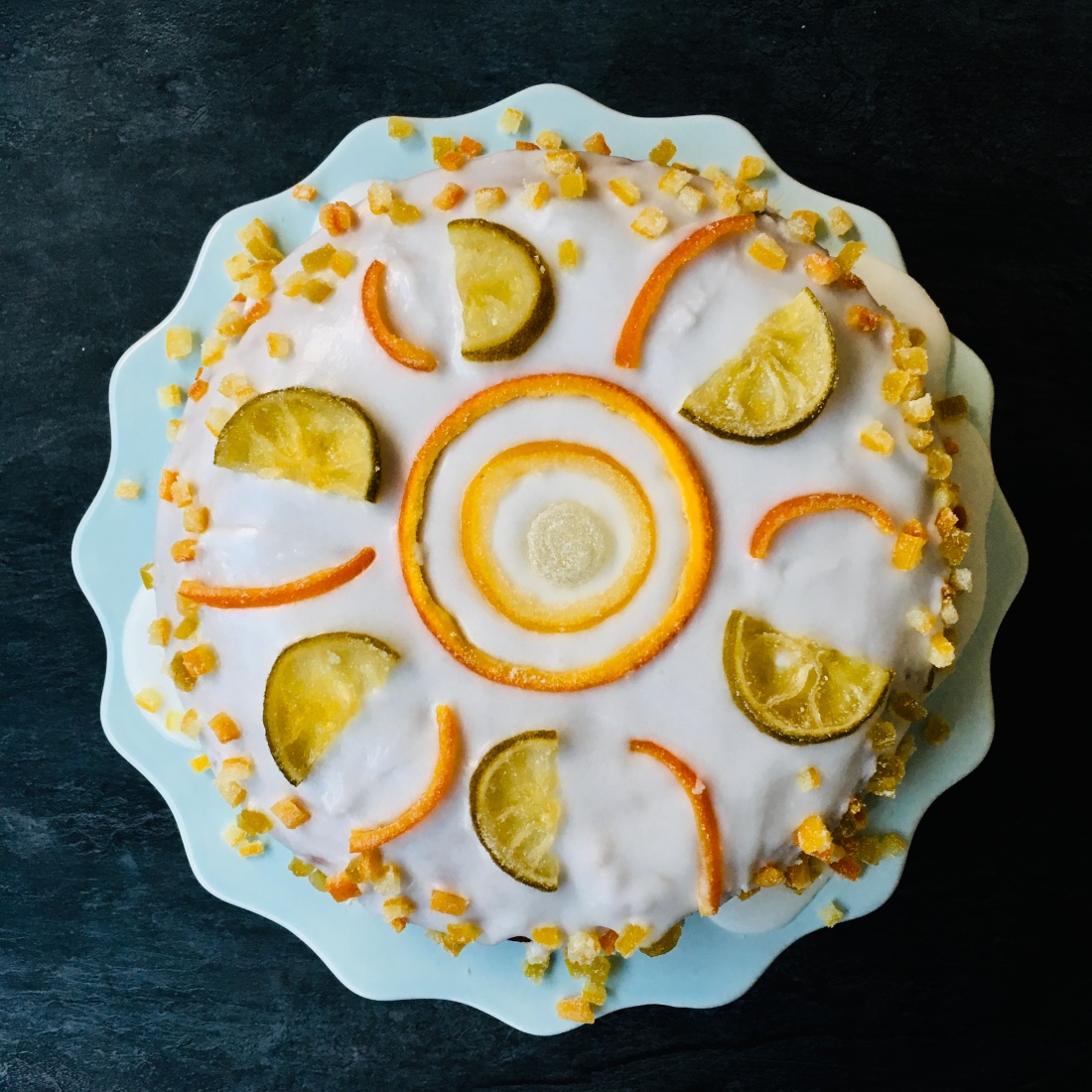
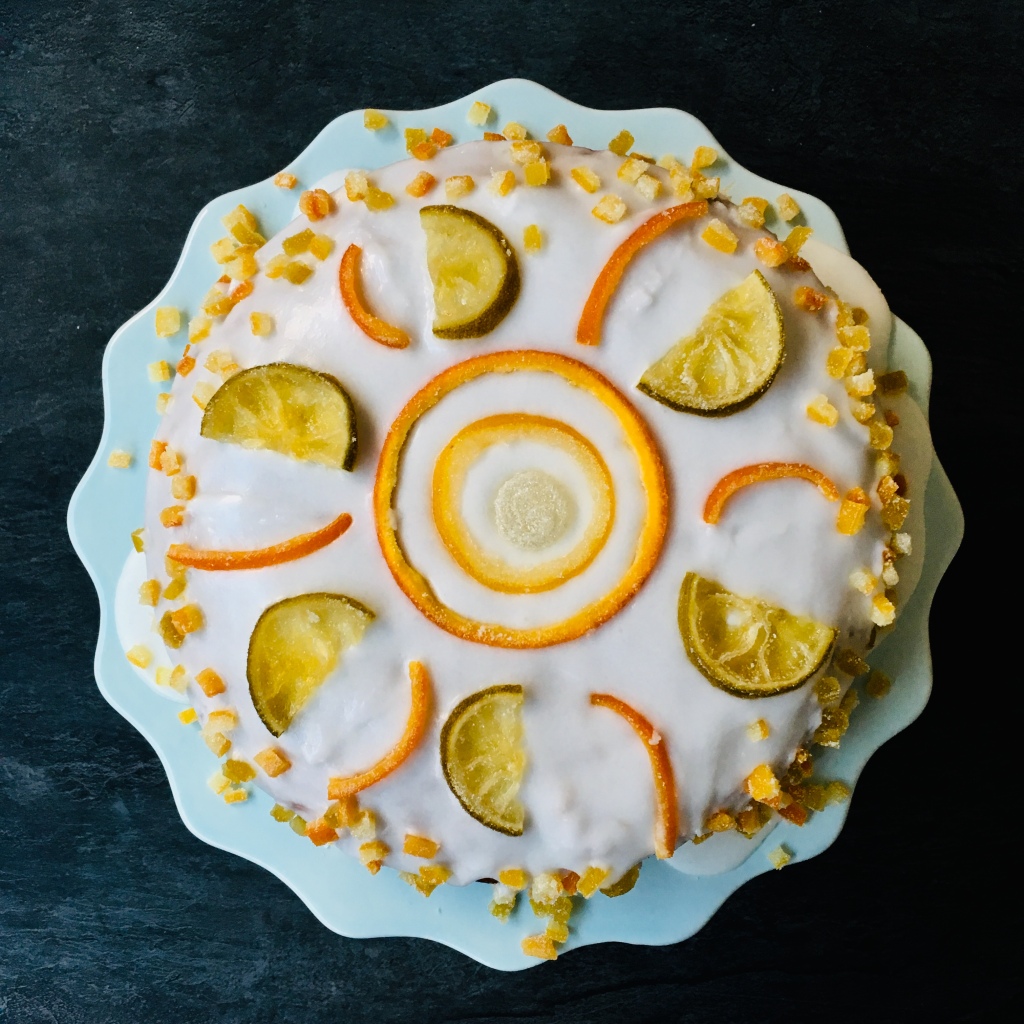
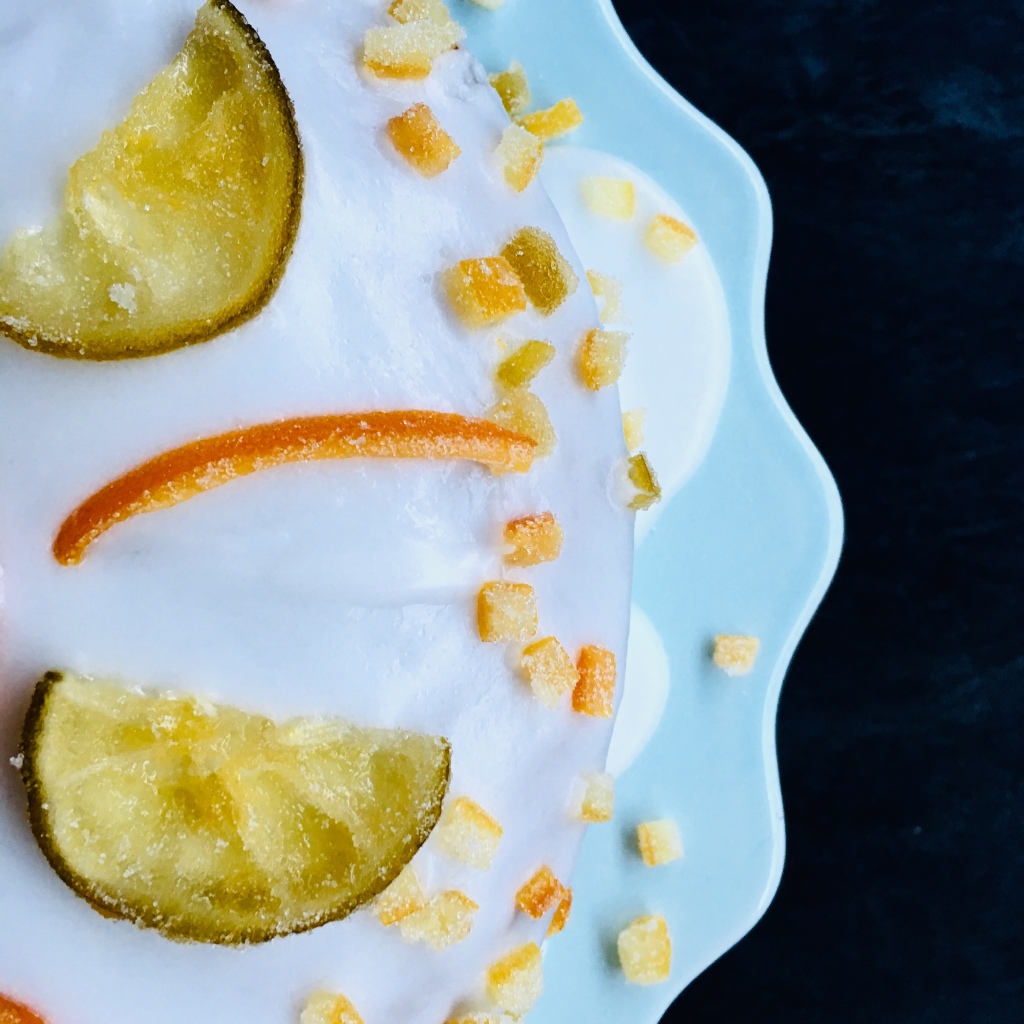
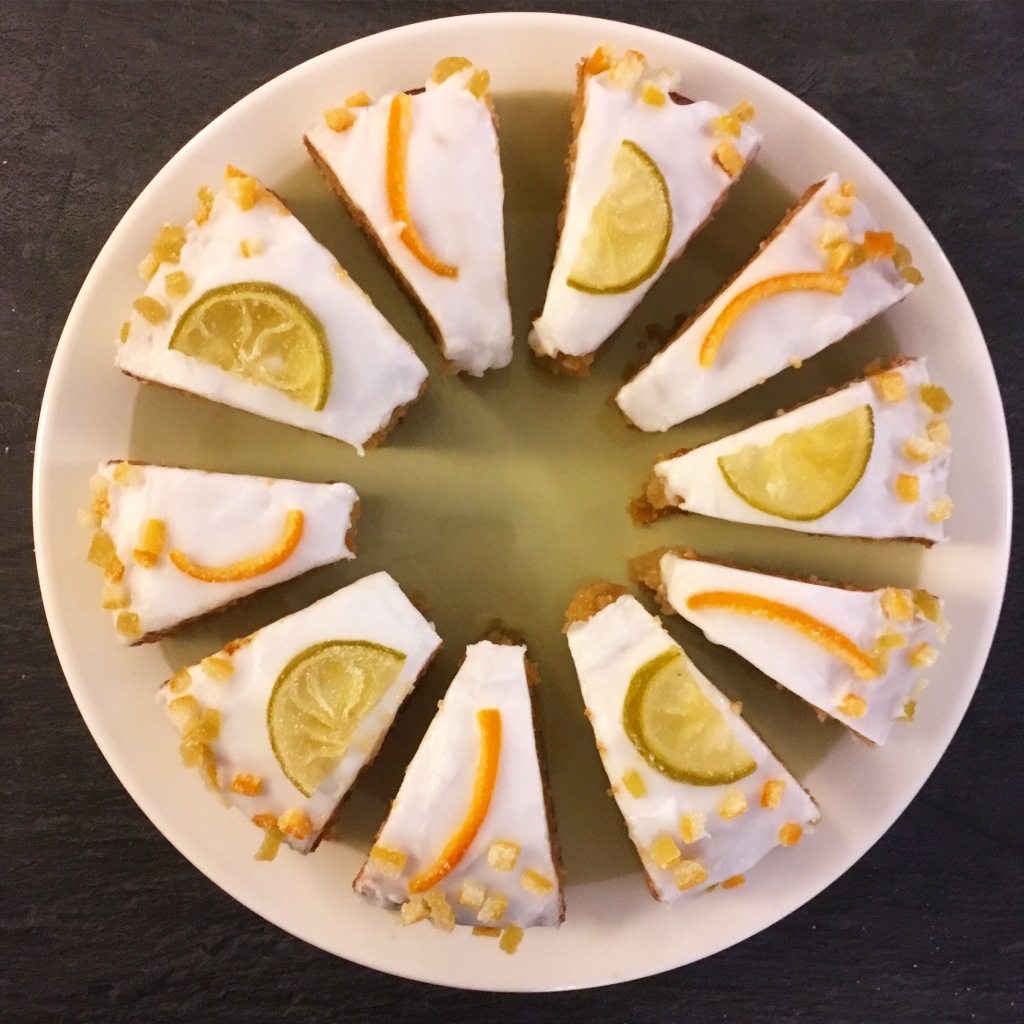
The cake itself is almond-based, which gives it a soft texture and subtle sweet flavour. To this I added a little gin and some cinnamon for some warmth. The cake was then soaked in a citrus-cardamom syrup (with some gin and tonic added) and topped with a gin icing and homemade candied citrus peels. I also got some gin gummy sweets from Lakeland, I popped one right in the centre of the cake.

'Death by gin' mother's day cake

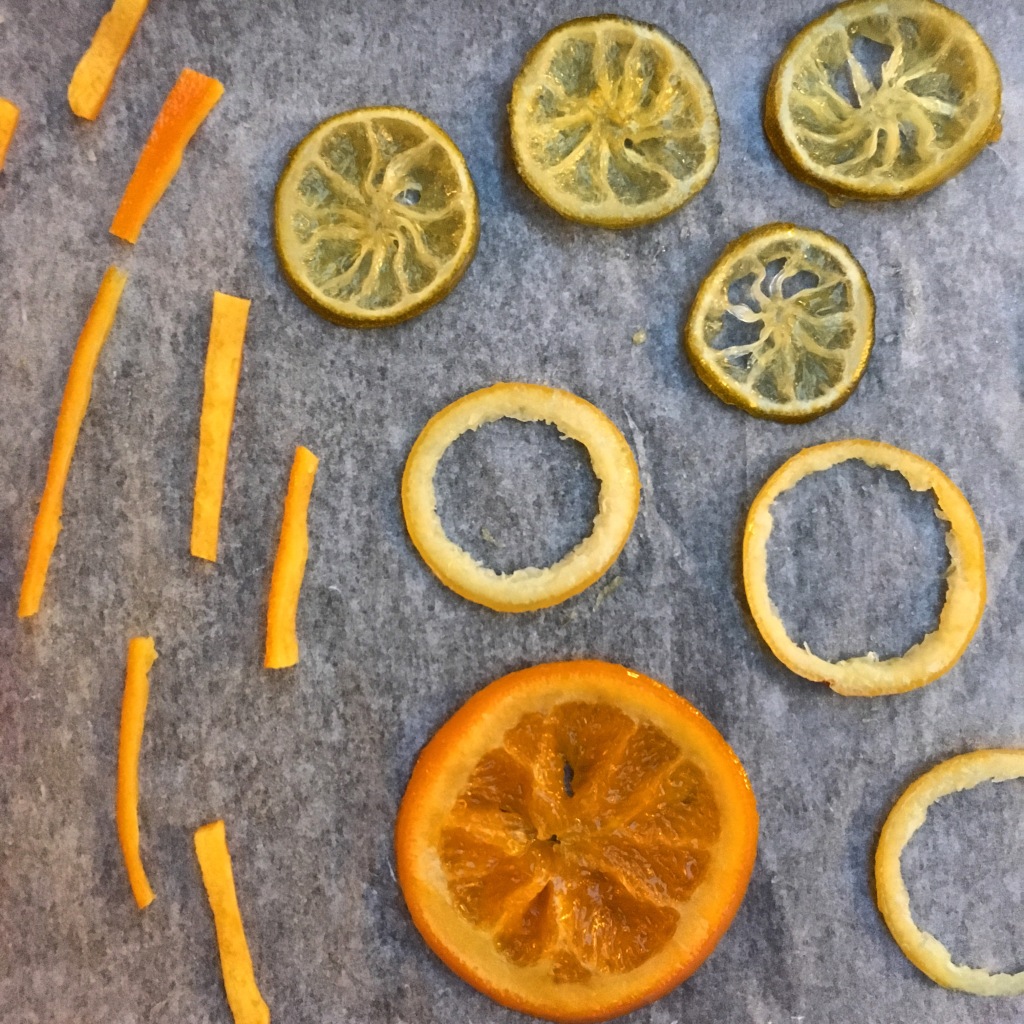
I’d never candied anything before, but the process was fairly easy! The resulting peel tastes fresher and looks more vibrant than any that you buy at the shop, and can be used in so many ways. I candied limes, lemons, grapefruit and oranges. Limes worked well in slices, round or cut into halves. I hoped to create slices of the other fruits too, but that didn’t quite work out. I found that the orange slices didn’t dry out well, the flesh of the lemon slices disintegrated in the candying process, and the pith of the grapefruit was too large. I kept the peel of these three, however, and used it. You can keep it in a ring, cut it into strips, or cut it small to create a confetti effect.

Candied citrus

I did two rounds of candying. After the first round I had a citrus-infused syrup left over, a light amber colour and slightly jellied from the pectin of the fruits. I decided to use this syrup again for my second round of candying, after which it was even more intense. I saved the syrup again and, after a few additions, it was the perfect thing to drizzle over the cake. In retrospect, I was so enthusiastic about this syrup that the cake ended up a bit soggy.

The final result is a cake which feels grown up. There’s enough sugar to balance out the bitterness from the gin and the citrus, there’s sharpness and a bit of spice from the cinnamon and cardamom. This is definitely a must-bake for any gin lovers out there.

'Death by gin' mother's day cake

‘Death By Gin’ Mother’s day cake

For the candied peel:

250g caster sugar

1 lime

1 grapefruit (I used one with a pale green skin)

1 lemon

1 orange

For the cake:

140g ground almonds

85g gluten-free self-raising flour

170g caster sugar

225g butter

4 eggs

1 tsp baking powder

1 tsp cinnamon

1 tbsp gin

For the syrup:

125ml tonic water

60ml gin

6 cardamom pods

For the icing:

200g icing sugar

Gin

  1. First, make the candied fruit. This should be done a day in advance to allow the peel to dry out fully, but you can also dry the fruit in an oven on a low temperature. Wash and slice the fruit into thin slices.
  2. Combine the caster sugar with 250ml of water and heat until the sugar has dissolved and the mixture is bubbling. Drop in half the fruit and lower the heat to a simmer.
  3. Gently stir and turn the fruit every so often, cooking for 20-30 minutes or until the fruit is tender and translucent. If any slices fall apart you can still use the peel.
  4. Bring the fruit out of the pot and place it on a cooling rack to drain. Reserve the syrup. You can either dry it out like this overnight or you can place them on a baking sheet and cook them at a low temperature (I used 75 degrees) for about half an hour. I used a combination of both methods.
  5. Candy the other half of the fruit in the same manner and reserve the syrup. Once the peel is dry dust it lightly with more caster sugar.
  6. To make the cake, preheat your oven to 180 degrees. I used a medium-sized round spring-form tin for this cake. I greased the sides and placed baking paper at the bottom.
  7. Combine all the ingredients together in a bowl until the mixture is pale and fluffy. Add to the tin and bake for about forty minutes, until an inserted toothpick comes out clean. My cake browned a lot so I put some tin foil over it halfway through cooking.
  8. Whilst the cake is cooking prepare the syrup. Add the candying syrup to a pot along with the gin, tonic, and the seeds from the cardamom pods. Heat and stir to combine. Allow the syrup to bubble and reduce for about ten minutes, then turn off the heat and strain the syrup into a jug.
  9. Remove the cake from the oven and leave to cool slightly. Use a toothpick to poke holes in the cake and pour in some of the syrup. You won’t need all of the syrup, but the rest can be reserved for any number of uses.
  10. Leave the cake to cool completely. Once it has, make a thick icing from the icing sugar and some gin. Pour it over the cake, and arrange your candied fruit as desired.

Orange + amaretto crepe cake

Orange and amaretto crepe cake

Shrove Tuesday, Mardi Gras, Pancake Day…whatever you call it, whatever your beliefs, I’m sure we can all agree it’s a day to look forward to. As the day approaches (March 5th this year!) I thought I’d try something new for me- a crepe cake!

Here in the UK we tend to make French-style thin, crispy crepes on pancake day. As a child I doused all mine in lemon juice and sugar. The whole process was pretty magical- as soon as my plate was empty another hot, golden pancake would be slid onto it. One year I insisted that we experiment with a savoury bolognese pancake which went quite well. Sometimes we would have smaller, softer, sweeter pancakes (we call these Scotch pancakes).

Orange and amaretto crepe cake

The big stacks of fluffy pancakes which the Americans ate (with a slab of butter- why??) weren’t really our style. Hopefully one day I’ll travel to the states and get myself a big stack of pancakes (gluten free, of course). Until then, I’ve decided to try my hand at at a crepe cake, or as the French call it, ‘mille crepe’, meaning ‘a thousand crepes’. I’ve seen crepe cakes all over the internet and wanted to give it a go for myself!

This cake features twenty gluten free crepes stacked together with a thin layer of sweetened cheese (ricotta and cream cheese) filling between each crepe, a fresh orange compote, orange slices and toasted almonds. The result is more sophisticated than I’d anticipated, with subtle sweet flavours. I also love the way the layers look once you cut into it.

Orange and amaretto crepe cake

This dessert is also a surprising amount of work! But so worth it if you want to impress brunch guests, or perhaps for the birthday of a pancake lover. It keeps cold but it’s a bother to move in and out of a tin, so I recommend making it for an occasion. It also slices a bit neater when chilled but you could serve it at room temperature. My advice would also be to serve the compote on the side and just put fresh orange segments and almonds on the top. If you can find amaretti biscuits, crumble them up for a nice crunchy addition.

Orange and amaretto crepe cake

Orange + amaretto crepe cake

For the crepes:

500g plain flour

4 eggs

1 litre milk

For the filling:

250g ricotta

100g cream cheese

125g icing sugar

Splash of almond liquer (use almond extract for a non-alcoholic alternative)

For the compote:

5 oranges (I used a mixture of blood oranges and regular oranges)

1 tbsp light brown sugar

1 tbsp almond liquer (or tsps almond extract)

For the topping:

One orange

Toasted flaked almonds

Amaretti biscuits

  1. Combine the crepe ingredients to make a smooth batter. It would be best to make the crepe batter in two batches.
  2. Heat a small non-stick frying pan (mine was 20cm across). Once the pan is hot, pour in enough batter to just cover the base of the pan. Let the pancake cook on one side until you see bubbles on the top. Lift up the edge of the pancake to check if it’s ready to flip; it should be golden and crispy. Flip it and cook the other side briefly until it has golden spots. Place the pancake on a plate and leave it to one side.
  3. Repeat the process with the rest of the batter, stacking the pancakes together on a plate (they won’t stick together, don’t worry!). I found that this amount of batter made just over twenty pancakes.
  4. Once your pancakes are ready you can begin on the compote. Segment the oranges into a saucepan. This is a great YouTube video which shows you exactly how to do it.  
  5. Add the sugar and liquer to the saucepan and bubble over medium-high heat until the orange segments have softened.
  6. Whisk the filling ingredients together. The mixture will become looser, but don’t fear.
  7. Place your first pancake down on your plate or cake stand. Spread a spoonful of your filling mixture over the pancake. Place another pancake on top and repeat.
  8. Once you’ve placed your final pancake on top, you can decorate with icing sugar, almonds, fresh orange segments, or even crushed amaretti biscuits if you wish. Serve the cake immediately.