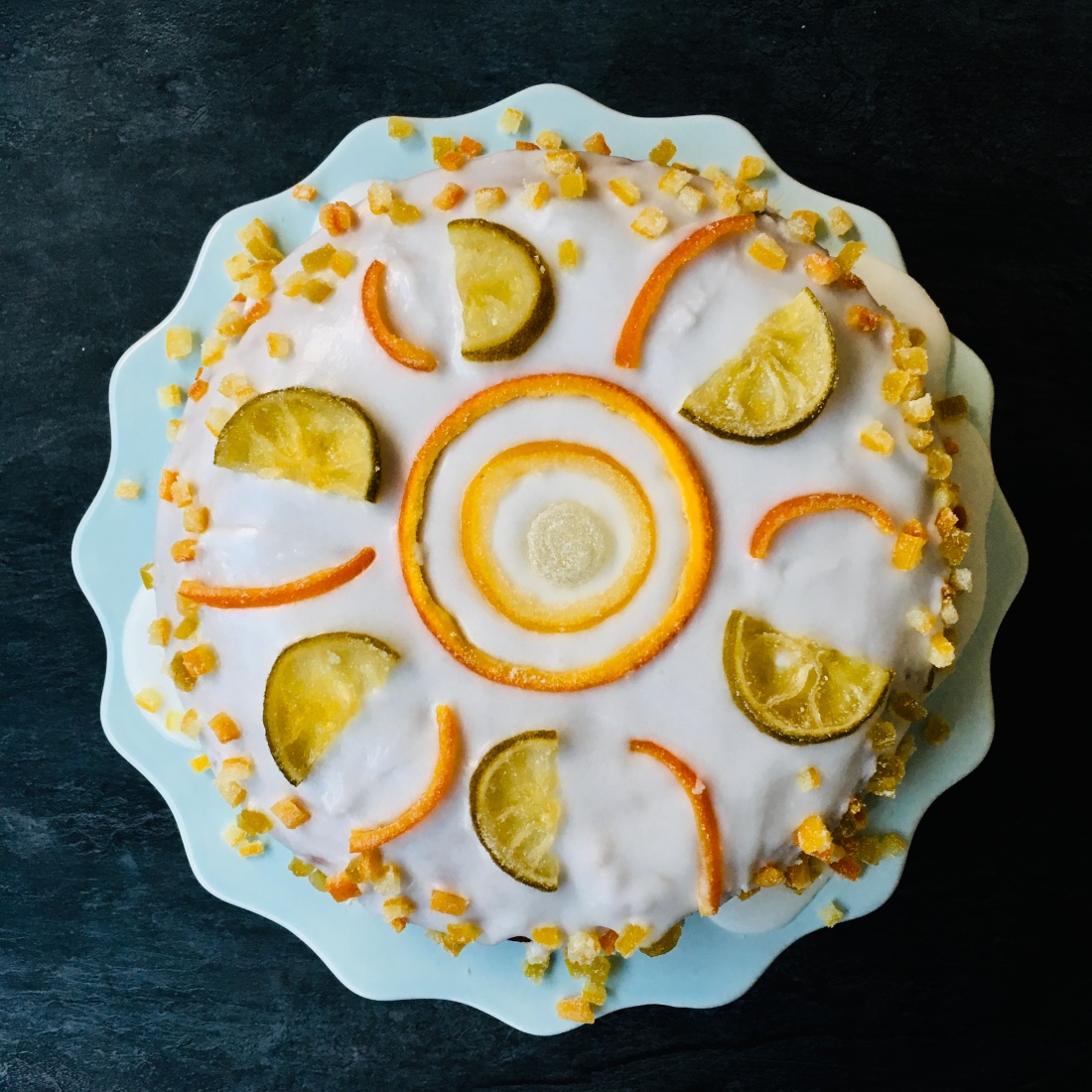
‘Death By Gin’ Mother’s day cake

'Death by gin' mother's day cake

I don’t know about you, but I’m starting to get a bit fed up with the cutesy mother’s day stuff. It all seems a bit too pink and schmaltzy. A bit impersonal. All too often, our gratitude towards our mothers is boiled down to a bunch of flowers, or a cake that looks like a bunch of flowers.

Don’t get me wrong, I love flowers (and so does my mum), and flowery cakes are lovely, but I wanted to personalise my cake to her. The spirit of the moment – gin- has always been my mum’s favourite (and, thankfully, not her ruin). This fact is so well known that she received three or four separate bottles for Christmas, much to her embarrassment (and delight).
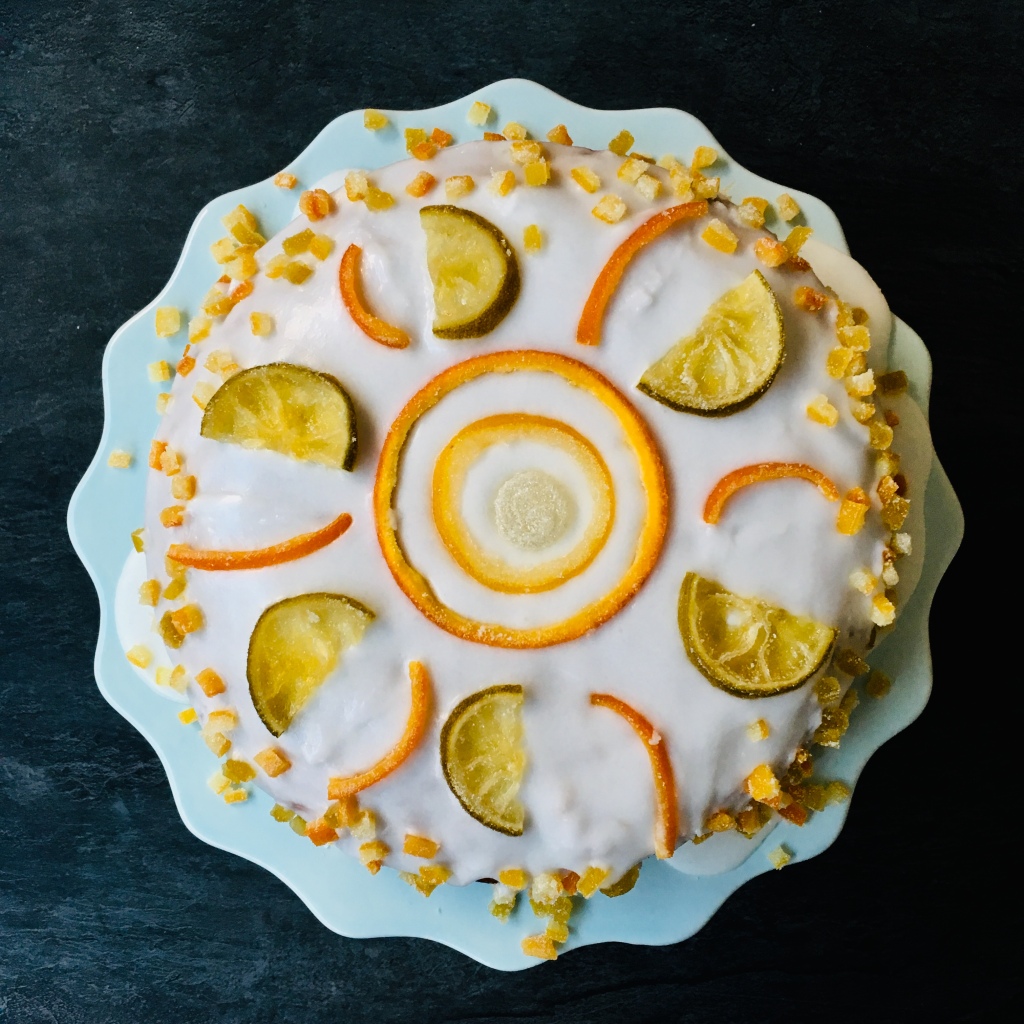
'Death by gin' mother's day cake

Gin is a flavoursome and versatile spirit which is being increasingly used in baking. When coming up with my idea for this cake I researched popular gin botanicals. The possibilities are almost endless, but I decided to pick a few to create a sophisticated and harmonious flavour palate.

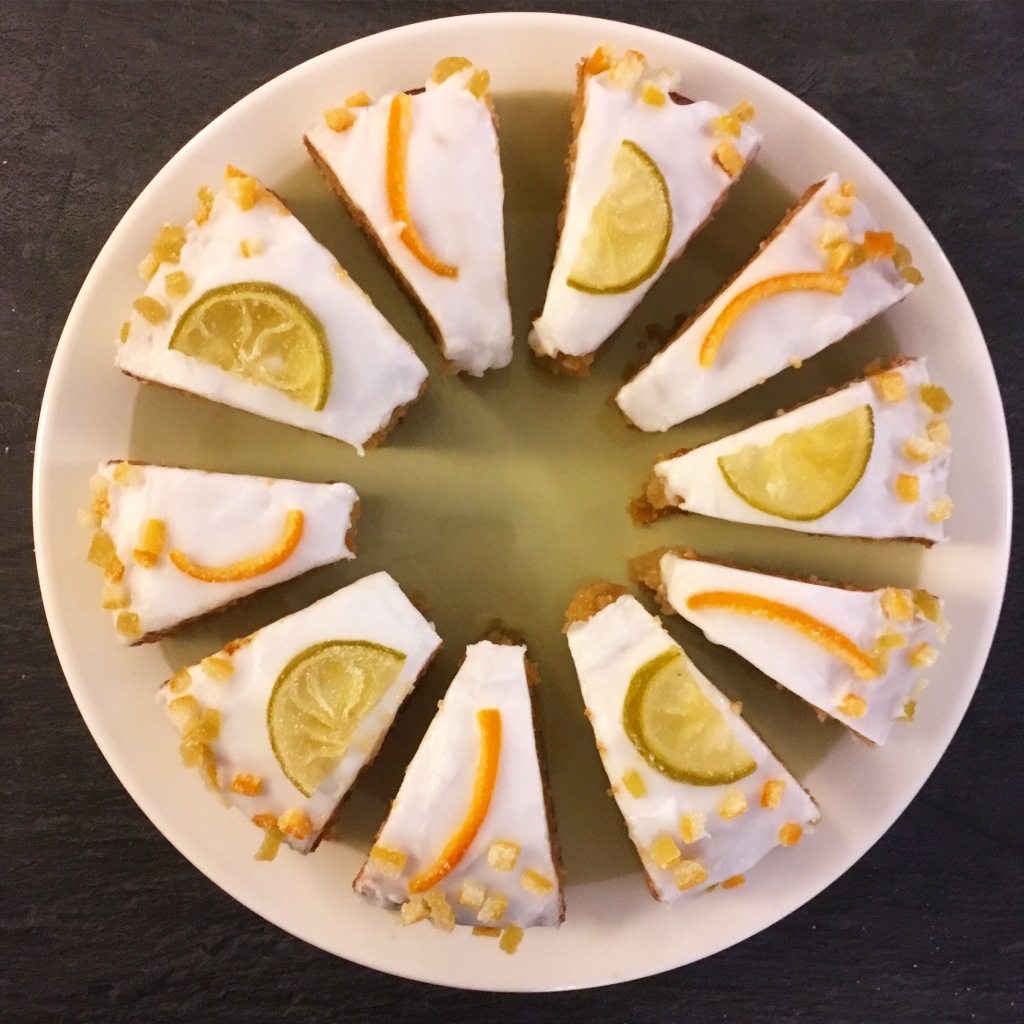
The cake itself is almond-based, which gives it a soft texture and subtle sweet flavour. To this I added a little gin and some cinnamon for some warmth. The cake was then soaked in a citrus-cardamom syrup (with some gin and tonic added) and topped with a gin icing and homemade candied citrus peels. I also got some gin gummy sweets from Lakeland, I popped one right in the centre of the cake.
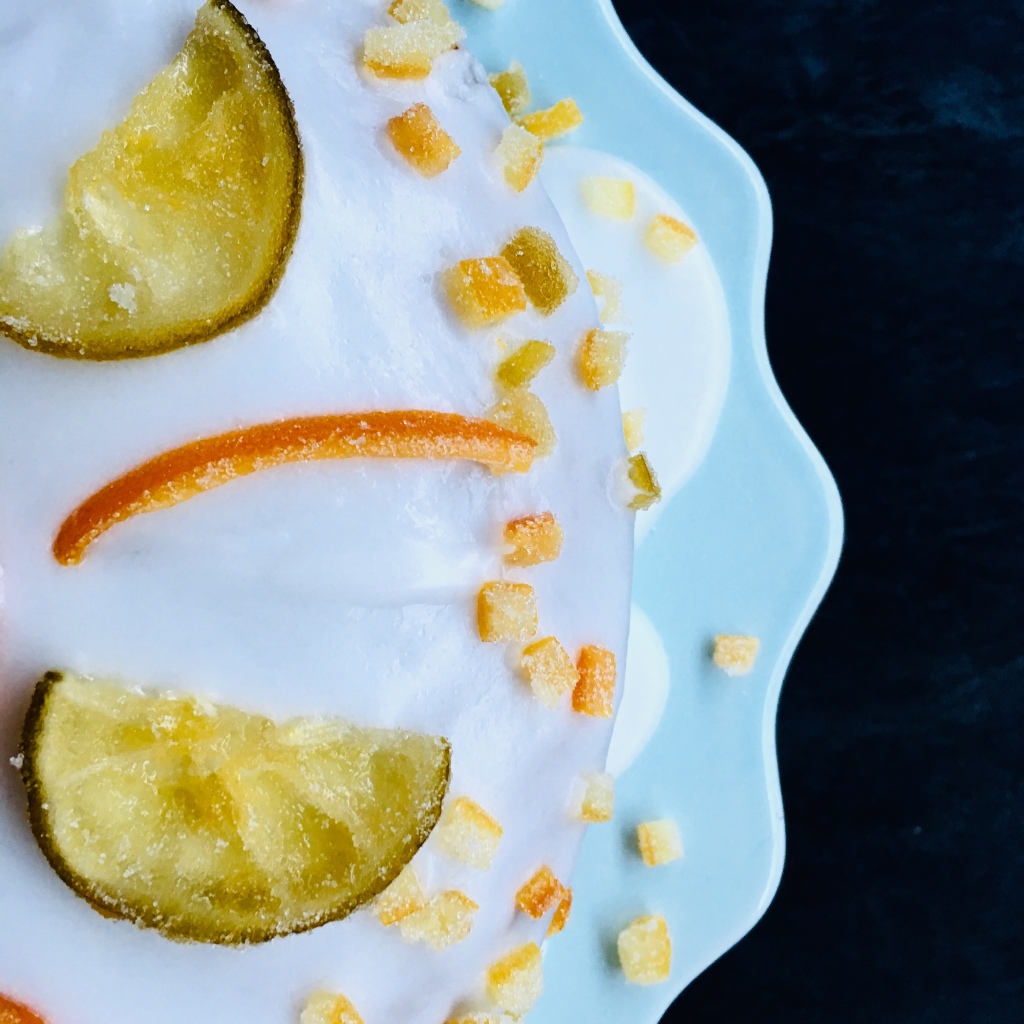
'Death by gin' mother's day cake

I’d never candied anything before, but the process was fairly easy! The resulting peel tastes fresher and looks more vibrant than any that you buy at the shop, and can be used in so many ways. I candied limes, lemons, grapefruit and oranges. Limes worked well in slices, round or cut into halves. I hoped to create slices of the other fruits too, but that didn’t quite work out. I found that the orange slices didn’t dry out well, the flesh of the lemon slices disintegrated in the candying process, and the pith of the grapefruit was too large. I kept the peel of these three, however, and used it. You can keep it in a ring, cut it into strips, or cut it small to create a confetti effect.
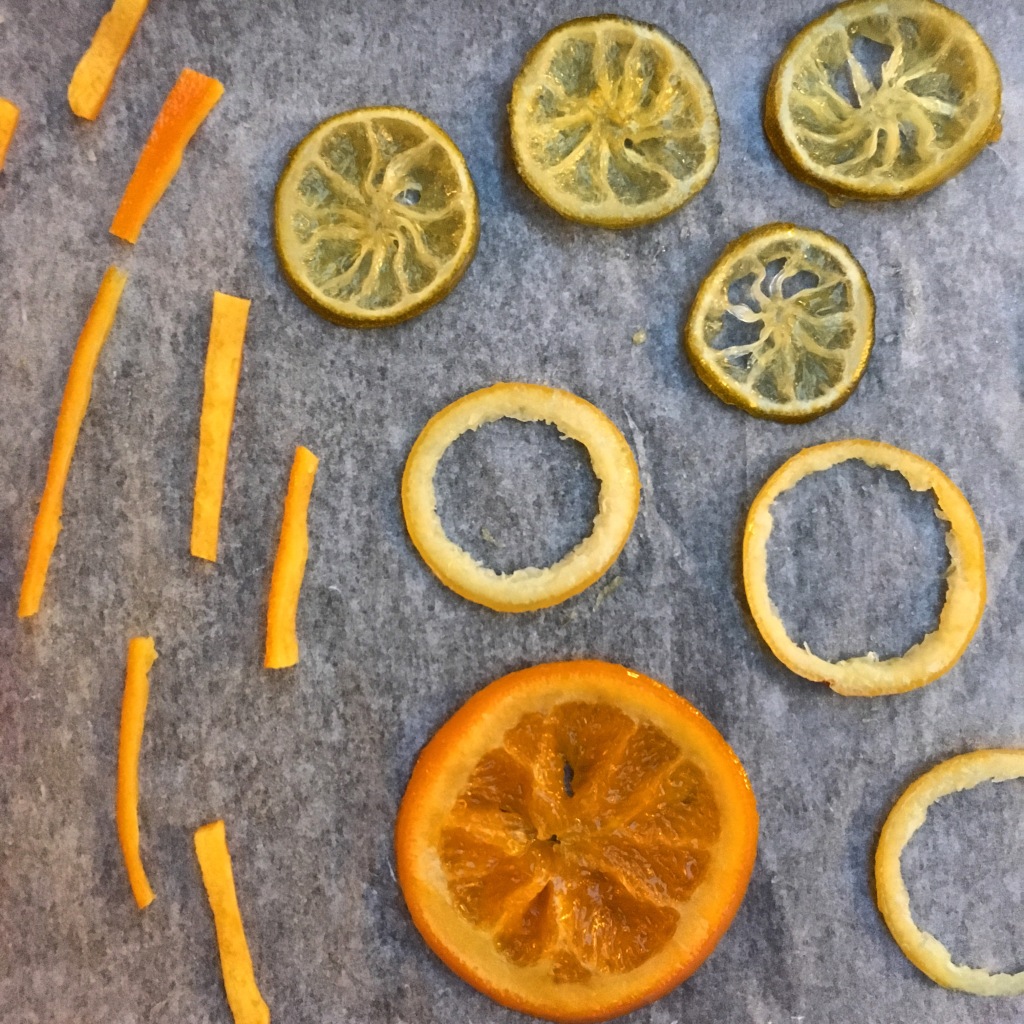
Candied citrus

I did two rounds of candying. After the first round I had a citrus-infused syrup left over, a light amber colour and slightly jellied from the pectin of the fruits. I decided to use this syrup again for my second round of candying, after which it was even more intense. I saved the syrup again and, after a few additions, it was the perfect thing to drizzle over the cake. In retrospect, I was so enthusiastic about this syrup that the cake ended up a bit soggy.

The final result is a cake which feels grown up. There’s enough sugar to balance out the bitterness from the gin and the citrus, there’s sharpness and a bit of spice from the cinnamon and cardamom. This is definitely a must-bake for any gin lovers out there.
'Death by gin' mother's day cake

‘Death By Gin’ Mother’s day cake

For the candied peel:

250g caster sugar

1 lime

1 grapefruit (I used one with a pale green skin)

1 lemon

1 orange

For the cake:

140g ground almonds

85g gluten-free self-raising flour

170g caster sugar

225g butter

4 eggs

1 tsp baking powder

1 tsp cinnamon

1 tbsp gin

For the syrup:

125ml tonic water

60ml gin

6 cardamom pods

For the icing:

200g icing sugar

Gin

  1. First, make the candied fruit. This should be done a day in advance to allow the peel to dry out fully, but you can also dry the fruit in an oven on a low temperature. Wash and slice the fruit into thin slices.
  2. Combine the caster sugar with 250ml of water and heat until the sugar has dissolved and the mixture is bubbling. Drop in half the fruit and lower the heat to a simmer.
  3. Gently stir and turn the fruit every so often, cooking for 20-30 minutes or until the fruit is tender and translucent. If any slices fall apart you can still use the peel.
  4. Bring the fruit out of the pot and place it on a cooling rack to drain. Reserve the syrup. You can either dry it out like this overnight or you can place them on a baking sheet and cook them at a low temperature (I used 75 degrees) for about half an hour. I used a combination of both methods.
  5. Candy the other half of the fruit in the same manner and reserve the syrup. Once the peel is dry dust it lightly with more caster sugar.
  6. To make the cake, preheat your oven to 180 degrees. I used a medium-sized round spring-form tin for this cake. I greased the sides and placed baking paper at the bottom.
  7. Combine all the ingredients together in a bowl until the mixture is pale and fluffy. Add to the tin and bake for about forty minutes, until an inserted toothpick comes out clean. My cake browned a lot so I put some tin foil over it halfway through cooking.
  8. Whilst the cake is cooking prepare the syrup. Add the candying syrup to a pot along with the gin, tonic, and the seeds from the cardamom pods. Heat and stir to combine. Allow the syrup to bubble and reduce for about ten minutes, then turn off the heat and strain the syrup into a jug.
  9. Remove the cake from the oven and leave to cool slightly. Use a toothpick to poke holes in the cake and pour in some of the syrup. You won’t need all of the syrup, but the rest can be reserved for any number of uses.
  10. Leave the cake to cool completely. Once it has, make a thick icing from the icing sugar and some gin. Pour it over the cake, and arrange your candied fruit as desired.

Salty Dog biscuits

I’ve been lucky enough to spend this weekend by the seaside with my family. I grew up in the countryside, and I’ve lived in cities for the past few years, but nothing compares to the seaside in my opinion. Every time I’m here I think, the Victorians got one thing right, health-wise: this place has healing properties. Something about the air and the water helps even the most wound-up amongst us to get some rest. As my mum says, the biggest problem around here is what to eat for lunch (a problem easily solved; platefuls of smoked fish and prawns for me, fresh lobster and chips for the parents).

I decided that during my visit I wanted to bake something which complimented my surroundings. That’s when the Salty Dog cocktail popped into my head. The name alone makes one think of the sea, and then when you consider the ingredients (gin, grapefruit juice, and a salt rim), it sounds like a very tasty way to keep scurvy at bay.

Salty Dog biscuits

The next question to solve was the form of the bake itself. I briefly considered a traybake, but I don’t want this blog to be full of cake. I need to stretch myself a bit and do some other bakes. I’m not much of a biscuit baker though, and I was worried about how to get the strong flavours of this cocktail into a biscuit.

In order to do this, I added the zest of a grapefruit into my biscuit dough, as well as something a little more experimental. Before I mixed my dough ingredients together I dampened my sugar with a bit of grapefruit juice; not enough to dissolve the sugar or make it syrupy, just to make it sort of damp and clumpy. The citrus flavour definitely carries through these biscuits.

Salty Dog biscuits

The icing is also made with grapefruit juice and some gin, and the biscuits are finished with a little more zest and some sea salt. The salt is my favourite part of these biscuits: it enhances the other flavours so well without being overwhelming. It’s not a consistent flavour either, as you would expect from a salted caramel, for example. The flecks of salt burst on your tongue at unexpected moments as you eat the biscuit.

I also really like the ‘sunburst’ design of the icing on these biscuits, but it’s tricky to master and required a bit of practice. I used a teaspoon with the icing, dripping the icing in a thin stream over the biscuits, but you could probably achieve more precise results with a piping bag.

These biscuits are quite light and crumbly, so for goodness’ sake PLEASE don’t even think about putting them in your tea. I think the elegant nature of these biscuits make them perfect for an afternoon tea. Pretty and delicate, with unexpected flavours, I reckon they’d be a hit.

Salty Dog biscuit

Salty Dog biscuits: (makes 28)

300g plain gluten free flour

200g butter or substitute

100g caster sugar

1 egg yolk

2 grapefruits

1 tbsp gin

300g icing sugar

Sea salt

  1. Combine the zest of 1 grapefruit with the flour and butter. In a separate bowl, dampen the sugar with a wedge of grapefruit until it is damp and clumpy but not syrupy or dissolved.
  2. Add the sugar to the flour/butter mixture with the egg yolk and combine into a soft dough. Wrap with cling film and chill in the fridge for at least one hour.
  3. Prepare a large baking sheet with greaseproof paper and preheat your oven to 180 degrees.
  4. Take your dough from the fridge and place it between two pieces of greaseproof paper. Roll it out until it is about the thickness of a pound coin, then cut circles. I used a glass to do this; my circles were about three inches across.
  5. Place the biscuits onto the paper. You can place them closely together, the dough doesn’t really spread as it cooks. Bake them for 10-12 minutes until they are dry and do not stick to the baking paper. They should be golden brown at the edges.
  6. Place the biscuits on a cooling rack and allow them to cool completely. Combine the icing sugar with the gin and mix. The icing should be of a pourable consistency. If it is not, add fresh grapefruit juice (you can use a sieve to avoid getting chunks of grapefruit flesh in the icing).
  7. Drizzle the icing back and forth in a ‘sunburst’ pattern. Then, before the icing dries hard, sprinkle on a little sea salt and grate some fresh grapefruit zest on top.

BONUS RECIPE: Christmas 75 cocktail!

As I hosted a bake-off screening with some friends this year (naturally I’m obsessed) I decided to do cocktails.  Whilst seeking inspiration online I found a recipe for a French 75.

At its most basic level, a French 75 contains gin, lemon juice and sugar or sugar syrup, topped up with something fizzy.  However, recipes vary, and some contain Cointreau, an orange liqueur. 

The Christmas 75 cocktail

When my friends and I tasted the budget student version which I threw together (Cointreau, bog standard gin, a spoonful of sugar and tonic water) we were delighted!  It was sweet but drinkable, and felt a bit fancier than what we were used to. 

Recently we got a bottle of spiced clementine gin into the house.  I was worried that it would be a bit naff, an overly-sweet Christmas gimmick.  But I was pleasantly surprised at the fresh taste of the clementine and the subtle spices.  It wasn’t long before I got the idea to add it to my new favourite cocktail.

This is the result!  I call it a Christmas 75.  It’s indulgent and fun, though Prosecco purists won’t be happy.  Mind how you go with these, they’re powerful (and if you’d like to experiment with the Cointreau, why not try my winter spice cake with Cointreau icing?). 

Christmas 75 cocktail and winter spice cake

Christmas 75:  

Spiced clementine gin

Cointreau

Fizz (I used prosecco, tonic water works well for a lighter drink with a bitter edge)

Candied peel and chocolate coins to garnish (optional)

  1. I’m not one to measure exactly I’m afraid, so this isn’t much of a recipe.  I added two teaspoons of candied, chopped mixed peel to a champagne flute and poured enough gin to cover. 
  2. Then I added a splash of Cointreau (roughly two parts gin to one part Cointreau).
  3. Then I topped up with Prosecco.
  4. The chocolate coin garnish is tricky, but not impossible (I would not recommend it if you’re hosting a massive party).  Unwrap your choice of chocolate coin (not too small) and place it on a chopping board. 
  5. You then have to heat a small knife.  I tried a few different methods; soaking the knife in hot water and holding it over a toaster worked the best, as matches can produce a sort of sooty residue.
  6. After a few seconds of heating, place the knife on the coin.  You are attempting to melt a slit into the coin so that you may slot it over the side of the glass.  The coins are prone to shattering so make sure you do not try to make the slit too long, it should not quite reach the centre of the coin.  
  7. Repeat the process, heating the knife and gently slicing through the coin.  Eventually you should have a slit which will fit onto the side of a glass.  By that time you will need a drink.  Cheers!
Chocolate coin cocktail garnish