Easter Rocky Road

Easter rocky road

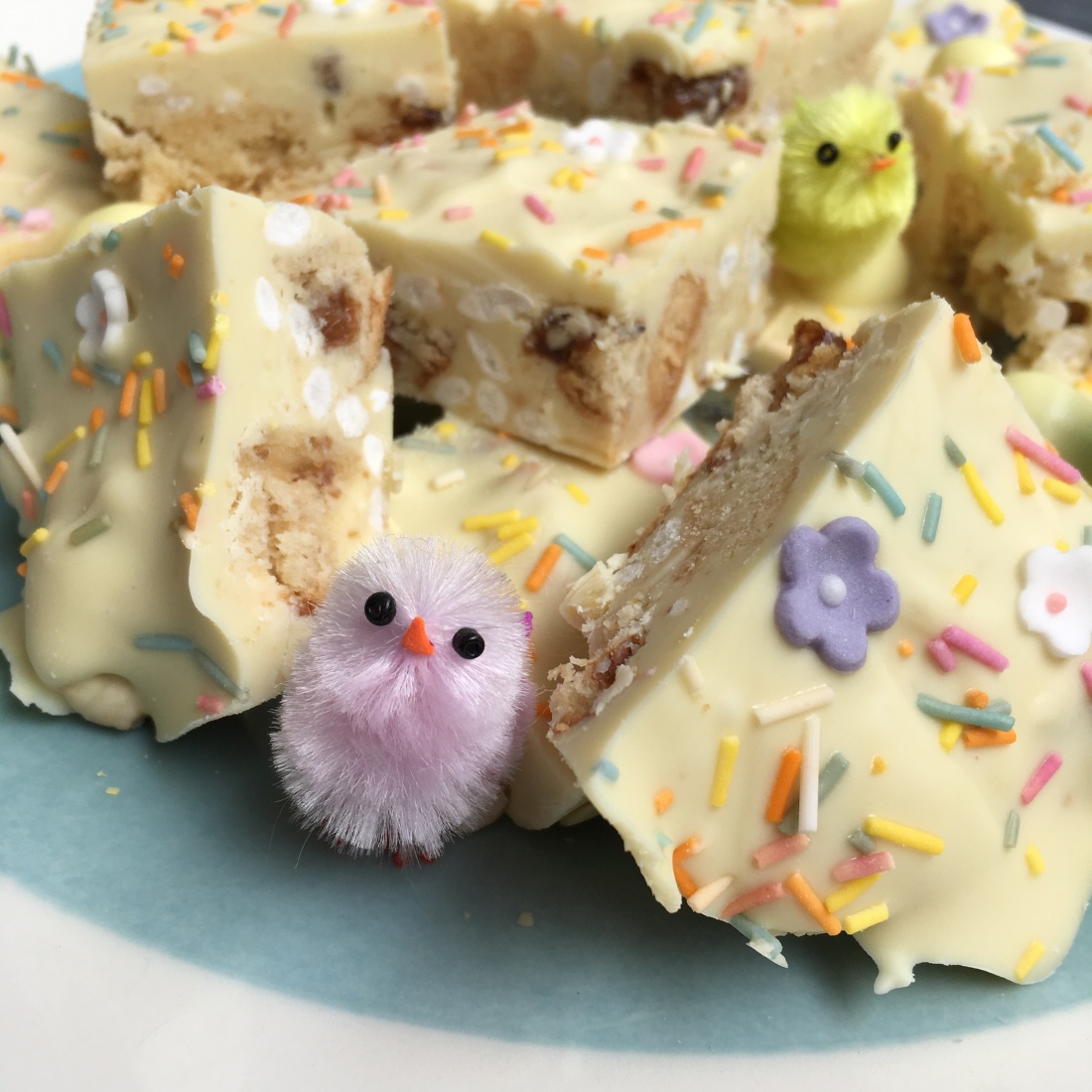
When I was a child, we had an Easter tradition. Every year we would crush Shredded Wheat, mix it with melted chocolate and form it into nests. They were finished off with mini chocolate eggs and taken into primary school, where they were always received well.

Now, sadly, I can’t eat cocoa or wheat (shredded or otherwise). I can, however, eat white chocolate, and I think the colour looks so bright and springlike.
Easter rocky road

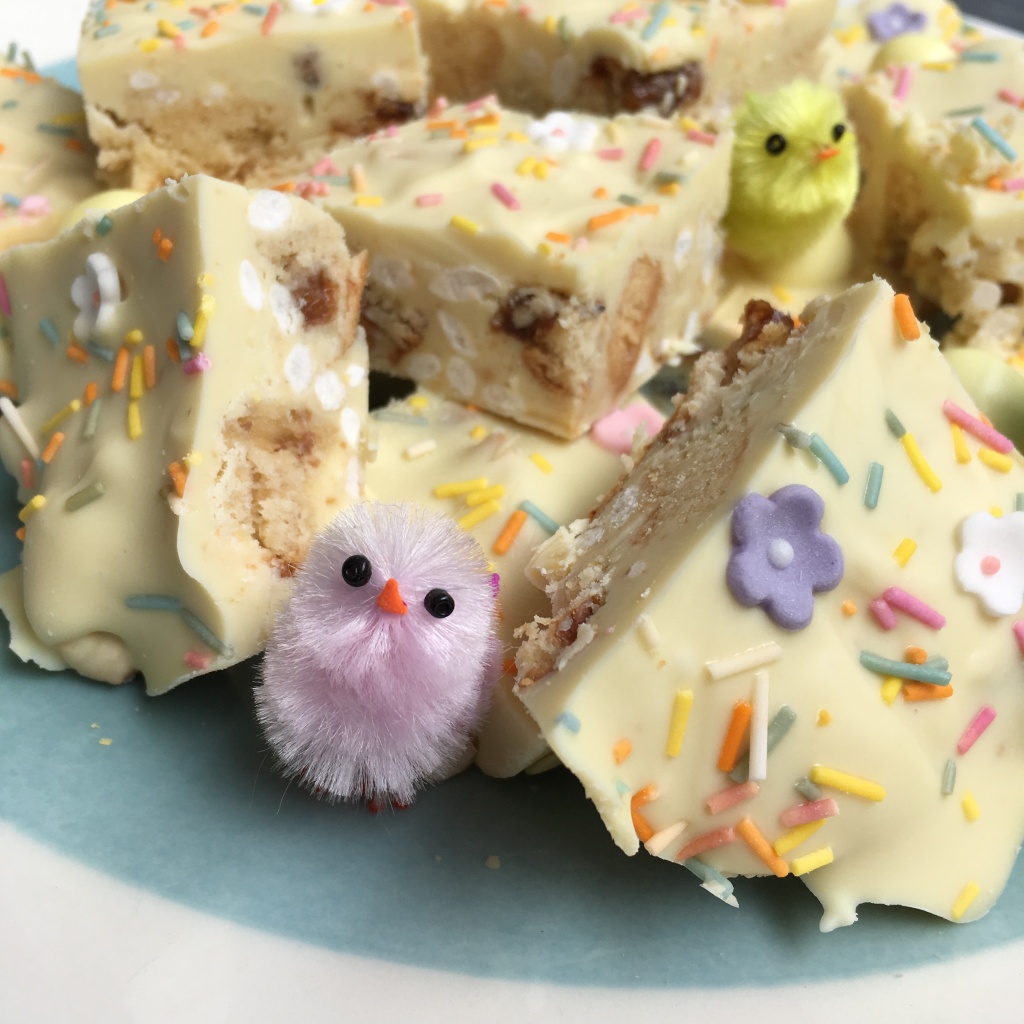
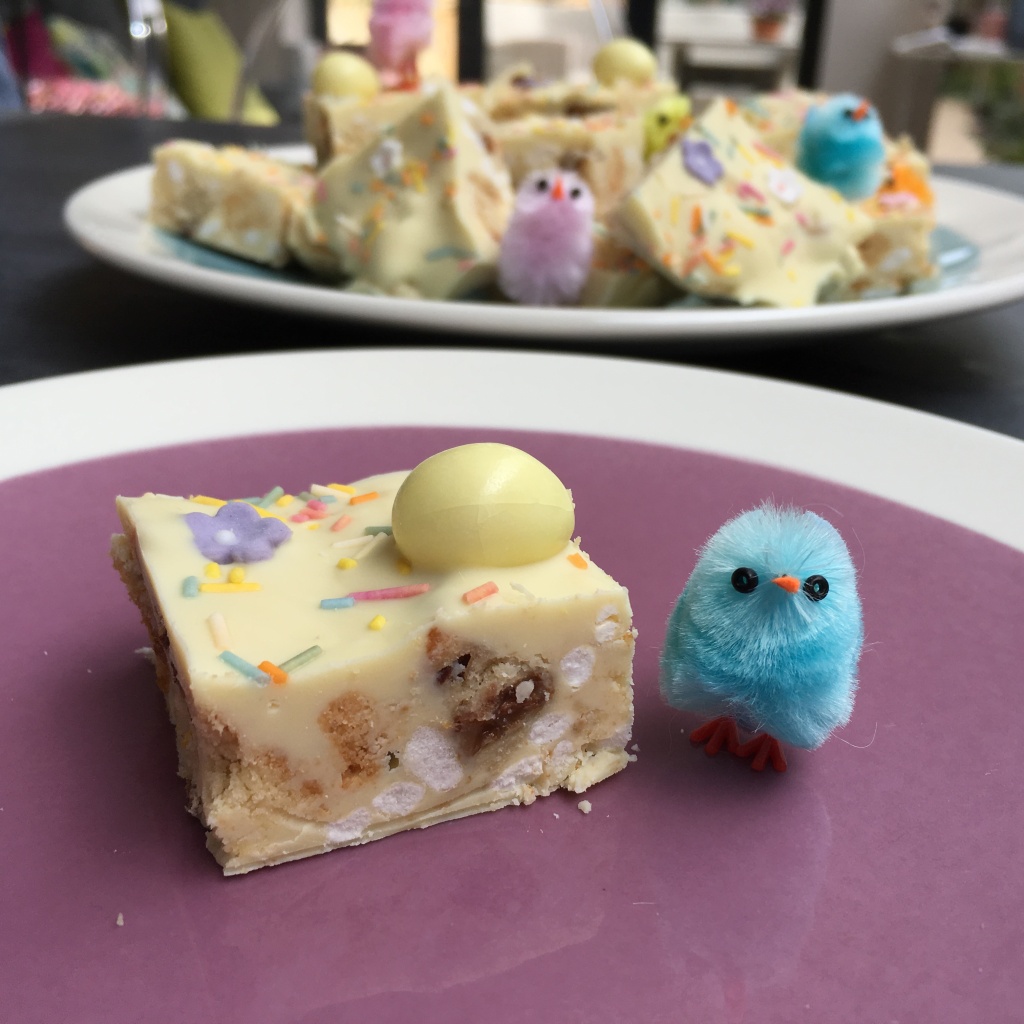
The textures of this rocky road are provided by crispy puffed rice, chunks of crumbly shortbread, and cubes of hot cross bun. If you’re disappointed by the lack of marshmallows in this recipe, then by all means put some into yours.

This recipe is definitely for those with a sweet tooth, so I’d recommend cutting it into dainty cubes. This would be a nice project to do with children; they’ll be entranced by the melted chocolate, and they’ll love the mixing and decorating.
Easter rocky road white chocolate

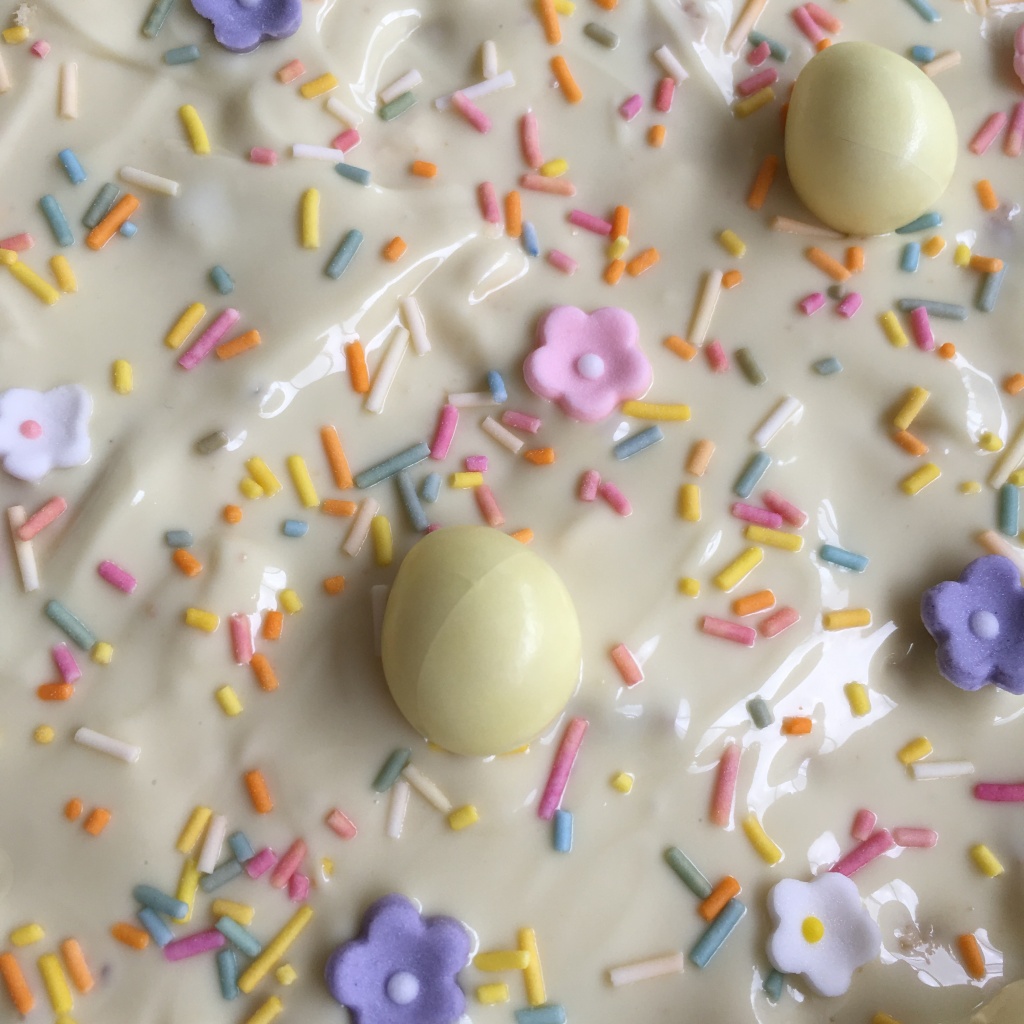
To decorate, I used pastel sugar sprinkles and white chocolate eggs. Feel free to deviate! The shops are full with so many gorgeous Easter treats to use.

This quick, no-bake treat is also suitable for freezing! Why not make some this weekend and freeze them, ready for the big day (If you can wait that long!)
Easter rocky road

Easter Rocky Road

1 gluten-free hot cross bun

100g gluten-free shortbread

15g gluten-free puffed rice

405g white chocolate

Decorations

  1. Cut the hot cross bun into small cubes and set aside.
  2. Cut the shortbread into big chunks.
  3. Measure out the rice and set aside.
  4. Break all the chocolate. Place two thirds of it into a bowl set over a pot of water. Gnetly heat the pot to melt the chocolate, making sure to stir and watch it carefully.
  5. Once the chocolate’s melted, add in the shortbread, rice and bun pieces. Stir to combine then press into a 20cm square pan (lined with baking paper).
  6. Melt the final third of the chocolate. This will be poured over the top of the rocky road to make the surface smoother.
  7. Once the chocolate has been poured and spread on top, the surface of the rocky road should look even and ready for decorating. Place your decorations on before the chocolate sets. When you’re happy, place in the fridge and leave to chill for about an hour.
  8. Once it’s set, cut into small chunks and enjoy!

Rhubarb + custard cream cheesecake

Rhubarb

I like to say that life is too short for regrets, but if I were pressed to find one I might well say this; I didn’t try rhubarb until I was about twenty years old. Can you blame me? Like many British children I only saw it as a fibrous green-grey mush lurking under a pile of crumble. When it’s cooked like that it doesn’t exactly look appetising.

When I was diagnosed with IBS at nineteen I decided to follow a low-FODMAP diet, which I still do today. On this particular diet a number of fruits are ‘banned’, including stone fruits, apples and pears. This meant that crumble, a treat which I always enjoyed so much, was almost impossible to create. That is, until I remembered that rhubarb was both crumble and FODMAP friendly, and I fell in love.

Rhubarb and custard cream cheesecake

Rhubarb’s sweet-sour sherberty taste is complex and delicious, and it makes a great foil for richer desserts. Not to mention the colour of it (when it’s not boiled to a pulp) is a gorgeous vibrant pink. It’s a welcome burst of colour and taste in the cold winter months, which is when forced rhubarb comes into season. No strawberries, no raspberries? No problem. Rhubarb’s got it all.

As well as the aforementioned crumble, rhubarb is great as a compote (traditionally served with custard). This flavour combination is so iconic that I knew I had to bring these two flavours together. And here we have it: A creamy baked cheesecake with a custard cream biscuit base and a rhubarb jelly on the top.

Rhubarb

This recipe involved a few firsts for me as a cook. I’d never baked a cheesecake before, or made jelly. Because of that I had a few stumbles which I think I should warn you of, if you’re in the same position.

The jelly was actually very easy to make! Luckily I had just the right proportions of ingredients and I used leaf gelatine to set it. The jelly set after just an hour in the fridge and looked so beautiful; a vibrant peachy pink which adds a much-needed tartness to the rich cheesecake (so rich that I recommend small slices, which is unlike me).

The cheesecake was trickier. The more experienced amongst you will notice that the outside of the cheesecake is quite dark around the edge. I struggled with my timings because I worried about the cheesecake being undercooked, so I baked it for longer than instructed. I must admit I was thrown off by the ‘slight wobble’ instructions of the recipes that I consulted. To judge something by wobbling is pretty subjective, in my opinion. This recipe is the result of some research and post-baking judgement on my part, and hopefully it will serve you well.

Rhubarb and custard cream cheesecake

Rhubarb + custard cream cheesecake (serves 16)

175g gluten-free custard cream biscuits

50g melted butter

900g cream cheese

250g caster sugar

3 tbsp gluten-free plain flour

1 tsp vanilla extract

zest of 1 orange

3 eggs plus 1 yolk

200ml double cream

For the rhubarb jelly:

225g rhubarb

juice of 1 orange

60g caster sugar

1 gelatine leaf

  1. Preheat the oven to 160 degrees. Line the base of a springform baking tin (23cm) with baking paper or aluminium foil.
  2. Crush the custard cream biscuits, either by hand of in a food processor, until you have fine crumbs. Combine the crumbs with the melted butter and press the mixture into the base of the tin.
  3. Bake the cheesecake base for ten minutes, then remove from the oven and leave the tin on a cooling rack. Leave the oven on.
  4. Combine the rest of the cheesecake ingredients together using a whisk or electric mixer. The mixture will be liquid and pale.
  5. Butter the sides of the tin and then pour the cheesecake mixture in. Bake for an hour and then turn the oven off, leaving the cheesecake inside. If you prefer your cheesecake firmer, leave the oven door closed. If you want a creamier result, open the oven door. Leave for two hours.
  6. Once the two hours are up remove the cheesecake from the oven. When it’s completely cool place it in the fridge to chill.
  7. To make the rhubarb jelly, wash and chop your rhubarb. The size of the pieces doesn’t matter so long as they are fairly uniform.
  8. Place the rhubarb with the orange juice and sugar into a pan over a medium heat until the rhubarb softens, this should take about ten minutes.
  9. Pour the contents of the pan into a food processor and blitz it until you have a smooth liquid with no lumps.
  10. Strain the liquid through a sieve. If you follow this recipe you should yield 1/4 pint of liquid.
  11. Pour the clear liquid into the pan over a gentle heat to warm. Take one leaf of gelatine and place it into cold water. Leave it for five minutes.
  12. After five minutes retrieve the softened gelatine leaf from the water and squeeze out the excess water. Place the leaf into your warm rhubarb liquid and stir to dissolve. Turn off the heat and leave the mixture to cool.
  13. Bring your cheesecake out of the fridge. Naturally, baked cheesecakes often dip a little in the middle and are higher around the sides. The top of my cheesecake was very golden brown. I scraped the top layer off with a spoon. This pronounced the dip which gave me somewhere to pour my jelly into.
  14. Pour the jelly onto the cheesecake and place it in the fridge to chill. It should be set in one hour.

Classic steamed pudding with marmalade + sultanas

Classic Steamed Pudding with Marmalade + Sultanas

Like many British children I turned to steamed sponges for warmth and comfort during the long winter months. I loved the chocolate puddings that my mum would give me at home, rich with sauce and humming with sweetness, but the stodgy syrup and jam sponges at school were just as welcome.

As I was discussing with my parents last night when we tucked into this particular pudding, the flavours and textures of a steamed pudding are what make it so distinctive and moreish. Technically, I use the same recipe for this pudding as I do for my baked sponges, but the steaming gives the sponge a unique, tender bite which distinguishes it from any other cake.

Classic Steamed Pudding with Marmalade + Sultanas

Warm sponges like these call for something sweet and sticky to top them. Traditionally jam or golden syrup is used. I still remember the excitement at school when syrup sponge was on the menu; it’s a total crowd pleaser. I suppose it’s the trifecta of sticky, soft and sweet which appeals to our inner child.

I was inspired to make this recipe when I spotted some marmalade with stem ginger in the supermarket sitting nearby a large bag of plump bronze sultanas. Nigella Lawson has a well-known baked marmalade pudding recipe which is a favourite in our house (we’ve made it many times over) and I suddenly had the idea to make a steamed pudding- something a little more grown up.

In the interests of being grown up this pudding has sultanas in, something which my younger self would baulk at. Feel free to omit them if you feel similarly, but I think they add a nice texture and compliment the bitter orange flavour of the marmalade. Also regarding texture, I think that marmalade with peel looks and tastes better than marmalade without peel, but this is a matter of preference.

Classic Steamed Pudding with Marmalade + Sultanas

Steamed puddings can be served with any number of sauces or sides: cream, custard, ice cream. We have some yoghurt lovers in our house who douse any and all cakes with it. The good thing about steamed puddings, however, is that they do tend to be moist, and can be eaten without accompaniment.

I hope that you give a steamed pudding a go this winter if you’ve never made one before. It’s actually very easy to do, though they take a bit of time to cook, and they don’t require any equipment which isn’t readily available. I got my cooking instructions from St Delia Smith, but this is my own recipe.

Gluten Free Steamed Pudding with Marmalade + Sultanas (serves eight)

Equipment required:

One large steamer

One ceramic pudding bowl (2 pints or 1 and 1/4 litres)

Aluminium foil

String

Ingredients:

170g GF self raising flour

110g light muscovado sugar

170g butter

3 eggs

Two handfuls sultanas

1 tsp vanilla extract

1 tsp ginger

1 tsp cinnamon

2 tbsp marmalade

  1. Prepare your steamer.
  2. Grease the inside of the pudding bowl well. Place the marmalade into the bowl and smooth it so that it covers the base of the bowl in an even layer.
  3. Combine the butter and sugar with an electric mixer until smooth.
  4. Add the rest of the ingredients and mix until smooth.
  5. Pour the mixture into the pudding bowl and smooth it out.
  6. Cut two pieces of aluminium foil large enough to cover the top of the pudding bowl and place them on top of one another. create a ‘pleat’ or ‘fold’ along the middle of the foil (this allows for expansion). I’ve inserted pictures below this recipe to help.
  7. Place the pleated foil on top of the pudding bowl and tie it to the bowl with string. You can create a loop with the string to make it easier to remove the pudding bowl from the steamer when the pudding is ready.
  8. Place the pudding bowl in the steamer and steam for an hour and a half.
  9. Once the steaming time is over, remove the lid from the steamer and allow to cool for a minute before removing the pudding bowl. Cut the string, remove the foil and flip the pudding onto your serving dish in the same way you would make a sandcastle. Serve immediately.
Foil pleat
Pleating the foil like this allows for the sponge to expand
Steamed pudding
Use normal string to hold the foil in place (I couldn’t find my string)