Stem ginger and buckwheat cookies (GF, DF)

When you’re eating gluten free, you can usually find some great substitutions in the shops. Pasta, cereal, even the bread that’s available in shops is improving. But there’s one thing I’ve been struggling to find, and to make. The object of my desire is a perfectly chewy cookie. The cookies that I’ve been making and buying so far have all been wrong; too crunchy, too cakey, just plain wrong. That is, until now.

One day I decided to experiment with some buckwheat flour that I’d bought for another project. Buckwheat is a gluten-free grain with a nutty flavour, commonly used to make crepes. It’s also the not-so-secret ingredient to making perfect, chewy, flavoursome GF cookies.

In this recipe I don’t use a typical GF flour blend, just the buckwheat flour (this is available from health food shops). I also use chunks of crystallised ginger to add a really autumnal flavour and texture. I’m sure if you prefer you could use the balls of stem ginger in syrup, but the crystallised ginger lasts a long time in the cupboard and is generally neater to handle.

This may sound a bit nonsensical, bit I’ve started piping my chilled cookie dough onto the prepared trays before baking. I find that GF mixtures tend to be sticky and difficult to shape, and one day I decided to pipe the mixture using a piping bag and large round nozzle. Large chunks of ginger or chocolate chips tend to get a bit stuck (use the end of a teaspoon to unblock the nozzle) but I do think it makes my cookies more even in shape and size. They’re still not perfect, but they’re homemade, so I’m not worried about perfection! Plus, the piping saves me fiddling around with spoons.

I finished these babies off with a swirl of dark chocolate. This was a surprisingly relaxing process: cut the very tip off a piping bag and don’t try to be too neat about it. Let your wrist swing in a natural circular motion, the chocolate will flow and all will be well.

Stem ginger and buckwheat cookies (makes 18, GF, DF)

100g crystallised stem ginger, chopped into bite-size pieces

150g light brown sugar

110g soft butter or dairy-free spread

1 egg

150g buckwheat flour

pinch salt

1/2 tsp baking powder

1 bar dark chocolate for decoration (use dairy free chocolate if you’re making these DF)

  1. Cream the soft butter/spread with the sugar in a large bowl until pale and fluffy.
  2. Add the egg and mix well.
  3. Add the flour, salt and baking powder and mix well to combine.
  4. Stir in the chopped stem ginger until distributed.
  5. Cover the bowl with cling film and chill in the fridge for at least half an hour.
  6. Preheat the oven to 180 degrees fan and prepare two large, flat baking trays with baking paper.
  7. Put the cookie dough into a piping bag fitted with a large, round nozzle and pipe the dough onto the trays, ensuring space between the cookies. This mixture will make about 18 cookies; each portion should be roughly the size of a golf ball.
  8. Bake the cookies for around 12 minutes or until golden brown.
  9. Once baked, carefully place the cookies on a cooling rack. Melt the whole bar of dark chocolate and allow to cool for two minutes before placing in a piping bag. cut the very end off the piping bag (you only want a very small opening for the chocolate to flow through).
  10. When the cookies are fully cooled you can decorate them. Starting in the middle of the cookie, smoothly move your wrist in a circular motion to achieve the chocolate spiral effect. Leave for the chocolate to set, and then keep in an airtight container.

Coffee + sesame cakes

Long time, no bake!

I know there’s been quite a long hiatus since my last post. At that time I felt quite creatively blocked- I was putting myself under so much pressure to come up with original recipes and I wasn’t happy with anything I created.

Yesterday I felt an urge to bake and got inspired by the sesame seeds I had in my cupboard. I’d seen a lot of people on Instagram use them in desserts, particularly paired with chocolate. Although it’s a relatively new trend to Western baking, many Asian countries have used sesame in desserts for decades.

Sesame has a sweet, nutty flavour that I wanted to experiment with. I personally can’t tolerate much cocoa due to a medical condition, but I love coffee flavoured desserts. Coffee and chocolate have similar qualities, with deep, roasted flavour notes. So why not coffee and sesame?

I can assure you, this combination really works. The sesame adds a sophisticated depth of flavour to the cake (and makes it seem much fancier than it is). I also added a spoonful of treacle to the batter- I was aiming for a slightly sticky cake, and the deep molasses works well with the other strong flavours. I used golden caster sugar for this recipe, but it would be interesting to see the results with a darker sugar.

The cake is soft and moist, with a little bit of texture from the seeds flecked through. My boyfriend described the flavours as a rollercoaster; first sesame, then coffee, then sesame again to finish. A little squiggle of chocolate on the top finishes these cakes off, and it works brilliantly with the rest of the flavours. This is one of my new favourite flavour combinations, and I can’t wait to experiment with it more!

Coffee + Sesame cakes

170g gluten-free self-raising flour

115g golden caster sugar

170g butter or dairy-free spread

1 tbs treacle

1 tbs coffee extract

30g sesame seeds

3 eggs

Chocolate and more sesame seeds for the top

  1. Preheat the oven to 180 degrees fan.
  2. Prepare whatever tin you’re using. This would make a lovely traybake, cupcakes, or possibly a loaf cake. I used my silicone tin with 12 small rectangular holes.
  3. Mix the flour, sugar, butter/spread, treacle, coffee extract, sesame seeds and eggs together thoroughly in a bowl.
  4. When the mixture is smooth and well-combined, place it into your tin and bake for about 15 minutes (depending upon the shape and size of your tin, this is how long mine took). I believe that you can smell when a cake’s ready, but you can always use a toothpick if you don’t trust your nose (an inserted toothpick should come out clean).
  5. When the cake/s are ready, bring them out and allow them to cool in the tray. When cool, drizzle them with a little melted milk or dark chocolate (make sure the chocolate isn’t too hot or runny, allowing it to cool a little will make it easier to pipe) and sprinkle a few more seeds on the top to finish. Enjoy!

Vegan date and chocolate flapjacks

In all truthfulness, this is not the recipe which I hoped to share today.

I’ve been thinking for a while about doing a vegan recipe. I had a can of pumpkin puree in the cupboard which I bought on a whim, and I thought I would try to do something with that. I planned to make nutty pumpkin muffins with a molten date caramel core. The batter looked promising, but the final results were disappointing (I’m not even sure they were edible).

Vegan date and chocolate flapjack

It was time to come up with a plan B. I had about half the date caramel left (which was really more of a date paste). I also realised that I had some dairy free chocolate chips in the cupboard. The thought struck me: flapjack. Cake can go wrong in so many ways, especially when you attempt to make it vegan and gluten free. But flapjack? Making a flapjack vegan requires one simple substitution (dairy-free spread instead of butter). This can’t go wrong.

Vegan date and chocolate flapjack

Sure enough, the flapjacks turned out well! Sticky, golden and toothsome, with a sweet layer of chocolate and date paste in the middle. Who said vegans have to live off celery sticks and hummus?

Vegan Chocolate and Date flapjack:

150g dates

1 tbsp almond butter

Almond milk

Vanilla extract

50g dairy-free chocolate chips (I used a mix of white and milk chocolate)

500g pure oats

8 tbsps golden syrup

200g light muscovado sugar

250g dairy-free spread

  1. Preheat the oven to 180 degrees and line a deep pan with baking paper.
  2. Combine the dates with the almond butter, vanilla extract and a pinch of salt in a food processor. Add splashes of almond milk until you have a paste.
  3. Melt the spread, golden syrup and sugar together, then add them to the oats and stir to combine.
  4. Place half the oat mixture into the bottom of the pan in an even layer. Then spread the date paste on top of this layer.
  5. Scatter the chocolate chips over the date paste layer. Then place the rest of the oats on top.
  6. Bake for half an hour until golden, then leave to cool completely before slicing.

Apricot and Ginger surprise cake (dairy + gluten free)

I think it’s best to start this post by wishing you all a happy new year! I know that for most of us our new year’s celebrations were held two weeks ago (been there, drank the fizz, got the hangover) but this year I’m celebrating new year twice: I’m celebrating Chinese new year for the first time!

My boyfriend’s family is from Hong Kong, and it just so happens that his aunt’s birthday coincides with Chinese new year this time (February 5th). It’s a big birthday too. When my boyfriend’s mum suggested that I might like to make a cake, naturally I leapt at the chance.

When I first met her, the aunt in question kindly gave me a money packet. As soon as I started dreaming up this cake I knew that I would incorporate some element of the money packet design as decoration. Then I got another idea. I’d seen surprise cakes online- a cavity is made in the cake which is filled with treats- but I’d never made one. Since money is traditionally given at Chinese new year, why not fill the cake with chocolate coins? Luckily they’re still in the shops (and available online) after Christmas, and heavily discounted!

In terms of flavours, I knew that this aunt liked Victoria sponge, but I wanted to play with the flavours a bit more. I had a new bottle of ginger extract which I was dying to try, and I decided that apricot jam would be a good pairing. Thus, the whole cake was formed in my head: the flavours (plain sponge, sandwiched with apricot jam and ginger buttercream), the decoration (buttercream flowers, inspired by the money packet) and the surprise (chocolate coins hidden inside).

I learnt how to do the buttercream flowers from a few different YouTube videos- Cupcake Savvy’s Kitchen, Greggy Soriano from Greggy’s Digest, and Joni Kwan from How to Cake it Step by Step. I used a set of plastic palette knives which I found from my local art shop, but I’m sure you can find similar ones online. I love the effect, I think it’s very beautiful and soft, and I can’t wait to play around with it more in the future!

What you see in this post is the trial of this cake, and it involved a lot of techniques which I had never done before. This meant that the assembly and decoration of this cake was a long and messy process. It was definitely worth it when I cut into that first slice and saw the coins spilling out just as I’d hoped.

The texture of this sponge is so light and fluffy, as well as the icing. The ginger extract gives a sweet heat to it and compliments the apricot nicely. This is definitely an interesting take on the Victoria sponge, and it’s worth trying out even if you’re a purist. Now all that’s left for me is to do it all again- hopefully with less mess this time. Wish me luck!

Apricot and Ginger Surprise cake: (gluten free + dairy free)

340g plain flour

225g caster sugar

340g dairy-free spread

6 eggs

2 tsp baking powder

2 tsp vanilla

For the decoration:

450g dairy-free spread

260g icing sugar

2 tsp ginger extract

Food colourings

300g apricot jam

About 15 chocolate coins

Tube of black writing icing/sprinkles/edible pearls (for the middle of the flowers)

  1. Preheat the oven to 180 degrees and line two sandwich cake tins.
  2. NOTE: The ingredients which I have listed are enough for the four individual cakes which make up this whole cake. I made these in two batches of two as I only have two sandwich cake tins.
  3. Cream the spread with the sugar until pale and fluffy, then add the other ingredients and combine well.
  4. Divide the mixture between the tins and bake for fifteen minutes or until the cakes shrink from the edges of the tin. They should be a light golden brown and an inserted toothpick should emerge clean.
  5. Leave the cakes to cool.
  6. Once you have baked all your cakes and they are all cool, start making your icing. To do this, simply combine the icing sugar with the spread and the ginger extract until pale and fluffy.
  7. Divide your buttercream equally into bowls and colour them as you desire, reserving some white icing to cover the whole cake.
  8. Place your first layer of cake down and cover it with first a layer of apricot jam, then some coloured buttercream.
  9. Use something round (I used a large round biscuit cutter) to cut a hole from the middle of two of the sponges (You can reserve these to make a small cake later).
  10. Place one of these sponges on top of the first layer you decorated. Add jam and buttercream, then place the other ring cake on top (So far your creation has a complete layer on the bottom, with the two ‘ring’ layers stacked on top, with jam and coloured buttercream between each layer).
  11. Take your chocolate coins, still in foil, and place them vertically into the hollow in the middle of your cake. Once you have enough in there they should stand up on their own.
  12. Place your final, complete layer on top of your cake, then cover the whole thing lightly in white buttercream.
  13. Use your palette knives and your coloured buttercream to create flowers on top. I used black writing icing to create dots in the centres of the flowers, but you could use sprinkles or edible pearls. I used the last scraps of coloured icing to create a watercolour effect around the sides of the cake.

Hazelnut and Orange Blossom cakes

Hello all. I hope you’re well! I know that I haven’t shown any signs of life since Christmas (have any of us?) but I’m here today with a recipe and a hope- that this blog won’t wilt and die like the few houseplants I’ve owned.

I do feel more positive about this enterprise though. I’m always going to bake, and so I might as well carry on with the blog! It pushes me to go that bit further (this sometimes leads to existential baking crises in Lakeland, but it’s all in good fun! I’m happy!). It also justified me buying a new tin today, which really makes me happy, even though I have absolutely no space left anywhere and far too many tins to begin with.

Hazelnut and Orange Blossom cakes

This tin is silicone with a wire edge which gives it a bit of stability (hallelujah!). I think I’m definitely going to invest in more silicone tins, and I’ll tell you for why (if you care to read). I find that gluten free cakes are often a bit more delicate than their wheaty cousins, and the thin top layer of cake in particular is very liable to peel or flake off, and to be left stuck on metal tins no matter how well you grease them. With silicone tins, these cakes popped out as neat as you please, fully intact. I’m sold!

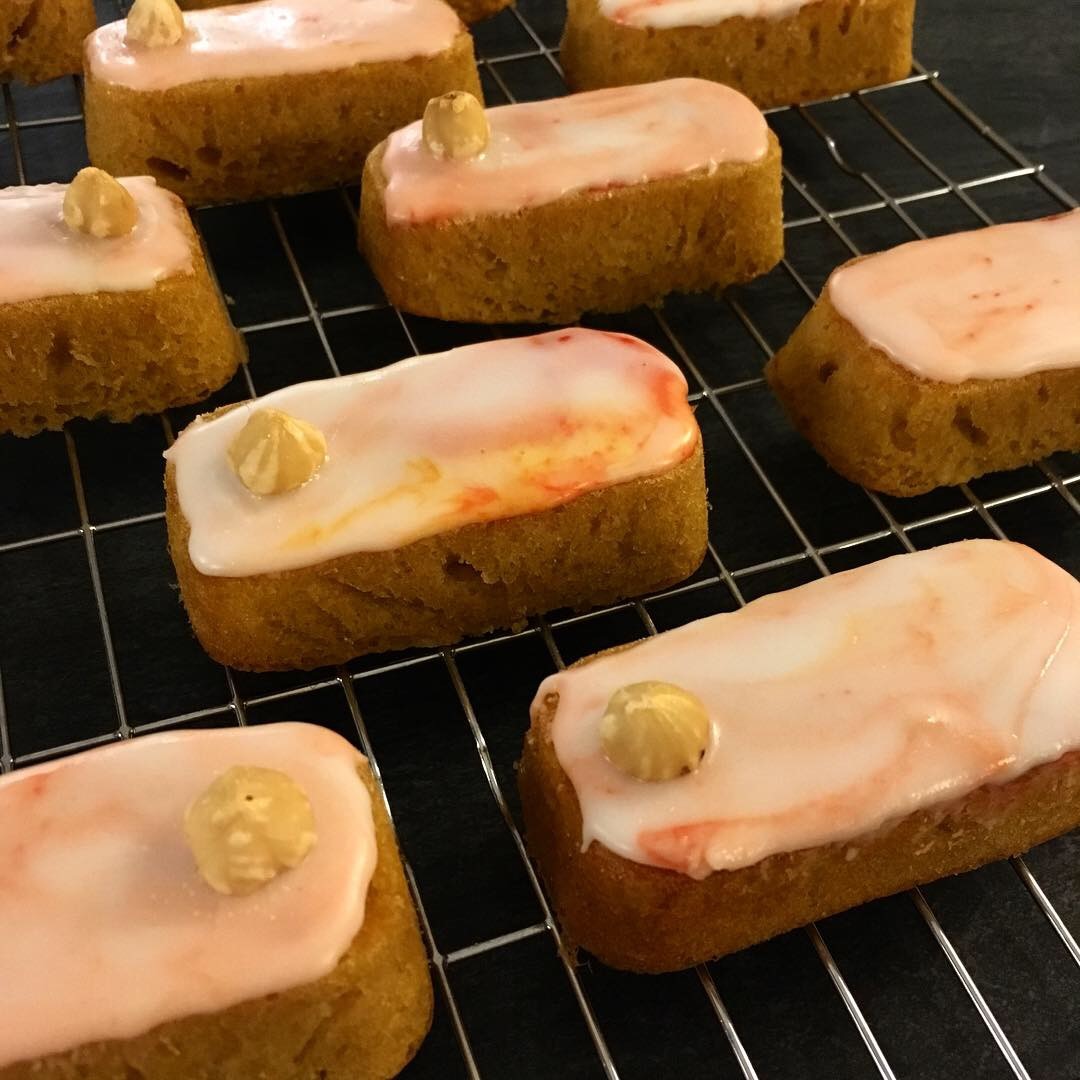
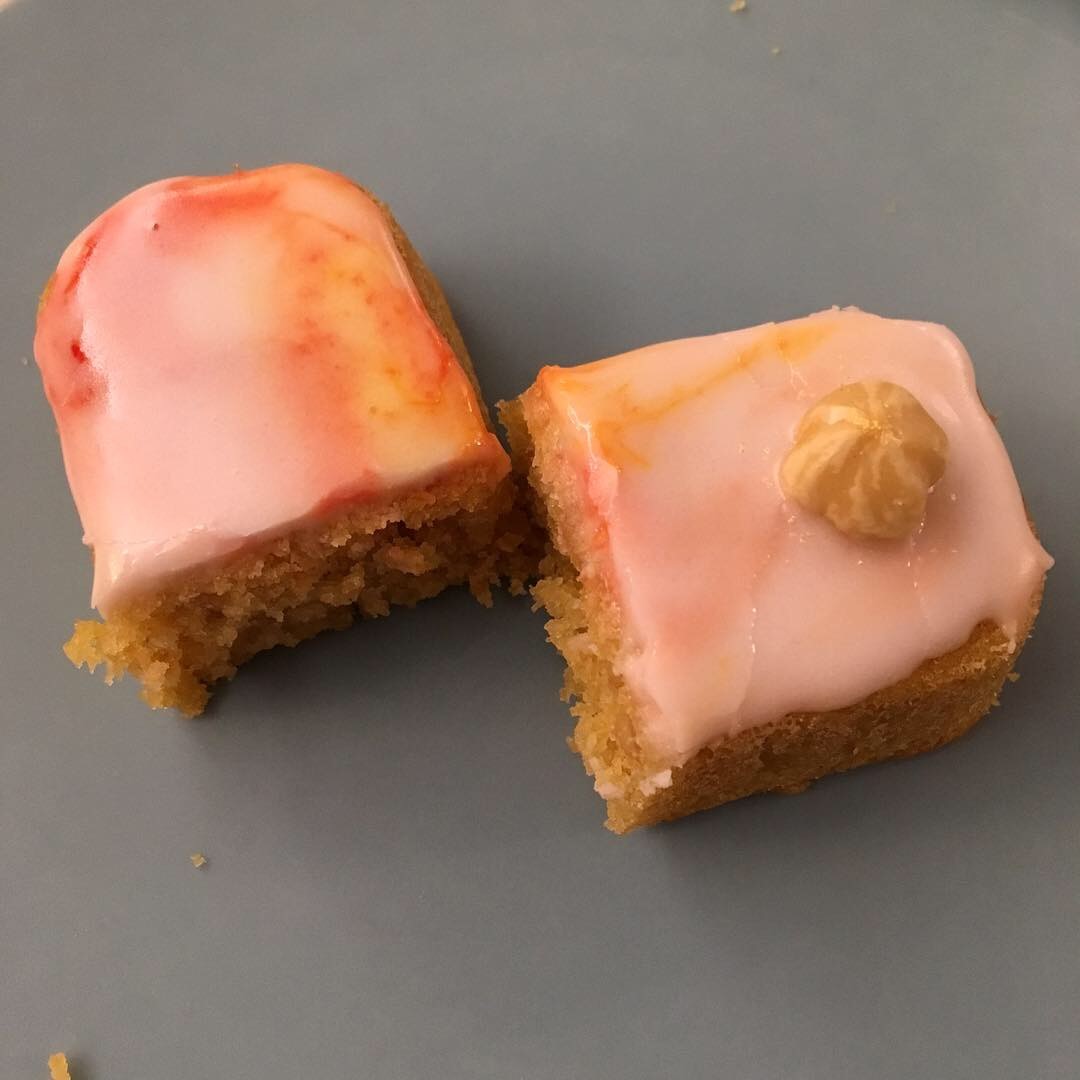
These cakes also happen to be dairy free as well as gluten free thanks to the fact that we had some dairy-free spread left in the fridge. The sponge has blitzed roasted hazelnuts taking the place of some of the flour, orange zest, and a little orange blossom extract. The sponge is light and moist, with crunchy pieces of hazelnut. I realised upon trying the batter that the way I had put this cake together resembles the composition of a perfume: the hazelnuts provide the rich, deep base note, the orange zest is a middle tone, and the orange blossom water offers a floral, zingy finish.

Hazelnut and Orange Blossom cake

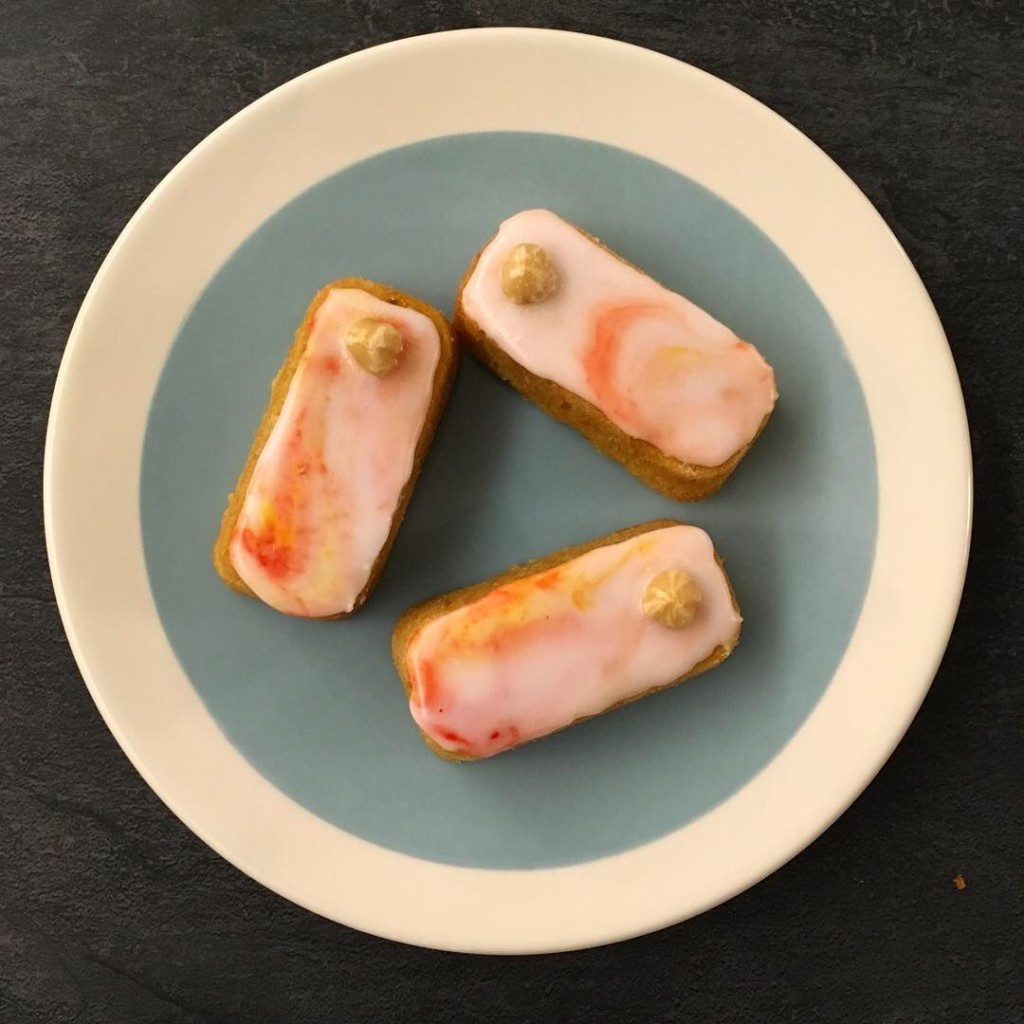
I absolutely love using marbled icing in bakes and I feel it’s worked well here! Please try it and use whichever colours you like, although I do feel that greens can give the impression that the cake is slightly mouldy. That said, do as you feel. I tend to choose my colours to represent the flavours that are in the cake; pink for rose, orange for orange blossom etc etc.

This recipe is fab if you’ve got posh friends you want to impress, or you want something that’s delicate but packs a punch in both flavour and texture. Naturally, you could make these as regular cupcakes, but if you’re an avid baker then maybe get a rectangular tin. I can’t wait to use mine again.

Hazelnut and Orange Blossom cakes

Hazelnut and Orange Blossom Cakes: makes 12 (gluten free, dairy free)

170g dairy-free spread (or butter, if you wish)

110g light brown sugar

110g plain gluten free flour

1 teaspoon baking powder (ensure it’s gluten free)

75g blanched hazelnuts (get chopped if you can)

3 eggs

1 orange

Orange blossom water

200g icing sugar

Food colouring

  1. Preheat the oven to 180 degrees.
  2. Cream the dairy-free spread or butter with the sugar using an electric mixer.
  3. If your hazelnuts are not chopped, chop them in a food processor until you have very small chunks.
  4. Add the chopped nuts, flour, baking powder, eggs, one teaspoon of orange blossom water, and the zest of an orange to the butter mixture and combine using an electric mixer.
  5. Distribute the mixture equally between the sections of the pan.
  6. Bake for 15 minutes.
  7. After a few minutes, pop the cakes out and leave to cool.
  8. To make the icing, combine the icing sugar with two teaspoons or orange blossom water and a little fresh water until you have a thick, runny consistency. The icing should be opaque white.
  9. Leaving the icing in the bowl, add around four dots of pure food colouring. Don’t mix it in! Use a teaspoon to dollop some icing on top of the cake. As you move the icing to cover the cake, the colouring will stretch into the white icing and you will see a marbling pattern. Some cakes will have more marbling than others, and they will all look different.
  10. I had some hazelnuts left over so I finished each cake with a single hazelnut on the side. I think it looks fancy.