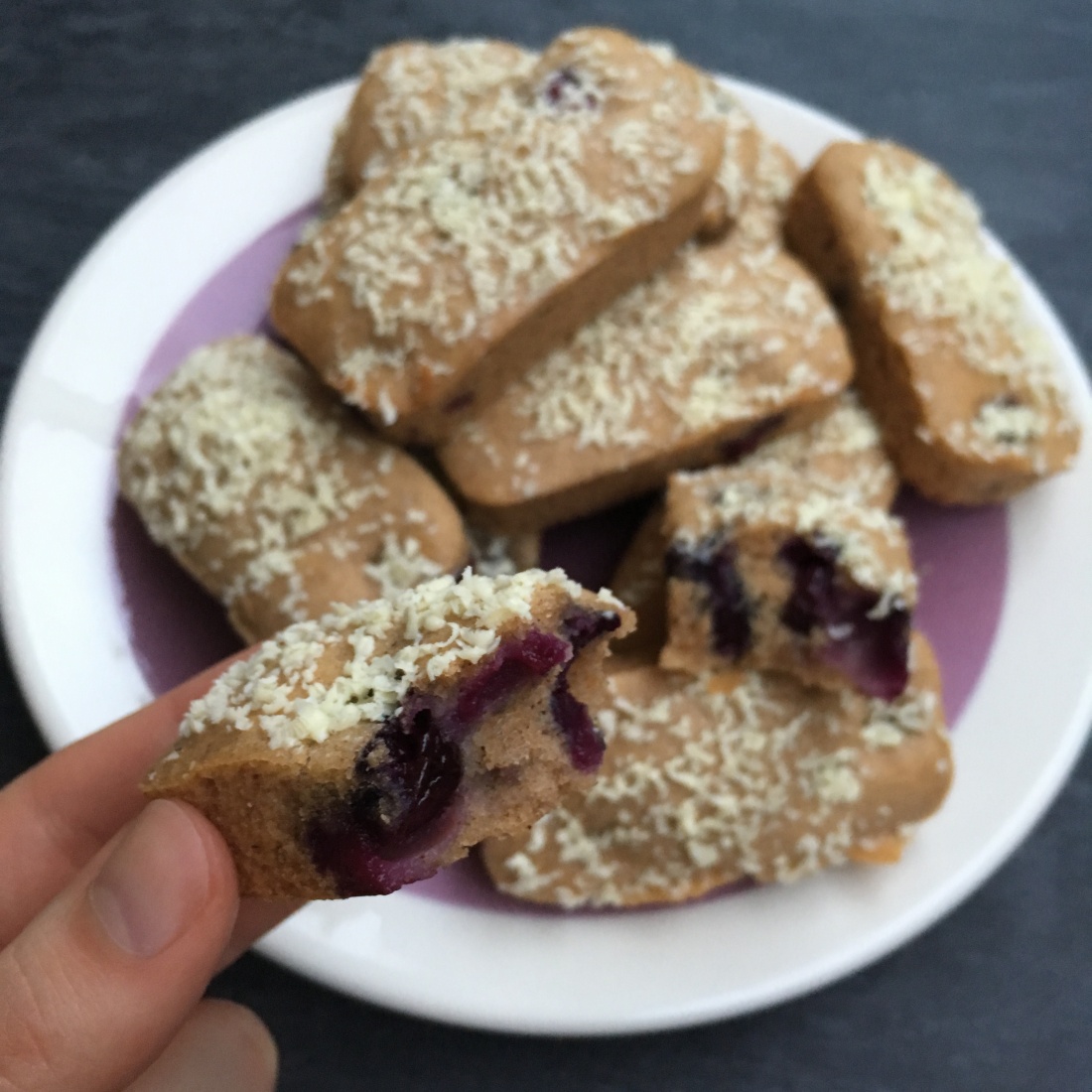
Cinnamon + blueberry mini cakes

Cinnamon and blueberry cakes

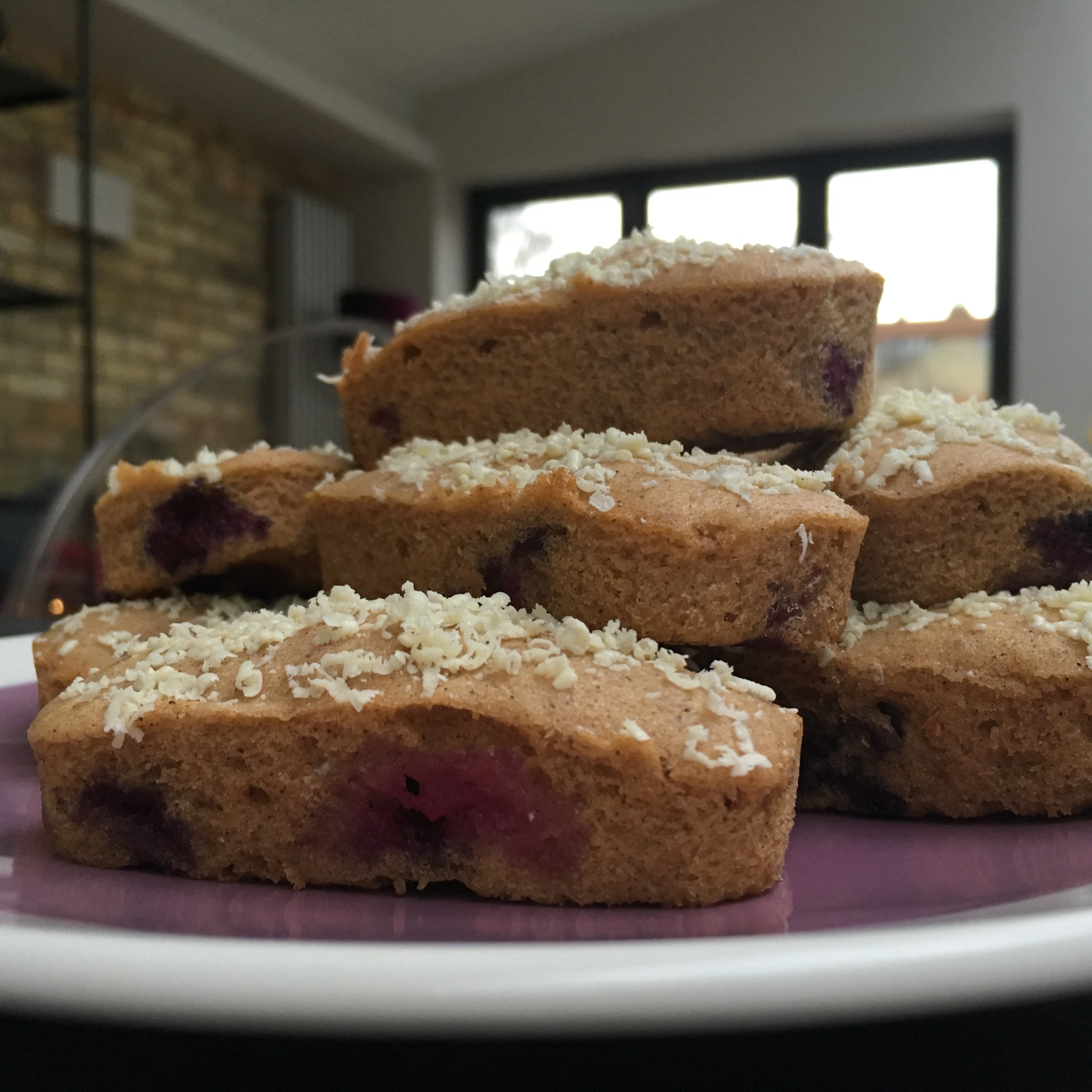
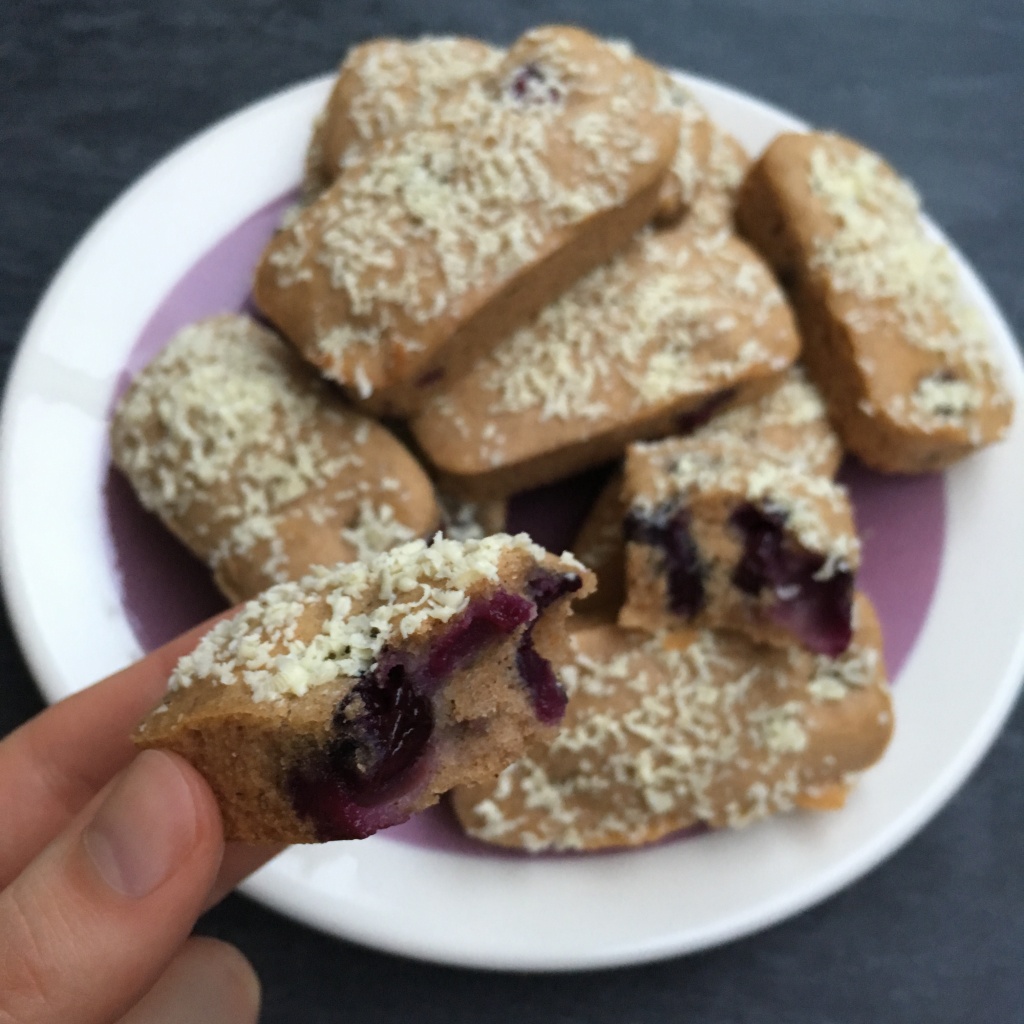
I first started experimenting with this particular flavour trio (blueberry, cinnamon and white chocolate) when I was young. I remember buying waffles from the supermarket and covering them with a fresh blueberry compote spiked with cinnamon, and then drizzling molten white chocolate over the top. I called them ‘midnight waffles’.

Cinnamon and blueberry cakes

Years later I’ve decided to reunite the trio in cake form. The result is a toothsome cinnamon sponge (I don’t like to go small with spices) with fresh, bursting blueberries and white chocolate grated on top. I think this looks sweet, you may think it looks like toenail clippings. You could always drizzle melted chocolate instead, or even put chocolate chunks into the sponge along with the blueberries.

Cinnamon and blueberry cakes

Cinnamon + blueberry mini cakes

110g Gluten free self-raising flour

110g softened butter

2 eggs

55g light brown sugar

One handful fresh blueberries

3 tsps ground cinnamon

1 tsp vanilla extract

1 bar white chocolate

  1. Preheat the oven to 160 degrees.
  2. Cream the butter and sugar together until pale and fluffy, then add the other ingredients (except the blueberries) and mix to combine.
  3. Gently fold the blueberries into the mix.
  4. Distribute the mixture and bake for around 12 minutes (times may vary depending on your tin).
  5. Extract your cakes from the tin whilst they are warm but not hot, and grate the chocolate over them (if desired). If the cakes become too cool the chocolate will not stick to their surface.

Lemon + raspberry layer cake

Lemon and raspberry cake

February is the shortest month of the year, and for me it’s often the busiest. All the members of my family (except me) have birthdays within two weeks of February, so I spend quite a bit of time planning and making birthday treats.

The thing that truly gets us through February, however, is the promise that it will end soon and spring will appear. My mum feels this very strongly. When I was a child I used to scoff a bit as she waxed lyrical about the blossoming trees on the way to school, and a houseful of daffodils at Christmas time is not to everyone’s taste. I’m sorry for chuckling, mum (I know you’re reading this).

Lemon and raspberry cake

At the risk of sounding like an episode of Call The Midwife, there’s a real joy in the promise of a new year. Waking up to find sunlight on the other side of your curtains instead of darkness- that’s progress. The possibility of eating and drinking outside, even if you’re swaddled in a blanket as you do it. I appreciate all the seasons in their own way, but there’s something particularly nice about spring.

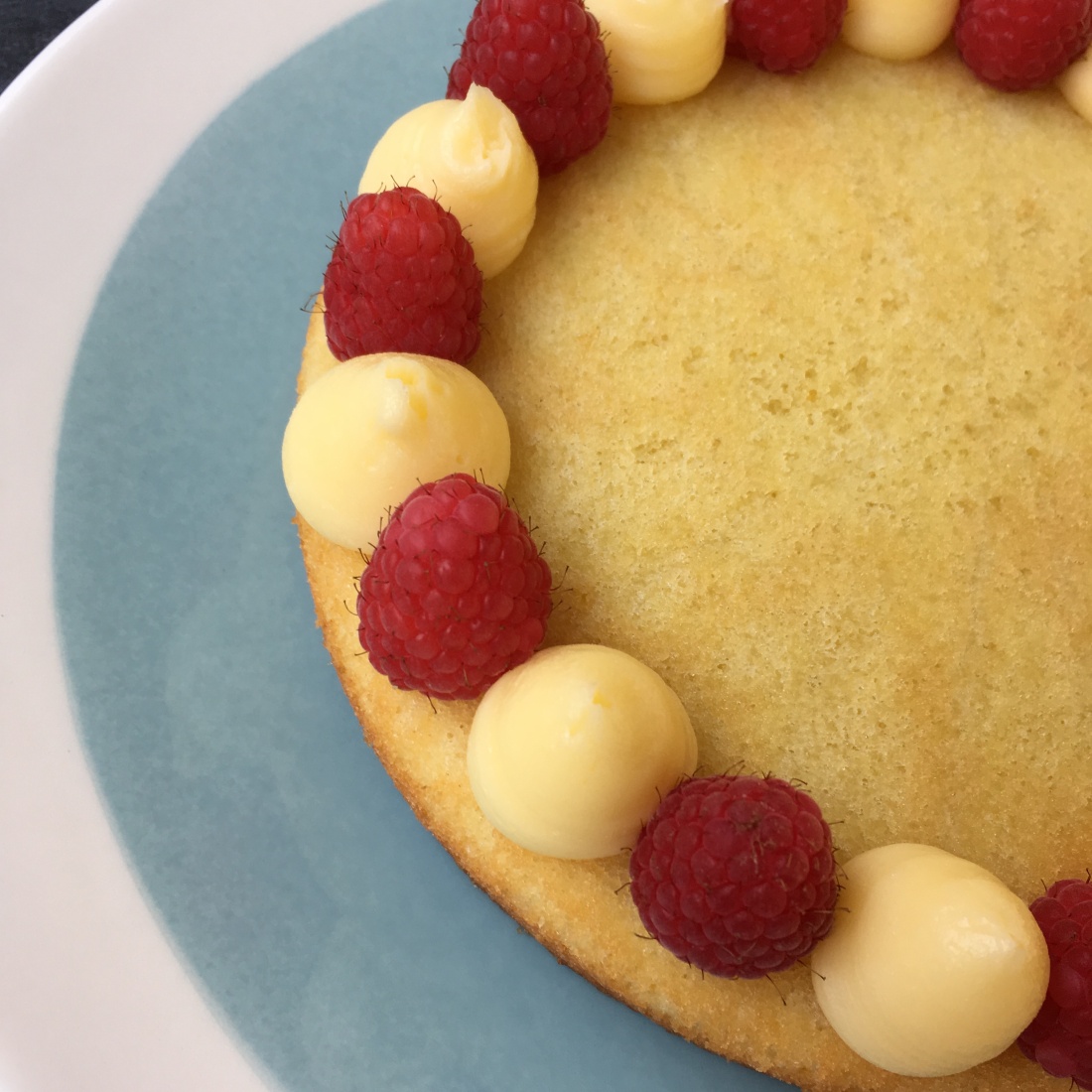
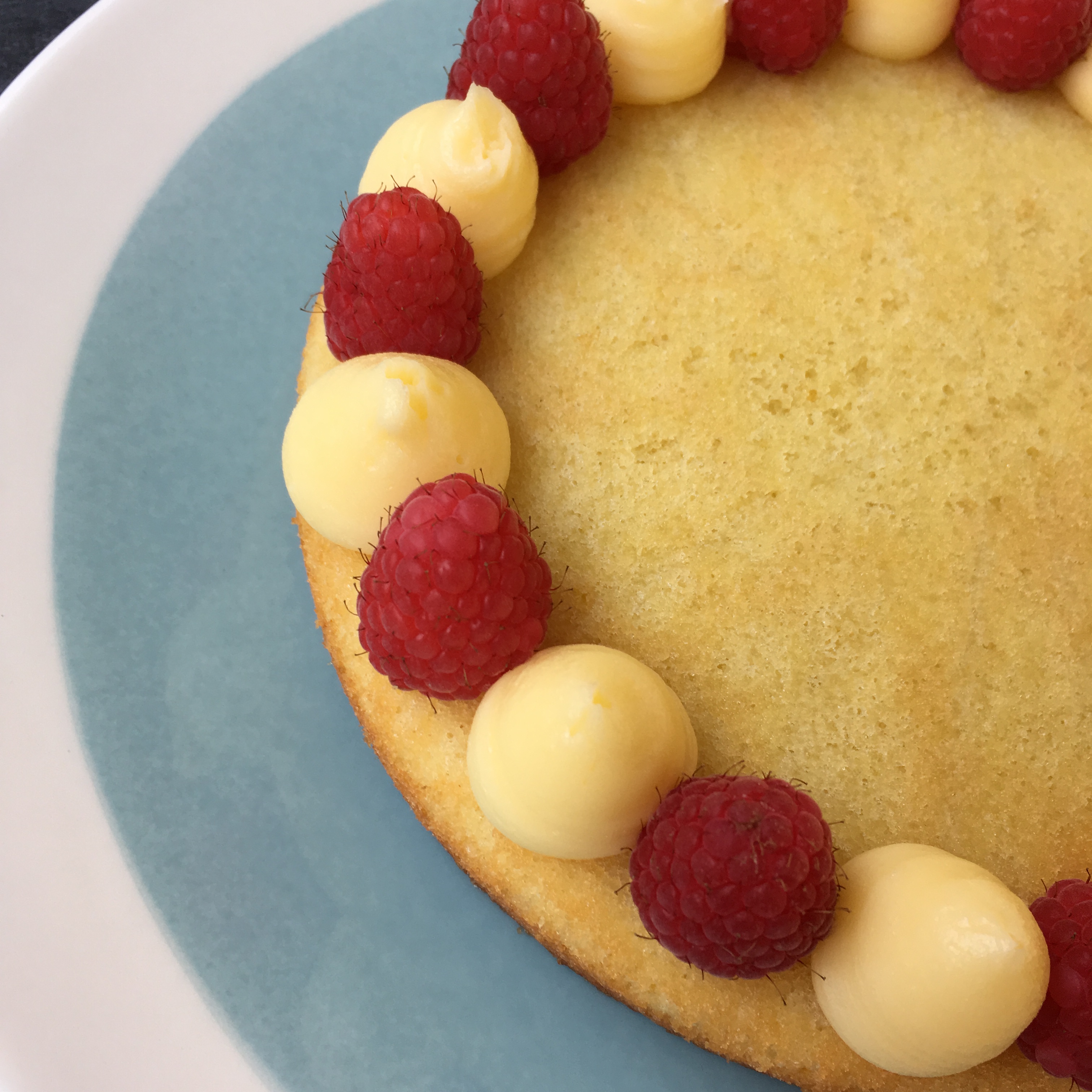
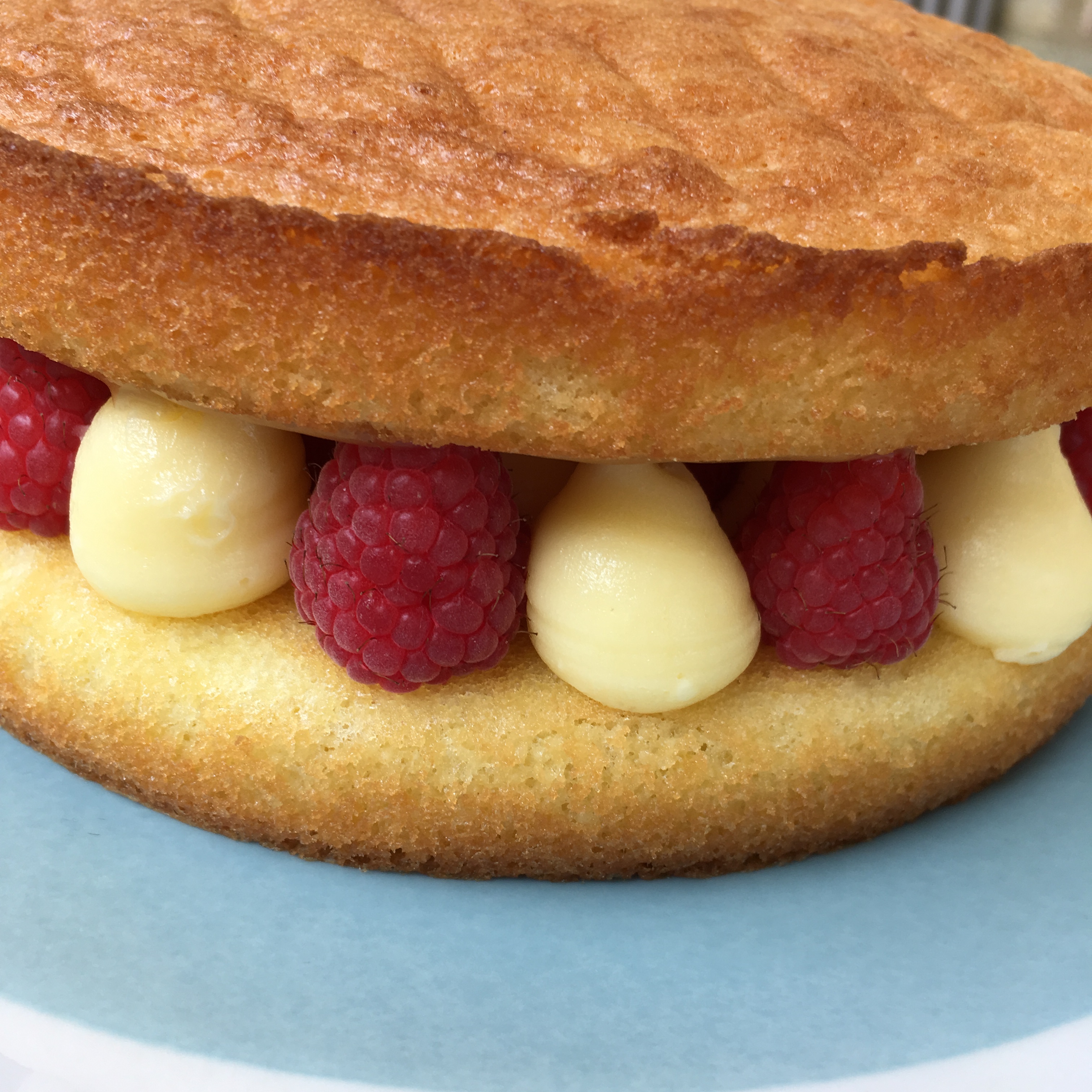
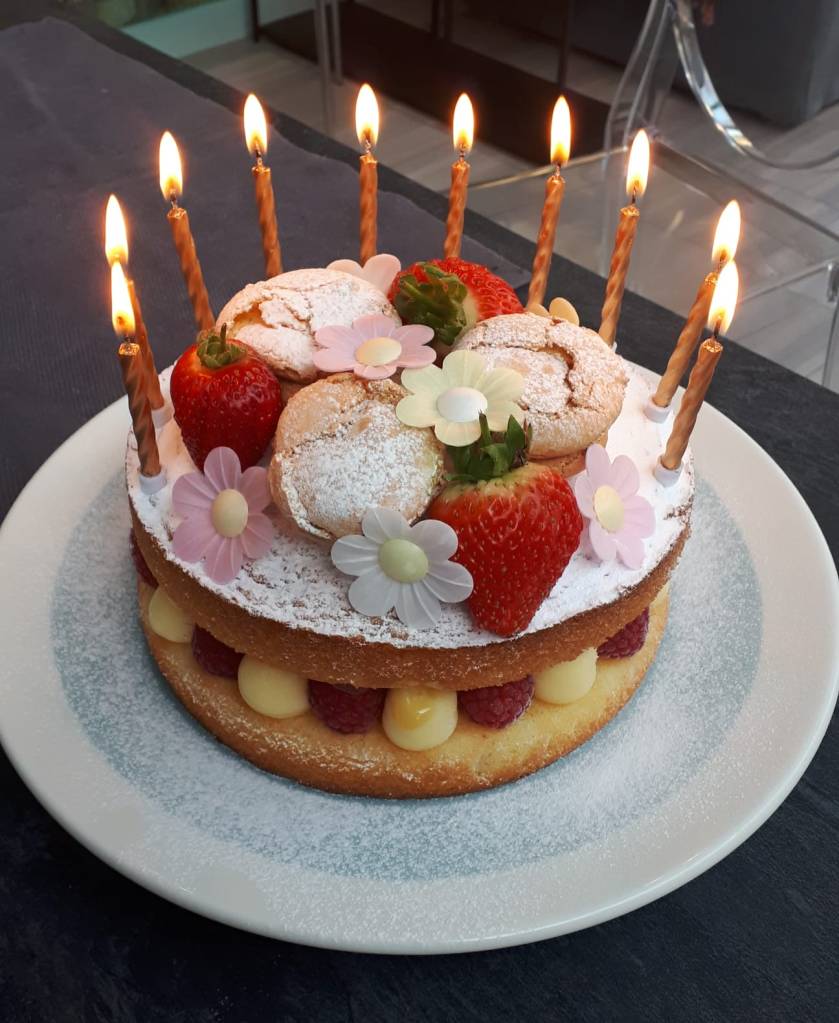
This is why I decided to celebrate the (hopefully imminent) arrival of spring in my mum’s birthday cake this year, using some of her favourite flavours. She loves the freshness of lemons and raspberries, and I think they’re both tart enough to pair nicely in a sweet layer cake with buttercream icing. The colours are also gorgeous and bold.

Lemon and raspberry cake

I decorated the cake with wafer daisies, fresh strawberries cut into fans, and macarons sandwiched with lemon curd. The macarons didn’t turn out exactly as I intended- I didn’t give them enough drying time so they cracked in the oven and didn’t form pieds (the frills on the bottom of the macaron). I decided to use them anyway, because they taste perfectly fine, and once they were dusted with a bit of icing sugar they looked quite nice.

Lemon and raspberry birthday cake

Lemon + raspberry layer cake

170g Gluten free self-raising flour

55g ground almonds

225g softened butter

170g white caster sugar

4 eggs

Zest of one lemon

Filling

One punnet of raspberries (around 225g)

250g softened butter

Icing sugar

Lemon curd (about 2 tbsp)

  1. Preheat your oven to 180 degrees fan. Grease two sandwich cake tins and line the base with a circle of baking paper.
  2. Combine the butter and sugar in a large bowl until pale and fluffy. Add the rest of the cake ingredients and stir to combine.
  3. Divide the cake batter evenly between the two tins and bake for about fifteen minutes until golden, and an inserted toothpick comes out clean. Remove the sponges and leave to cool.
  4. I don’t tend to weigh icing sugar when making buttercream icing, I judge it by eye and taste. First cream the butter, then add the sugar gradually until the icing tastes sweet enough for you. You can add other flavours, like vanilla, or leave it plain.
  5. Place the icing into a piping bag with a round nozzle tip. Gently wash and dry the raspberries. Pipe a blob of icing and place a raspberry next to it. Continue around the perimeter of the cake and then work inwards, doing concentric circles of alternate raspberries and icing blobs.
  6. When that layer is complete, spread some lemon curd on the other sponge and flip it on top of the bottom layer.
  7. Decorate your sponge as you like!

Rhubarb + custard cream cheesecake

Rhubarb

I like to say that life is too short for regrets, but if I were pressed to find one I might well say this; I didn’t try rhubarb until I was about twenty years old. Can you blame me? Like many British children I only saw it as a fibrous green-grey mush lurking under a pile of crumble. When it’s cooked like that it doesn’t exactly look appetising.

When I was diagnosed with IBS at nineteen I decided to follow a low-FODMAP diet, which I still do today. On this particular diet a number of fruits are ‘banned’, including stone fruits, apples and pears. This meant that crumble, a treat which I always enjoyed so much, was almost impossible to create. That is, until I remembered that rhubarb was both crumble and FODMAP friendly, and I fell in love.

Rhubarb and custard cream cheesecake

Rhubarb’s sweet-sour sherberty taste is complex and delicious, and it makes a great foil for richer desserts. Not to mention the colour of it (when it’s not boiled to a pulp) is a gorgeous vibrant pink. It’s a welcome burst of colour and taste in the cold winter months, which is when forced rhubarb comes into season. No strawberries, no raspberries? No problem. Rhubarb’s got it all.

As well as the aforementioned crumble, rhubarb is great as a compote (traditionally served with custard). This flavour combination is so iconic that I knew I had to bring these two flavours together. And here we have it: A creamy baked cheesecake with a custard cream biscuit base and a rhubarb jelly on the top.

Rhubarb

This recipe involved a few firsts for me as a cook. I’d never baked a cheesecake before, or made jelly. Because of that I had a few stumbles which I think I should warn you of, if you’re in the same position.

The jelly was actually very easy to make! Luckily I had just the right proportions of ingredients and I used leaf gelatine to set it. The jelly set after just an hour in the fridge and looked so beautiful; a vibrant peachy pink which adds a much-needed tartness to the rich cheesecake (so rich that I recommend small slices, which is unlike me).

The cheesecake was trickier. The more experienced amongst you will notice that the outside of the cheesecake is quite dark around the edge. I struggled with my timings because I worried about the cheesecake being undercooked, so I baked it for longer than instructed. I must admit I was thrown off by the ‘slight wobble’ instructions of the recipes that I consulted. To judge something by wobbling is pretty subjective, in my opinion. This recipe is the result of some research and post-baking judgement on my part, and hopefully it will serve you well.

Rhubarb and custard cream cheesecake

Rhubarb + custard cream cheesecake (serves 16)

175g gluten-free custard cream biscuits

50g melted butter

900g cream cheese

250g caster sugar

3 tbsp gluten-free plain flour

1 tsp vanilla extract

zest of 1 orange

3 eggs plus 1 yolk

200ml double cream

For the rhubarb jelly:

225g rhubarb

juice of 1 orange

60g caster sugar

1 gelatine leaf

  1. Preheat the oven to 160 degrees. Line the base of a springform baking tin (23cm) with baking paper or aluminium foil.
  2. Crush the custard cream biscuits, either by hand of in a food processor, until you have fine crumbs. Combine the crumbs with the melted butter and press the mixture into the base of the tin.
  3. Bake the cheesecake base for ten minutes, then remove from the oven and leave the tin on a cooling rack. Leave the oven on.
  4. Combine the rest of the cheesecake ingredients together using a whisk or electric mixer. The mixture will be liquid and pale.
  5. Butter the sides of the tin and then pour the cheesecake mixture in. Bake for an hour and then turn the oven off, leaving the cheesecake inside. If you prefer your cheesecake firmer, leave the oven door closed. If you want a creamier result, open the oven door. Leave for two hours.
  6. Once the two hours are up remove the cheesecake from the oven. When it’s completely cool place it in the fridge to chill.
  7. To make the rhubarb jelly, wash and chop your rhubarb. The size of the pieces doesn’t matter so long as they are fairly uniform.
  8. Place the rhubarb with the orange juice and sugar into a pan over a medium heat until the rhubarb softens, this should take about ten minutes.
  9. Pour the contents of the pan into a food processor and blitz it until you have a smooth liquid with no lumps.
  10. Strain the liquid through a sieve. If you follow this recipe you should yield 1/4 pint of liquid.
  11. Pour the clear liquid into the pan over a gentle heat to warm. Take one leaf of gelatine and place it into cold water. Leave it for five minutes.
  12. After five minutes retrieve the softened gelatine leaf from the water and squeeze out the excess water. Place the leaf into your warm rhubarb liquid and stir to dissolve. Turn off the heat and leave the mixture to cool.
  13. Bring your cheesecake out of the fridge. Naturally, baked cheesecakes often dip a little in the middle and are higher around the sides. The top of my cheesecake was very golden brown. I scraped the top layer off with a spoon. This pronounced the dip which gave me somewhere to pour my jelly into.
  14. Pour the jelly onto the cheesecake and place it in the fridge to chill. It should be set in one hour.

Classic steamed pudding with marmalade + sultanas

Classic Steamed Pudding with Marmalade + Sultanas

Like many British children I turned to steamed sponges for warmth and comfort during the long winter months. I loved the chocolate puddings that my mum would give me at home, rich with sauce and humming with sweetness, but the stodgy syrup and jam sponges at school were just as welcome.

As I was discussing with my parents last night when we tucked into this particular pudding, the flavours and textures of a steamed pudding are what make it so distinctive and moreish. Technically, I use the same recipe for this pudding as I do for my baked sponges, but the steaming gives the sponge a unique, tender bite which distinguishes it from any other cake.

Classic Steamed Pudding with Marmalade + Sultanas

Warm sponges like these call for something sweet and sticky to top them. Traditionally jam or golden syrup is used. I still remember the excitement at school when syrup sponge was on the menu; it’s a total crowd pleaser. I suppose it’s the trifecta of sticky, soft and sweet which appeals to our inner child.

I was inspired to make this recipe when I spotted some marmalade with stem ginger in the supermarket sitting nearby a large bag of plump bronze sultanas. Nigella Lawson has a well-known baked marmalade pudding recipe which is a favourite in our house (we’ve made it many times over) and I suddenly had the idea to make a steamed pudding- something a little more grown up.

In the interests of being grown up this pudding has sultanas in, something which my younger self would baulk at. Feel free to omit them if you feel similarly, but I think they add a nice texture and compliment the bitter orange flavour of the marmalade. Also regarding texture, I think that marmalade with peel looks and tastes better than marmalade without peel, but this is a matter of preference.

Classic Steamed Pudding with Marmalade + Sultanas

Steamed puddings can be served with any number of sauces or sides: cream, custard, ice cream. We have some yoghurt lovers in our house who douse any and all cakes with it. The good thing about steamed puddings, however, is that they do tend to be moist, and can be eaten without accompaniment.

I hope that you give a steamed pudding a go this winter if you’ve never made one before. It’s actually very easy to do, though they take a bit of time to cook, and they don’t require any equipment which isn’t readily available. I got my cooking instructions from St Delia Smith, but this is my own recipe.

Gluten Free Steamed Pudding with Marmalade + Sultanas (serves eight)

Equipment required:

One large steamer

One ceramic pudding bowl (2 pints or 1 and 1/4 litres)

Aluminium foil

String

Ingredients:

170g GF self raising flour

110g light muscovado sugar

170g butter

3 eggs

Two handfuls sultanas

1 tsp vanilla extract

1 tsp ginger

1 tsp cinnamon

2 tbsp marmalade

  1. Prepare your steamer.
  2. Grease the inside of the pudding bowl well. Place the marmalade into the bowl and smooth it so that it covers the base of the bowl in an even layer.
  3. Combine the butter and sugar with an electric mixer until smooth.
  4. Add the rest of the ingredients and mix until smooth.
  5. Pour the mixture into the pudding bowl and smooth it out.
  6. Cut two pieces of aluminium foil large enough to cover the top of the pudding bowl and place them on top of one another. create a ‘pleat’ or ‘fold’ along the middle of the foil (this allows for expansion). I’ve inserted pictures below this recipe to help.
  7. Place the pleated foil on top of the pudding bowl and tie it to the bowl with string. You can create a loop with the string to make it easier to remove the pudding bowl from the steamer when the pudding is ready.
  8. Place the pudding bowl in the steamer and steam for an hour and a half.
  9. Once the steaming time is over, remove the lid from the steamer and allow to cool for a minute before removing the pudding bowl. Cut the string, remove the foil and flip the pudding onto your serving dish in the same way you would make a sandcastle. Serve immediately.
Foil pleat
Pleating the foil like this allows for the sponge to expand
Steamed pudding
Use normal string to hold the foil in place (I couldn’t find my string)

Vegan date and chocolate flapjacks

In all truthfulness, this is not the recipe which I hoped to share today.

I’ve been thinking for a while about doing a vegan recipe. I had a can of pumpkin puree in the cupboard which I bought on a whim, and I thought I would try to do something with that. I planned to make nutty pumpkin muffins with a molten date caramel core. The batter looked promising, but the final results were disappointing (I’m not even sure they were edible).

Vegan date and chocolate flapjack

It was time to come up with a plan B. I had about half the date caramel left (which was really more of a date paste). I also realised that I had some dairy free chocolate chips in the cupboard. The thought struck me: flapjack. Cake can go wrong in so many ways, especially when you attempt to make it vegan and gluten free. But flapjack? Making a flapjack vegan requires one simple substitution (dairy-free spread instead of butter). This can’t go wrong.

Vegan date and chocolate flapjack

Sure enough, the flapjacks turned out well! Sticky, golden and toothsome, with a sweet layer of chocolate and date paste in the middle. Who said vegans have to live off celery sticks and hummus?

Vegan Chocolate and Date flapjack:

150g dates

1 tbsp almond butter

Almond milk

Vanilla extract

50g dairy-free chocolate chips (I used a mix of white and milk chocolate)

500g pure oats

8 tbsps golden syrup

200g light muscovado sugar

250g dairy-free spread

  1. Preheat the oven to 180 degrees and line a deep pan with baking paper.
  2. Combine the dates with the almond butter, vanilla extract and a pinch of salt in a food processor. Add splashes of almond milk until you have a paste.
  3. Melt the spread, golden syrup and sugar together, then add them to the oats and stir to combine.
  4. Place half the oat mixture into the bottom of the pan in an even layer. Then spread the date paste on top of this layer.
  5. Scatter the chocolate chips over the date paste layer. Then place the rest of the oats on top.
  6. Bake for half an hour until golden, then leave to cool completely before slicing.

Apricot and Ginger surprise cake (dairy + gluten free)

I think it’s best to start this post by wishing you all a happy new year! I know that for most of us our new year’s celebrations were held two weeks ago (been there, drank the fizz, got the hangover) but this year I’m celebrating new year twice: I’m celebrating Chinese new year for the first time!

My boyfriend’s family is from Hong Kong, and it just so happens that his aunt’s birthday coincides with Chinese new year this time (February 5th). It’s a big birthday too. When my boyfriend’s mum suggested that I might like to make a cake, naturally I leapt at the chance.

When I first met her, the aunt in question kindly gave me a money packet. As soon as I started dreaming up this cake I knew that I would incorporate some element of the money packet design as decoration. Then I got another idea. I’d seen surprise cakes online- a cavity is made in the cake which is filled with treats- but I’d never made one. Since money is traditionally given at Chinese new year, why not fill the cake with chocolate coins? Luckily they’re still in the shops (and available online) after Christmas, and heavily discounted!

In terms of flavours, I knew that this aunt liked Victoria sponge, but I wanted to play with the flavours a bit more. I had a new bottle of ginger extract which I was dying to try, and I decided that apricot jam would be a good pairing. Thus, the whole cake was formed in my head: the flavours (plain sponge, sandwiched with apricot jam and ginger buttercream), the decoration (buttercream flowers, inspired by the money packet) and the surprise (chocolate coins hidden inside).

I learnt how to do the buttercream flowers from a few different YouTube videos- Cupcake Savvy’s Kitchen, Greggy Soriano from Greggy’s Digest, and Joni Kwan from How to Cake it Step by Step. I used a set of plastic palette knives which I found from my local art shop, but I’m sure you can find similar ones online. I love the effect, I think it’s very beautiful and soft, and I can’t wait to play around with it more in the future!

What you see in this post is the trial of this cake, and it involved a lot of techniques which I had never done before. This meant that the assembly and decoration of this cake was a long and messy process. It was definitely worth it when I cut into that first slice and saw the coins spilling out just as I’d hoped.

The texture of this sponge is so light and fluffy, as well as the icing. The ginger extract gives a sweet heat to it and compliments the apricot nicely. This is definitely an interesting take on the Victoria sponge, and it’s worth trying out even if you’re a purist. Now all that’s left for me is to do it all again- hopefully with less mess this time. Wish me luck!

Apricot and Ginger Surprise cake: (gluten free + dairy free)

340g plain flour

225g caster sugar

340g dairy-free spread

6 eggs

2 tsp baking powder

2 tsp vanilla

For the decoration:

450g dairy-free spread

260g icing sugar

2 tsp ginger extract

Food colourings

300g apricot jam

About 15 chocolate coins

Tube of black writing icing/sprinkles/edible pearls (for the middle of the flowers)

  1. Preheat the oven to 180 degrees and line two sandwich cake tins.
  2. NOTE: The ingredients which I have listed are enough for the four individual cakes which make up this whole cake. I made these in two batches of two as I only have two sandwich cake tins.
  3. Cream the spread with the sugar until pale and fluffy, then add the other ingredients and combine well.
  4. Divide the mixture between the tins and bake for fifteen minutes or until the cakes shrink from the edges of the tin. They should be a light golden brown and an inserted toothpick should emerge clean.
  5. Leave the cakes to cool.
  6. Once you have baked all your cakes and they are all cool, start making your icing. To do this, simply combine the icing sugar with the spread and the ginger extract until pale and fluffy.
  7. Divide your buttercream equally into bowls and colour them as you desire, reserving some white icing to cover the whole cake.
  8. Place your first layer of cake down and cover it with first a layer of apricot jam, then some coloured buttercream.
  9. Use something round (I used a large round biscuit cutter) to cut a hole from the middle of two of the sponges (You can reserve these to make a small cake later).
  10. Place one of these sponges on top of the first layer you decorated. Add jam and buttercream, then place the other ring cake on top (So far your creation has a complete layer on the bottom, with the two ‘ring’ layers stacked on top, with jam and coloured buttercream between each layer).
  11. Take your chocolate coins, still in foil, and place them vertically into the hollow in the middle of your cake. Once you have enough in there they should stand up on their own.
  12. Place your final, complete layer on top of your cake, then cover the whole thing lightly in white buttercream.
  13. Use your palette knives and your coloured buttercream to create flowers on top. I used black writing icing to create dots in the centres of the flowers, but you could use sprinkles or edible pearls. I used the last scraps of coloured icing to create a watercolour effect around the sides of the cake.

Salty Dog biscuits

I’ve been lucky enough to spend this weekend by the seaside with my family. I grew up in the countryside, and I’ve lived in cities for the past few years, but nothing compares to the seaside in my opinion. Every time I’m here I think, the Victorians got one thing right, health-wise: this place has healing properties. Something about the air and the water helps even the most wound-up amongst us to get some rest. As my mum says, the biggest problem around here is what to eat for lunch (a problem easily solved; platefuls of smoked fish and prawns for me, fresh lobster and chips for the parents).

I decided that during my visit I wanted to bake something which complimented my surroundings. That’s when the Salty Dog cocktail popped into my head. The name alone makes one think of the sea, and then when you consider the ingredients (gin, grapefruit juice, and a salt rim), it sounds like a very tasty way to keep scurvy at bay.

Salty Dog biscuits

The next question to solve was the form of the bake itself. I briefly considered a traybake, but I don’t want this blog to be full of cake. I need to stretch myself a bit and do some other bakes. I’m not much of a biscuit baker though, and I was worried about how to get the strong flavours of this cocktail into a biscuit.

In order to do this, I added the zest of a grapefruit into my biscuit dough, as well as something a little more experimental. Before I mixed my dough ingredients together I dampened my sugar with a bit of grapefruit juice; not enough to dissolve the sugar or make it syrupy, just to make it sort of damp and clumpy. The citrus flavour definitely carries through these biscuits.

Salty Dog biscuits

The icing is also made with grapefruit juice and some gin, and the biscuits are finished with a little more zest and some sea salt. The salt is my favourite part of these biscuits: it enhances the other flavours so well without being overwhelming. It’s not a consistent flavour either, as you would expect from a salted caramel, for example. The flecks of salt burst on your tongue at unexpected moments as you eat the biscuit.

I also really like the ‘sunburst’ design of the icing on these biscuits, but it’s tricky to master and required a bit of practice. I used a teaspoon with the icing, dripping the icing in a thin stream over the biscuits, but you could probably achieve more precise results with a piping bag.

These biscuits are quite light and crumbly, so for goodness’ sake PLEASE don’t even think about putting them in your tea. I think the elegant nature of these biscuits make them perfect for an afternoon tea. Pretty and delicate, with unexpected flavours, I reckon they’d be a hit.

Salty Dog biscuit

Salty Dog biscuits: (makes 28)

300g plain gluten free flour

200g butter or substitute

100g caster sugar

1 egg yolk

2 grapefruits

1 tbsp gin

300g icing sugar

Sea salt

  1. Combine the zest of 1 grapefruit with the flour and butter. In a separate bowl, dampen the sugar with a wedge of grapefruit until it is damp and clumpy but not syrupy or dissolved.
  2. Add the sugar to the flour/butter mixture with the egg yolk and combine into a soft dough. Wrap with cling film and chill in the fridge for at least one hour.
  3. Prepare a large baking sheet with greaseproof paper and preheat your oven to 180 degrees.
  4. Take your dough from the fridge and place it between two pieces of greaseproof paper. Roll it out until it is about the thickness of a pound coin, then cut circles. I used a glass to do this; my circles were about three inches across.
  5. Place the biscuits onto the paper. You can place them closely together, the dough doesn’t really spread as it cooks. Bake them for 10-12 minutes until they are dry and do not stick to the baking paper. They should be golden brown at the edges.
  6. Place the biscuits on a cooling rack and allow them to cool completely. Combine the icing sugar with the gin and mix. The icing should be of a pourable consistency. If it is not, add fresh grapefruit juice (you can use a sieve to avoid getting chunks of grapefruit flesh in the icing).
  7. Drizzle the icing back and forth in a ‘sunburst’ pattern. Then, before the icing dries hard, sprinkle on a little sea salt and grate some fresh grapefruit zest on top.

Chicken and Chorizo Pasties

Chicken and Chorizo pasties

Pastry isn’t something I’ve tackled much in my baking, even before I became gluten free. I’ve always been more interested in cake. My efforts to make gluten free pastry, or even to use the ready-made stuff in the supermarket, haven’t gone very well so far.

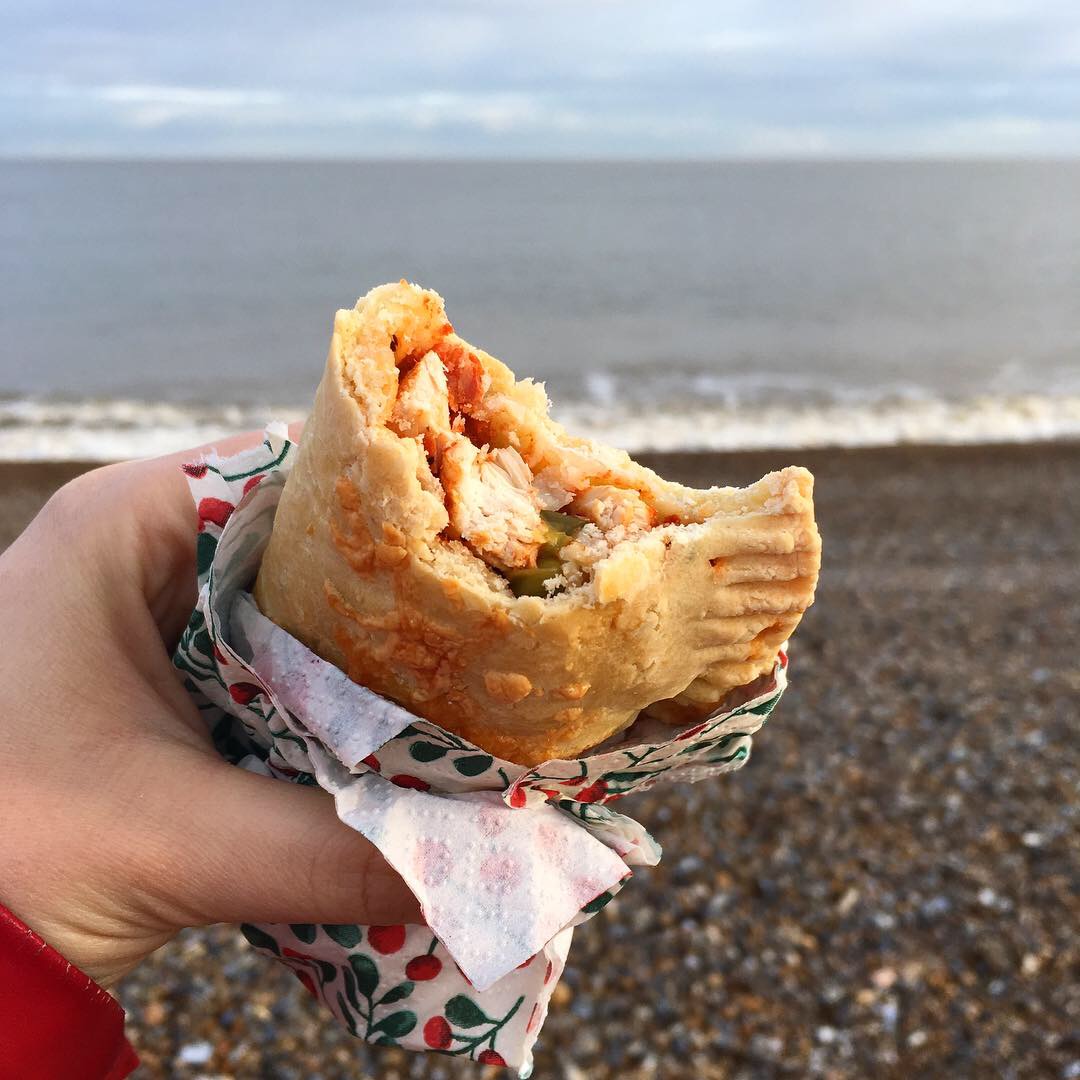
I don’t usually like to eat pastry either, if I’m honest. There’s no real reason behind this I suppose, it’s just a matter of taste. The one type that I really like, however, that I’ll never turn down, is a crispy hot-water crust, the type that covers pork pies and pasties. When I went on a solo trip to St Ives a few years ago I was delighted to see that there were loads of gluten-free options, including cream teas and pasties. There’s nothing better to warm you up on a chilly beach than a hot pasty; portable, filling, and versatile.

Chicken and Chorizo pasty

The traditional filling of a Cornish pasty, with chunks of beef, potato, turnip and onion, is perfectly tasty: I’m not trying to suggest that the recipe can be improved on! This is just another twist on a classic with a tasty filling. I suppose the filling is more like an empanada- versions of this filled pastry exist throughout South America and Europe. In truth, many cultures around the world have their own rough version of this sort of food. If there’s anything the human race can agree on, we love to take tasty things and encase them in dough.

This recipe is a fair bit of work, but I think the result is worth it. The pastry recipe is not entirely my own, I followed Jamie Oliver’s and it worked very nicely. https://www.jamieoliver.com/recipes/vegetables-recipes/gluten-free-veggie-pasties/  

Chicken and Chorizo pasties

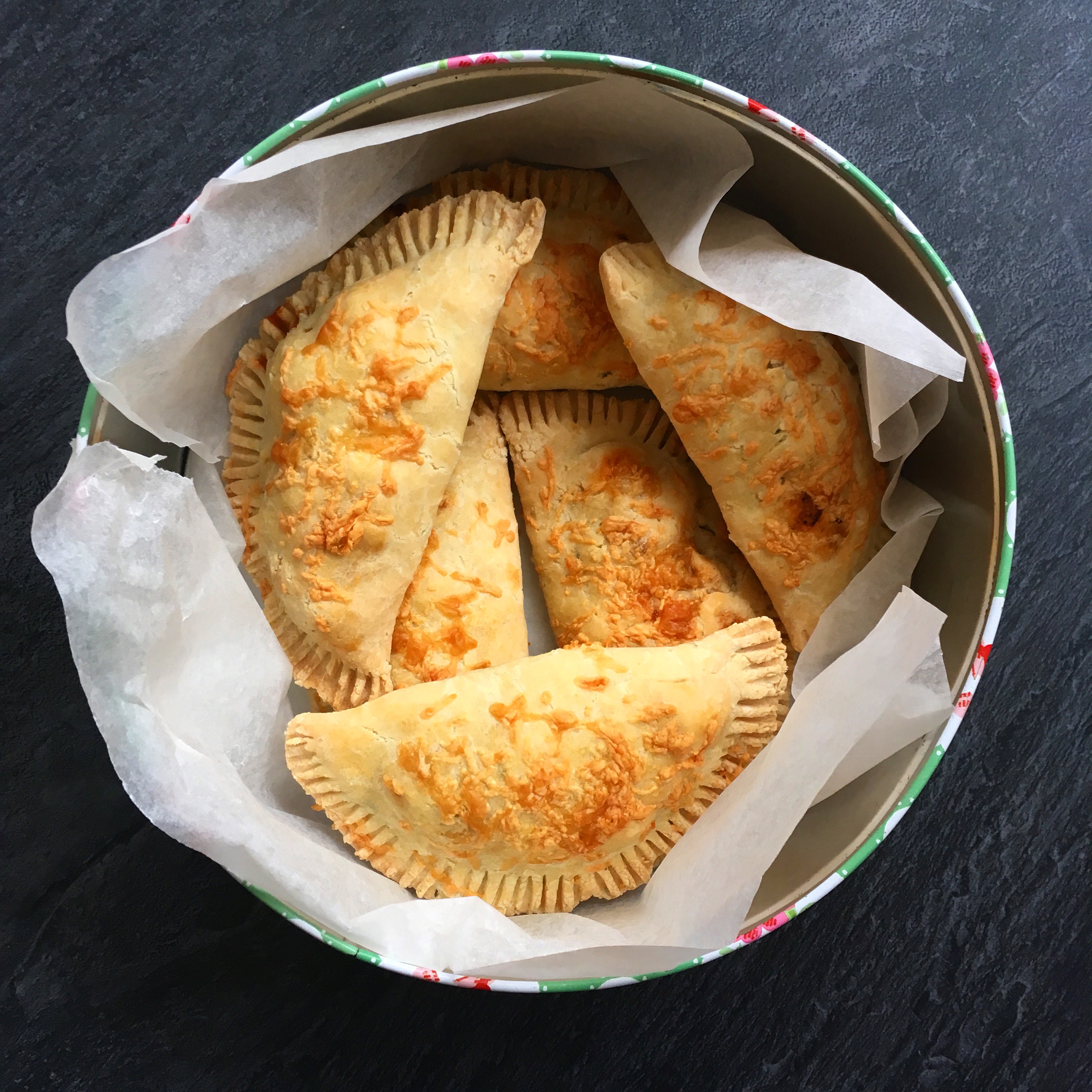
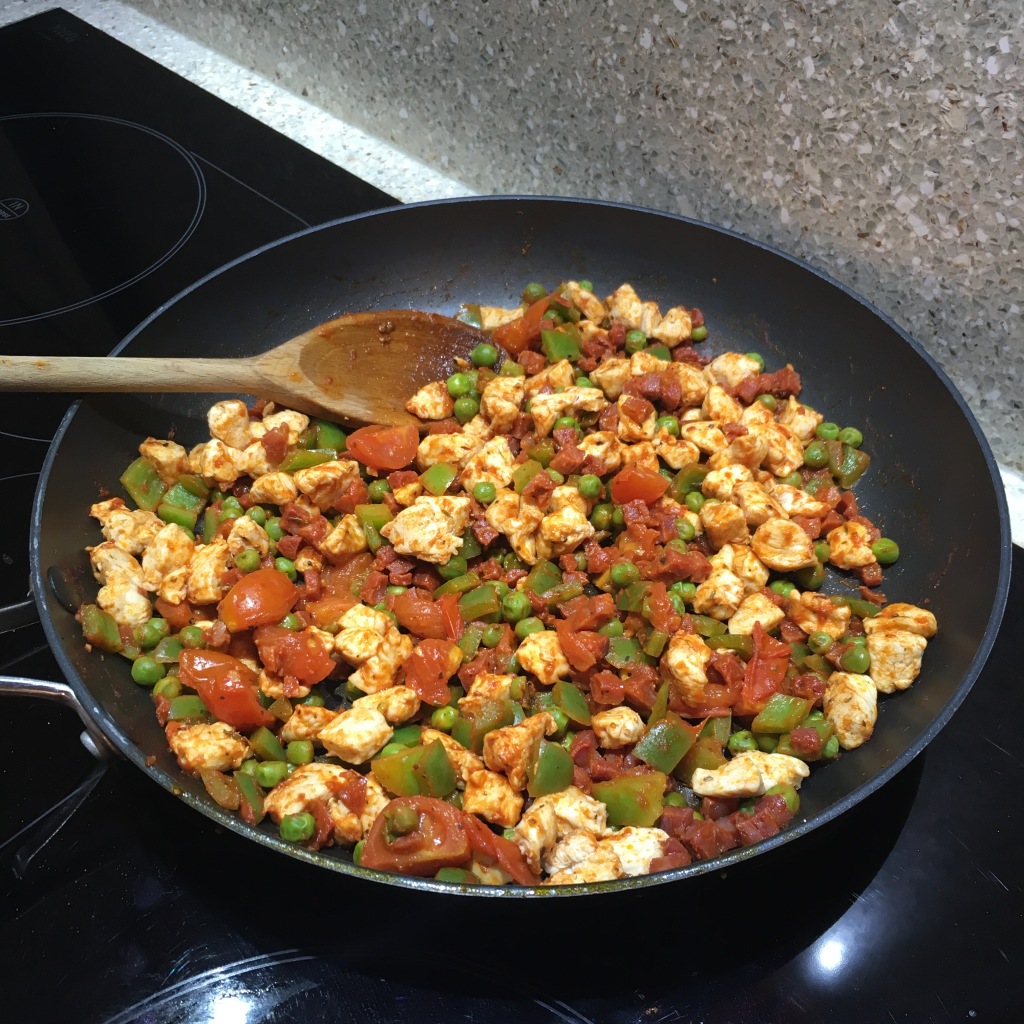
I also added some fresh thyme leaves to the pastry. I noticed that as the pastry was resting it got a bit crusty on the outside. Don’t worry, this doesn’t make a difference to the finished product. I improvised the filling with ingredients that I like. The pastry is crisp and cheesy, and the filling is tasty, savoury, and a bit spicy. This recipe would make 24 mini pasties, great for picnics or parties, or 12 larger pasties which make for a nice light meal.

Chicken and Chorizo pasty filling

Chicken and Chorizo Pasties (GF)

For the Pastry:

600g gluten free plain flour

2 tsp salt

2 tsp xanthan gum

100g butter

2 eggs (and 1 more for the egg wash)

2 tsp thyme

75g cheddar cheese, grated

For the filling:

150g diced cooking chorizo

320g chicken breast

1 green pepper

6 cherry tomatoes

1 tbsp tomato puree

75g frozen peas

1 tsp thyme

1 tsp mixed herbs

1 tsp something spicy (I used a cajun spice mix)

  1. To make the pastry, melt the butter in a pan with 260 ml of water. Bring to the boil and leave to cool slightly.
  2. Sieve the flour, xanthan gum and salt together into a large bowl. Add two beaten eggs and the thyme and stir to combine. Pour in the butter water mixture and stir again until the dough comes together into a ball. Cover the dough and leave it while you make your filling.
  3. First, fry the diced chorizo over a high-medium heat for about five minutes, then place the chorizo on a plate and set it to one side, reserving the red oil in the pan.
  4. Chop the chicken into small chunks and fry it in the chorizo oil for about six minutes until cooked through. Place the chicken on a plate and put it to one side. Blot the remaining water and oil out of the frying pan.
  5. Dice the green pepper and slice the cherry tomatoes into quarters. Add these to the frying pan with the tomatoes puree, herbs, spices, and a dash of water. Season and cook down for about six minutes until the tomatoes have softened and the water has been evaporated. Add the chicken and chorizo back into the mixture and stir to combine.
  6. Preheat your oven to 180 degrees and prepare a large tray with baking paper.
  7. Separate your dough into even balls (24 for mini pasties, 12 for full size). I sandwiched each dough ball between baking paper before rolling them into circles. The dough should be fairly thin, but not so thin that it will be difficult to form the pastries, about the thickness of a pound coin.
  8. Add around two spoonfuls of mixture to the centre of the dough circle (teaspoons for mini pasties, dessert/cereal spoons for full size). Fold the pastry over the filling into a semicircle and press the edges together. You can use a fork to give the edges a nice crimp.
  9. Place your pasties on the baking tray and cover them with egg wash and grated cheddar. Bake them for half an hour- they should be crisp and golden. Best eaten warm. SAFETY WARNING: unfortunately, as the meat has already been cooked twice, you should not reheat these pasties once they are cooked.

Hazelnut and Orange Blossom cakes

Hello all. I hope you’re well! I know that I haven’t shown any signs of life since Christmas (have any of us?) but I’m here today with a recipe and a hope- that this blog won’t wilt and die like the few houseplants I’ve owned.

I do feel more positive about this enterprise though. I’m always going to bake, and so I might as well carry on with the blog! It pushes me to go that bit further (this sometimes leads to existential baking crises in Lakeland, but it’s all in good fun! I’m happy!). It also justified me buying a new tin today, which really makes me happy, even though I have absolutely no space left anywhere and far too many tins to begin with.

Hazelnut and Orange Blossom cakes

This tin is silicone with a wire edge which gives it a bit of stability (hallelujah!). I think I’m definitely going to invest in more silicone tins, and I’ll tell you for why (if you care to read). I find that gluten free cakes are often a bit more delicate than their wheaty cousins, and the thin top layer of cake in particular is very liable to peel or flake off, and to be left stuck on metal tins no matter how well you grease them. With silicone tins, these cakes popped out as neat as you please, fully intact. I’m sold!

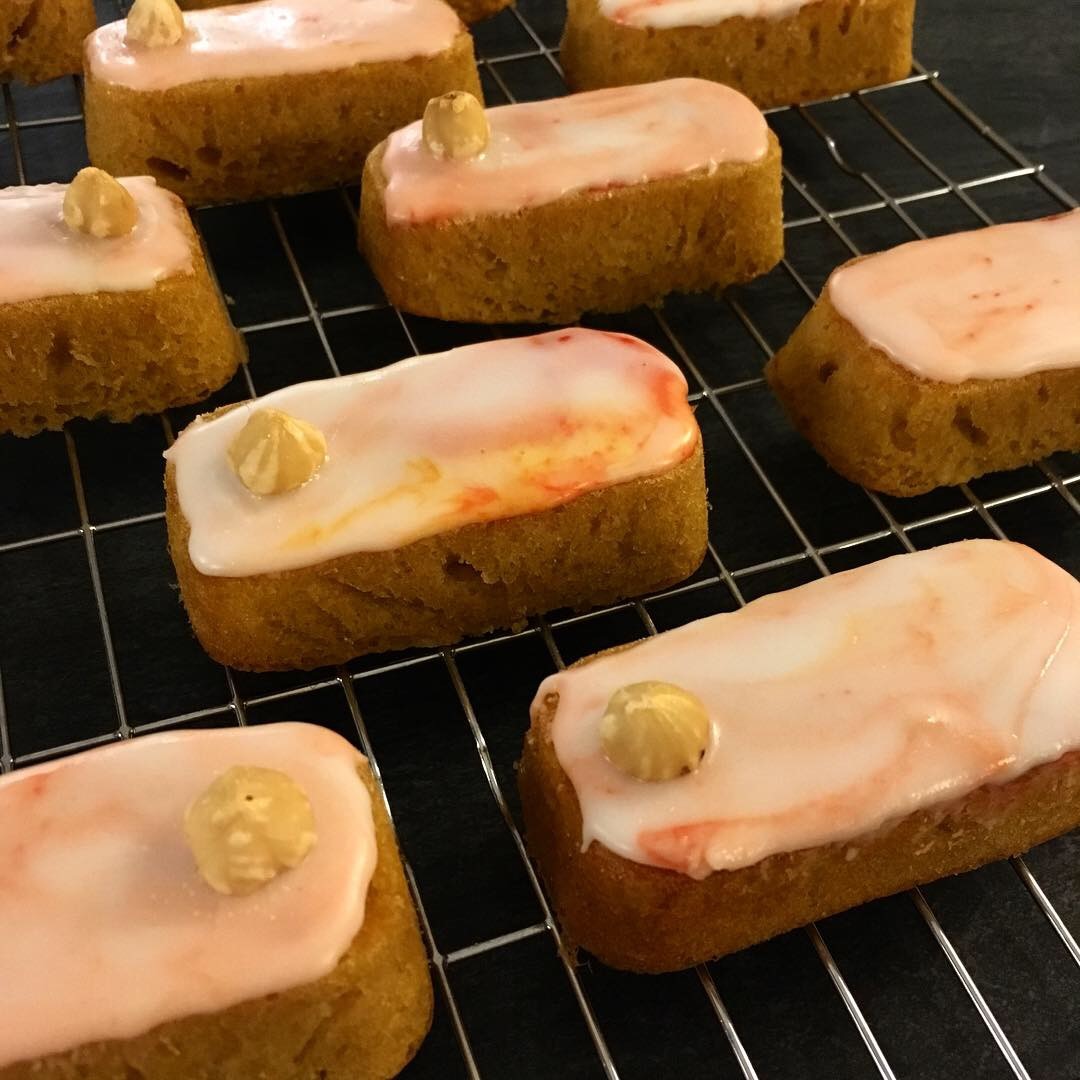
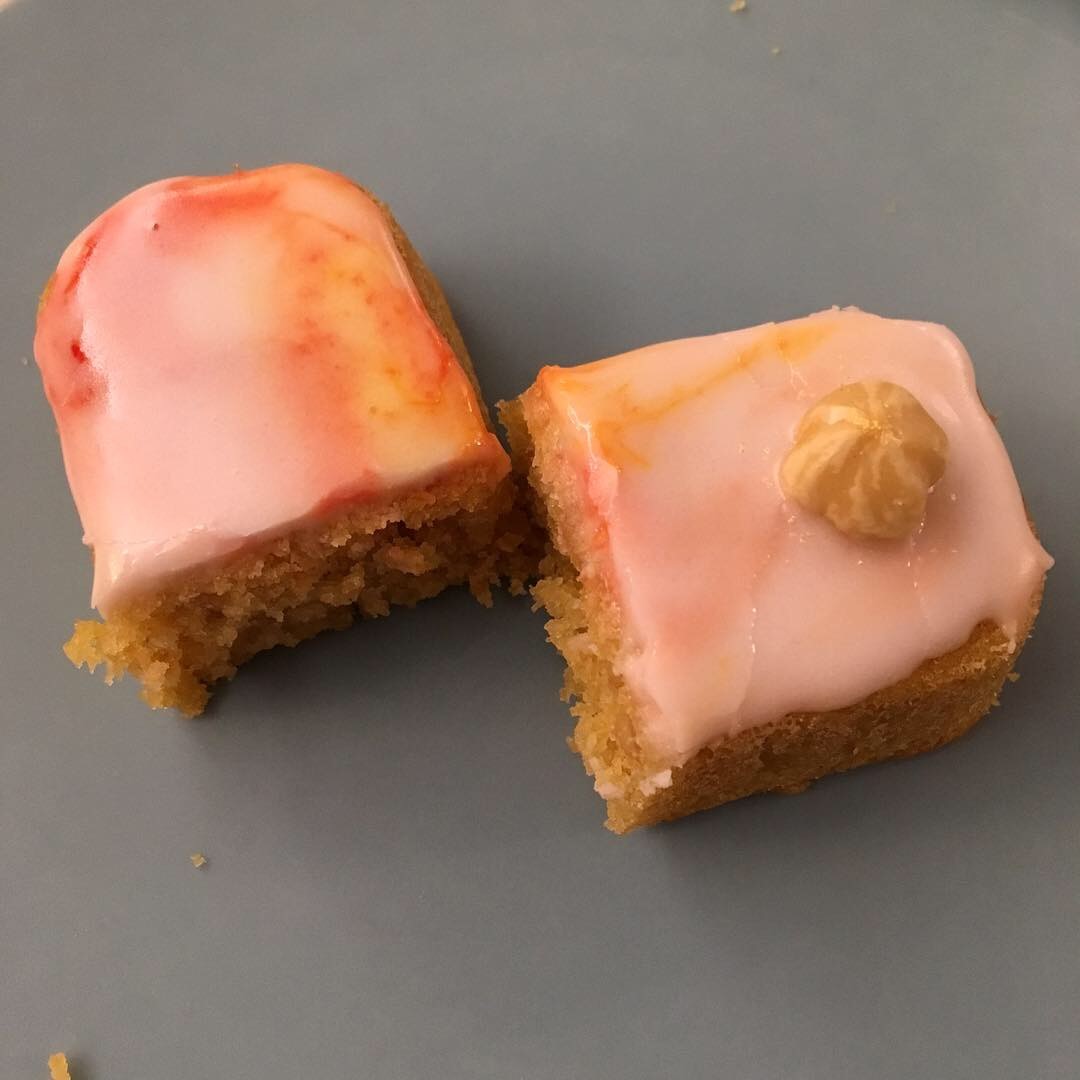
These cakes also happen to be dairy free as well as gluten free thanks to the fact that we had some dairy-free spread left in the fridge. The sponge has blitzed roasted hazelnuts taking the place of some of the flour, orange zest, and a little orange blossom extract. The sponge is light and moist, with crunchy pieces of hazelnut. I realised upon trying the batter that the way I had put this cake together resembles the composition of a perfume: the hazelnuts provide the rich, deep base note, the orange zest is a middle tone, and the orange blossom water offers a floral, zingy finish.

Hazelnut and Orange Blossom cake

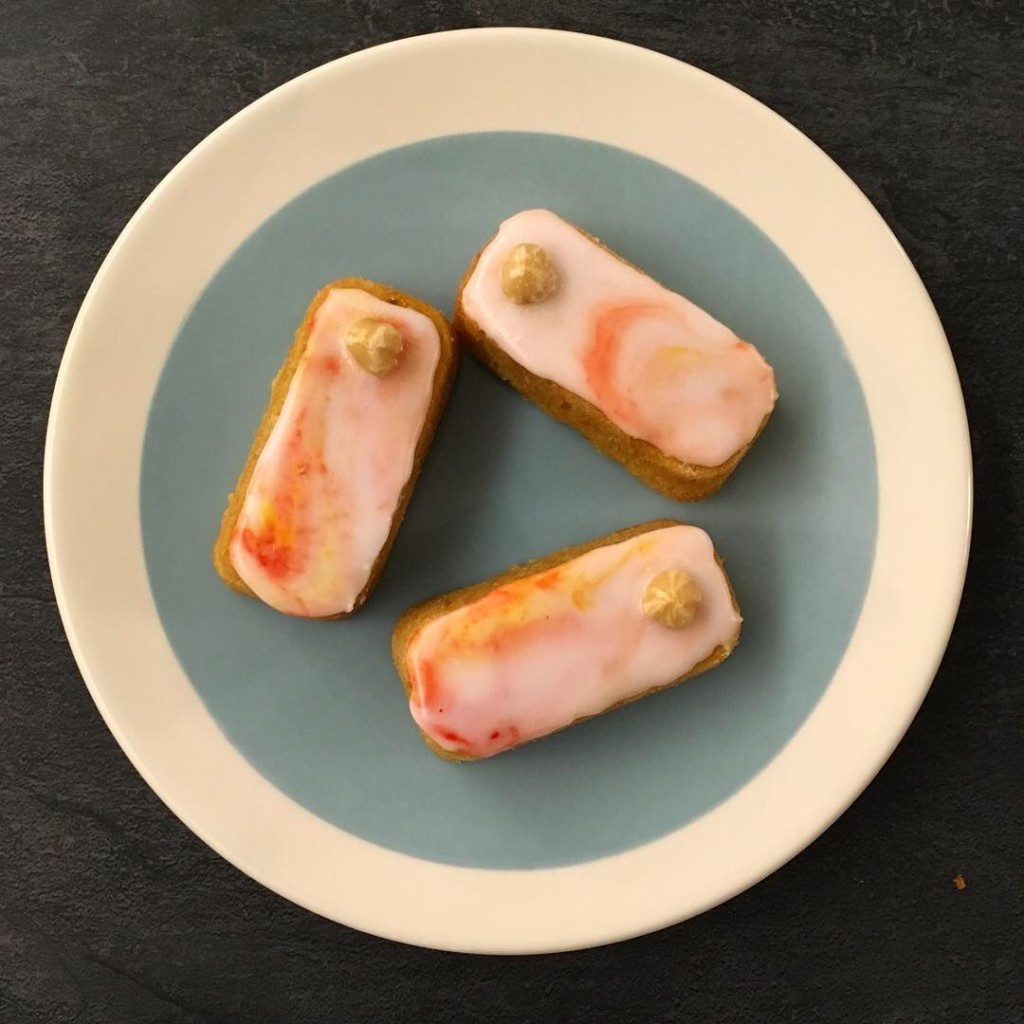
I absolutely love using marbled icing in bakes and I feel it’s worked well here! Please try it and use whichever colours you like, although I do feel that greens can give the impression that the cake is slightly mouldy. That said, do as you feel. I tend to choose my colours to represent the flavours that are in the cake; pink for rose, orange for orange blossom etc etc.

This recipe is fab if you’ve got posh friends you want to impress, or you want something that’s delicate but packs a punch in both flavour and texture. Naturally, you could make these as regular cupcakes, but if you’re an avid baker then maybe get a rectangular tin. I can’t wait to use mine again.

Hazelnut and Orange Blossom cakes

Hazelnut and Orange Blossom Cakes: makes 12 (gluten free, dairy free)

170g dairy-free spread (or butter, if you wish)

110g light brown sugar

110g plain gluten free flour

1 teaspoon baking powder (ensure it’s gluten free)

75g blanched hazelnuts (get chopped if you can)

3 eggs

1 orange

Orange blossom water

200g icing sugar

Food colouring

  1. Preheat the oven to 180 degrees.
  2. Cream the dairy-free spread or butter with the sugar using an electric mixer.
  3. If your hazelnuts are not chopped, chop them in a food processor until you have very small chunks.
  4. Add the chopped nuts, flour, baking powder, eggs, one teaspoon of orange blossom water, and the zest of an orange to the butter mixture and combine using an electric mixer.
  5. Distribute the mixture equally between the sections of the pan.
  6. Bake for 15 minutes.
  7. After a few minutes, pop the cakes out and leave to cool.
  8. To make the icing, combine the icing sugar with two teaspoons or orange blossom water and a little fresh water until you have a thick, runny consistency. The icing should be opaque white.
  9. Leaving the icing in the bowl, add around four dots of pure food colouring. Don’t mix it in! Use a teaspoon to dollop some icing on top of the cake. As you move the icing to cover the cake, the colouring will stretch into the white icing and you will see a marbling pattern. Some cakes will have more marbling than others, and they will all look different.
  10. I had some hazelnuts left over so I finished each cake with a single hazelnut on the side. I think it looks fancy.

Kintsugi-inspired gingerbread buns

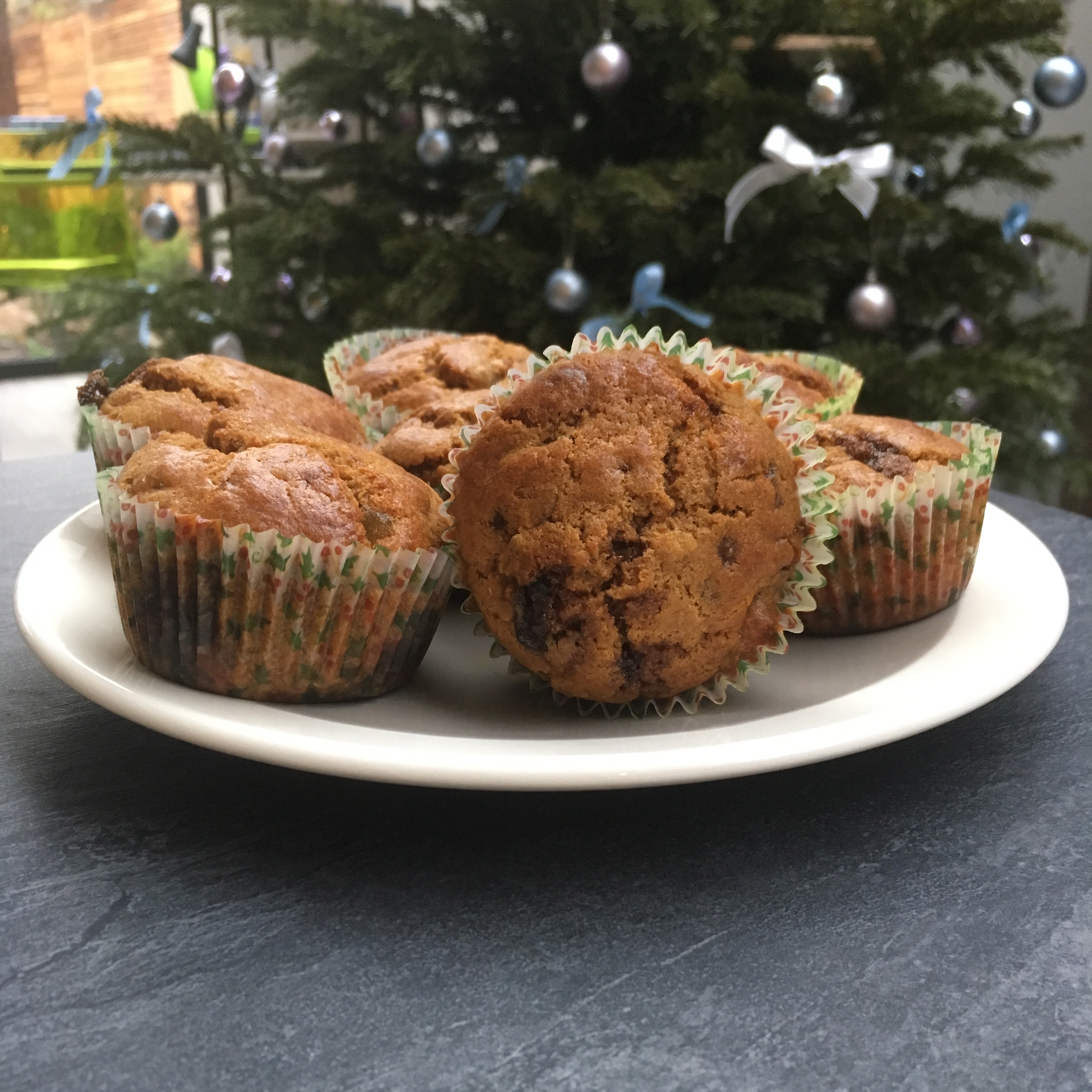
Every baker knows that things don’t always go to plan. This might be through fault of our own, the recipe which we were following, or from any other number of factors. In recent days I’ve been thinking about this blog and how-so far- nothing has seemed to go too wrong. I knew it would only be a matter of time before I would pull something from my oven that I wasn’t entirely happy with.

I am an amateur baker, and although I want to provide helpful, tasty recipes, I also want to show what happens when things don’t turn out as you expected, or hoped. Sometimes you come out with something that’s completely inedible. I’ve been baking for years and this still happens to me. Sometimes, however, you come out with something which could be great, with a bit of inspiration.

I’d been struggling with deciding what to make today and eventually decided to make some gingerbread buns. I pictured plump, even, golden brown buns which I would decorate with pretty white icing swirls. Instead the cakes turned out with craggy surfaces and hard lumps of muscovado sugar.

Gingerbread buns

As I sat in front of the oven watching the buns bake I questioned putting them on this blog. I thought that they were too imperfect. I didn’t go out into the rain to get more ingredients for a fresh batch (I couldn’t have done that anyway as I have to work) and I scolded myself for being lazy. I have this idea in my head that other baking bloggers work weeks perfecting their recipes instead of making it once and hoping for the best (I don’t know if this is true or not).
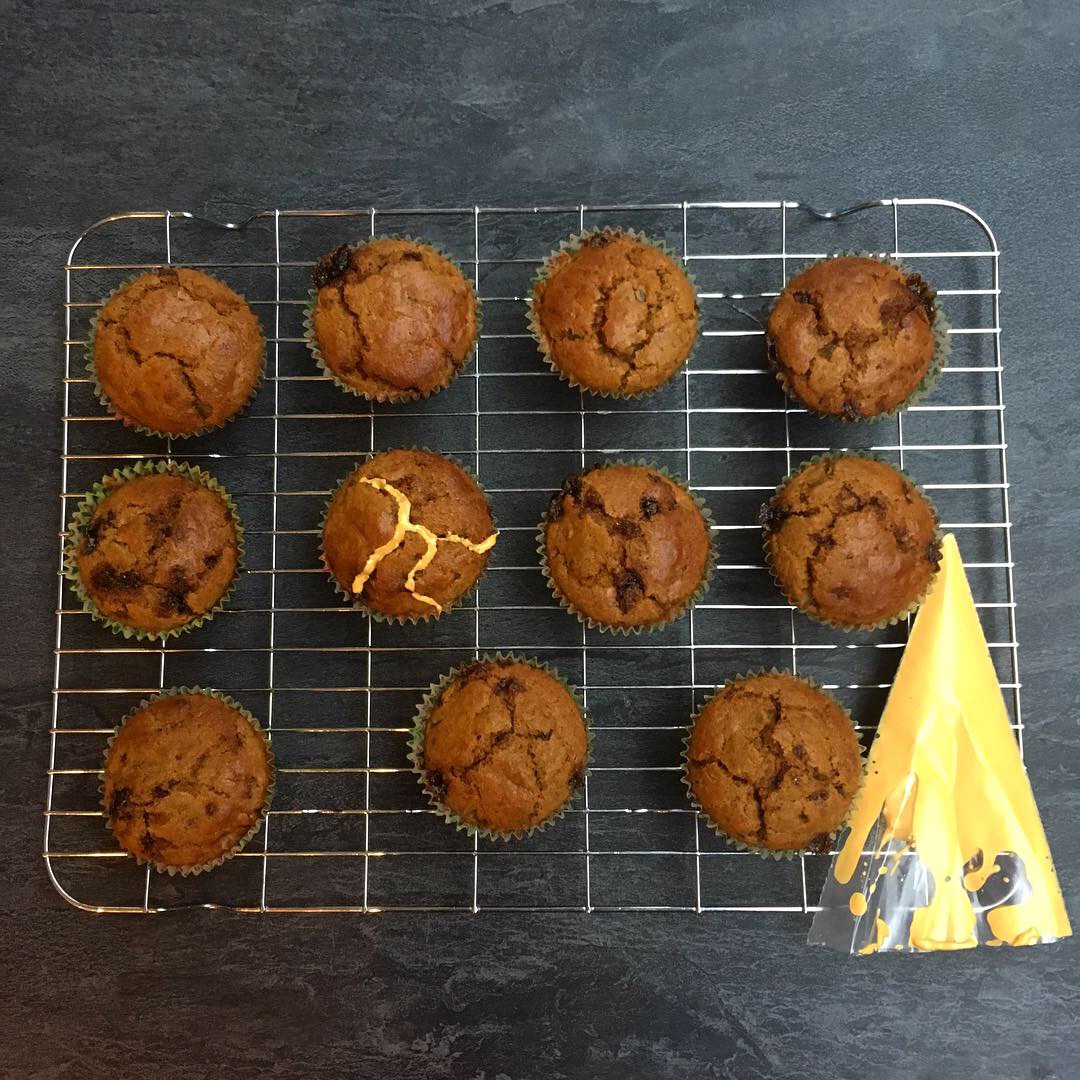
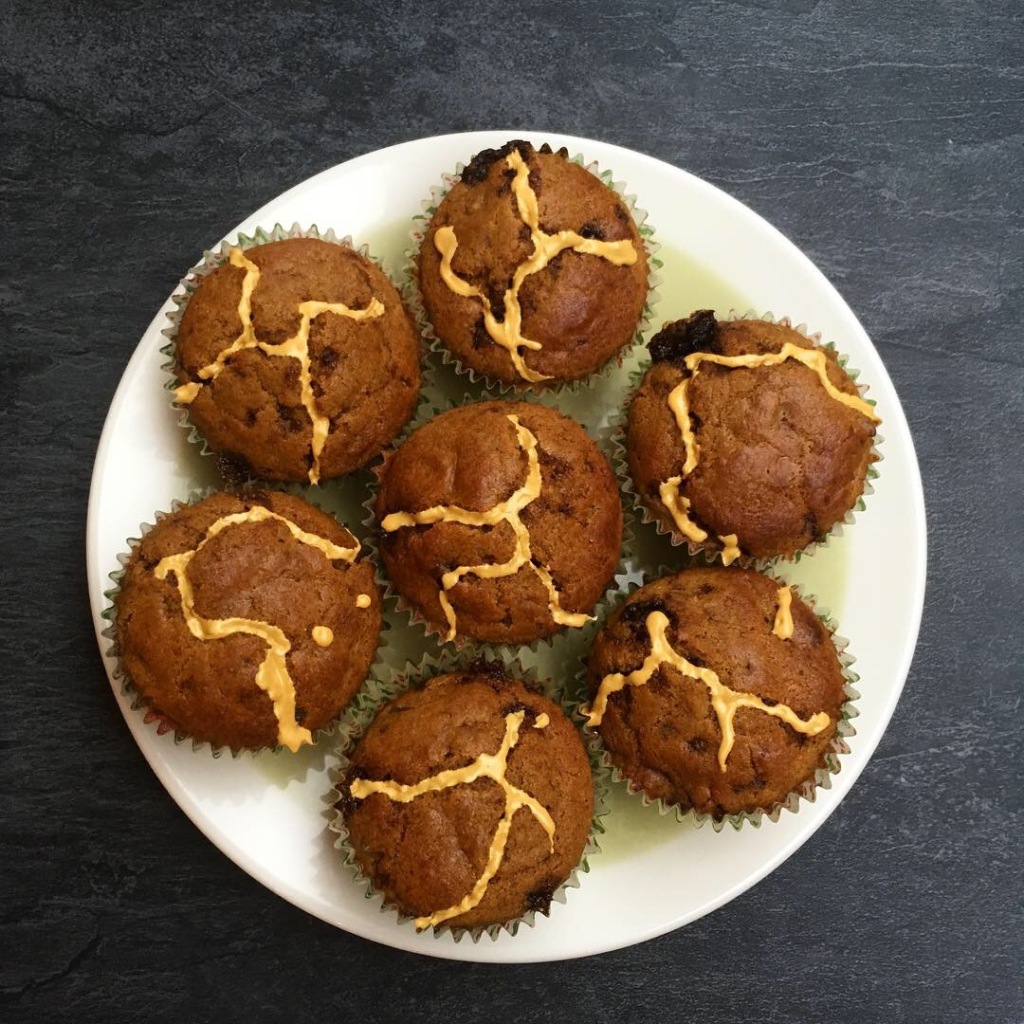
Then I realised- this could be a teaching opportunity. I could take these perfectly good cakes and turn them into something unique. I knew that I couldn’t cover the crags with icing, so I decided instead to enhance them. This choice was inspired by the Japanese art of kintsugi, in which broken crockery is repaired with molten gold. Instead of disposing of a broken bowl or plate, it is made even more beautiful than it was before. I love the way the gold icing makes delicate patterns on these buns as it flows through the cracks.

Gingerbread buns

The buns themselves are spicy, with little chewy nuggets of stem ginger and a deep background flavour of treacle. I made the icing with a little fresh lemon juice and some almond extract- water alone would be fine if you prefer a plain icing but I think the sharp lemon flavour with the rich almond is delicious.

Gingerbread buns

Gluten free Gingerbread Buns: (makes 12)

170g gluten free self-raising flour

170g butter

3 eggs

55g dark brown sugar (fresh is best to avoid lumps)

55g treacle

Stem ginger in syrup (I used 4 balls, chopped finely)

1 tsp each of cinnamon, ginger, nutmeg and allspice

For the icing:

100g icing sugar

2 tsp lemon juice

1 tsp almond extract

Edible gold dust

  1. Place paper cases into a 12-hole tin and preheat the oven to 180 degrees.
  2. Cream the butter with the sugar, treacle and spices. To make measuring the treacle easier, first measure your sugar in your measuring bowl and then add the treacle on top of the sugar. When you pour the two into your mixing bowl then the treacle will slide right off on the sugar instead of sticking to the bowl.
  3. Add the flour and eggs to the butter mixture and combine. Lastly, fold in the chopped stem ginger.
  4. Fill the paper cases evenly and bake the cakes for roughly 12 minutes. The tops of the cakes will be firm to touch and an inserted toothpick will emerge clean.
  5. Whilst the cakes cool. combine your icing ingredients with a very small amount of water until you have an icing which is suitably golden and not too runny. Add the liquids slowly until you are happy with the texture.
  6. I then cut the end off a piping bag to make it smaller and filled the piping bag with the icing. I cut the very end off the piping bag in order to make a very small hole to pipe through.
  7. Pipe the icing into the cracks on your cakes.